

Views: 0 Author: Site Editor Publish Time: 2026-03-25 Origin: Site


Acrylic mirrors are reflective sheets made from polymethyl methacrylate (PMMA). Their light weight, shatter resistance, and ease of customization make them suitable for interior decoration, advertising displays, signage, retail spaces, exhibitions, and children’s products.
This article explains how acrylic mirrors are manufactured, from selecting the PMMA sheet to applying the reflective layer, adding the backing, cutting, and final inspection.
An acrylic mirror consists of a PMMA sheet with a reflective metal layer applied to one side. A protective paint coating or self-adhesive layer may then be added behind the reflective surface.
Likebond offers silver, gold, rose gold, red, blue, green, purple, hardened, self-adhesive, and paint-backed acrylic mirrors. Their thicknesses, sizes, colors, and shapes can be customized.
| Feature | Acrylic mirror | Glass mirror |
|---|---|---|
| Weight | Lightweight | Heavier |
| Breakage | Shatter-resistant | May shatter when broken |
| Processing | Easy to cut, drill, and shape | Requires specialized glass-processing tools |
| Colors | Available in many decorative colors | Usually limited |
| Installation | Easier to transport and mount | Requires stronger support |
| Reflection | Requires a flat mounting surface | More dimensionally stable |
Acrylic mirrors are useful when low weight, safety, color, and custom shapes are more important than the rigid reflection provided by glass.
Production begins with a high-quality PMMA sheet. The substrate should have consistent thickness, good optical clarity, and a smooth surface.
The sheet is inspected for scratches, bubbles, dust, and other defects that could affect the finished reflection. Likebond offers customizable thicknesses from 1 to 8 mm. Its standard gold acrylic mirror sheet measures 1220 × 2440 mm, with custom sizes also available.
The acrylic surface must be thoroughly cleaned before the reflective layer is applied. Dust, grease, moisture, or fingerprints may create visible defects in the finished mirror.
Careful handling and a clean production environment help maintain a smooth and uniform reflective surface.
A fine reflective metal coating is applied to the PMMA sheet through vacuum metallization. This layer creates the mirror effect, while the acrylic sheet provides structural support.
Different decorative finishes can be produced, including silver, light gold, rose gold, deep gold, red, blue, green, and purple.
The reflective layer must be protected from scratches and damage. Likebond provides different backing options for different installation requirements.
Paint-backed acrylic mirrors receive a protective coating behind the reflective layer. Self-adhesive mirrors include an adhesive backing that allows them to be mounted directly on a clean, smooth, and flat surface.
Likebond lists 80U, 120U, and 3M adhesive options. Buyers should select the backing according to the mounting surface and installation method.
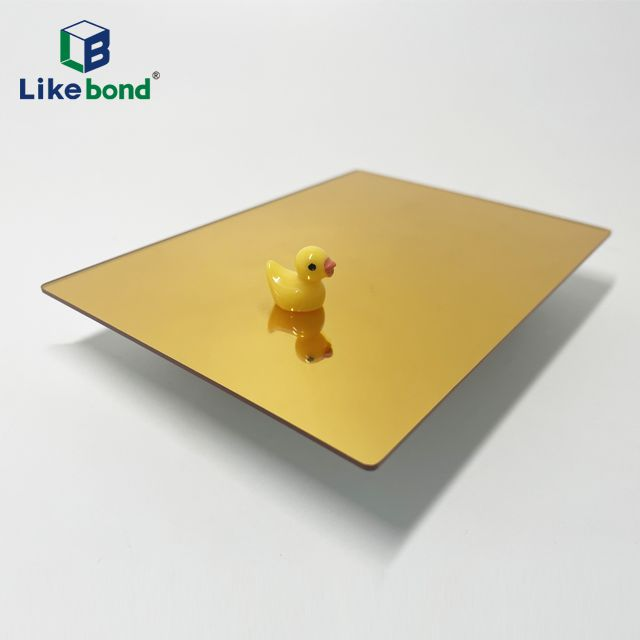
The finished mirror sheet can be cut, drilled, or shaped according to customer drawings. Acrylic mirrors can be made into letters, logos, signs, geometric wall panels, decorative elements, and other custom forms.
Processing conditions must be controlled carefully. Excessive heat or unsuitable cutting tools may melt the acrylic, damage the coating, or create cracks around the edges.
Customers should provide the required size, thickness, color, shape, backing, hole positions, and edge requirements before production.
A protective film is placed over the visible mirror surface to prevent scratches, dust, and fingerprints during processing, transportation, and installation.
The protective film should remain in place until the mirror has been installed.
Before shipment, the acrylic mirrors are inspected for coating uniformity, surface defects, color consistency, dimensions, and backing quality.
Likebond uses protective packaging such as kraft paper and solid wood crates to reduce the risk of damage during transportation.
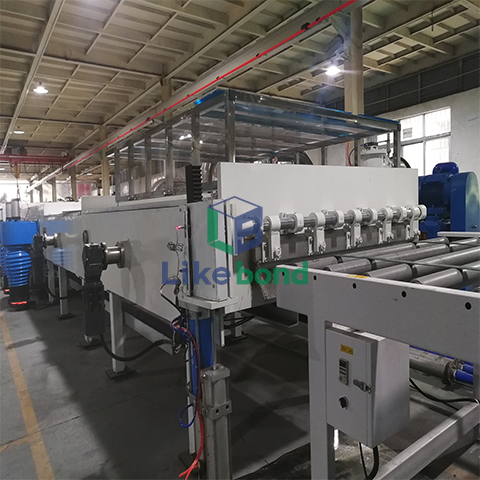
Acrylic mirrors are lighter than glass mirrors, making them easier to transport, handle, and install. Their shatter-resistant construction also reduces the risks associated with broken glass.
However, acrylic surfaces can scratch more easily than glass. They should be handled carefully and cleaned with soft materials.
Acrylic mirrors can be customized in different colors, thicknesses, sizes, and shapes. Likebond’s product range includes self-adhesive, paint-backed, double-sided, two-way, colored, patterned, and hardened acrylic mirrors.
This flexibility makes them suitable for decorative panels, logos, signs, displays, and custom interior projects.
Self-adhesive acrylic mirrors can be mounted directly on a clean, smooth, dry, and flat surface. Their lower weight also makes installation easier than heavy glass mirrors.
Because acrylic is flexible, an uneven mounting surface may cause visible distortion. Larger sheets may require additional support or a suitable bonding system.
Gold, rose gold, red, blue, green, purple, and other finishes provide more creative options than conventional silver mirrors. These colors can support different interior designs and brand styles.
Likebond specializes in advertising and decorative materials. Its acrylic mirrors are mainly designed for indoor applications.
Interior decoration: Decorative walls, ceilings, partitions, and geometric mirror arrangements.
Advertising and signage: Reflective letters, logos, directional signs, and promotional graphics.
Retail displays: Display backgrounds, fitting mirrors, and visual merchandising.
Restaurants and cafés: Decorative walls and partitions that reflect indoor lighting.
Exhibitions: Lightweight mirror panels for temporary displays and exhibition structures.
Children’s products: Shatter-resistant reflective components where glass breakage may create a safety risk.
Acrylic mirrors are generally not recommended for outdoor use.
Although the PMMA substrate has certain weather-resistant properties, an acrylic mirror also contains a reflective coating, backing, adhesive, and protective layers. Prolonged exposure to direct sunlight, rain, moisture, and temperature changes may damage these layers.
Outdoor exposure may lead to fading, peeling, oxidation, reduced adhesion, or changes in the mirror’s reflective appearance. Likebond also recommends avoiding prolonged exposure to strong direct light because colored acrylic mirrors may gradually fade.
For these reasons, acrylic mirrors are better suited to indoor decoration, advertising displays, retail spaces, exhibitions, restaurants, cafés, and other protected environments.
If a project requires an outdoor reflective material, buyers should consult the manufacturer about a more suitable product instead of assuming that a standard acrylic mirror can withstand long-term exterior exposure.
Correct installation and cleaning can help maintain the appearance of an acrylic mirror.
Install the mirror on a clean, smooth, dry, and flat surface.
Keep the protective film in place during processing and installation.
Use a soft microfiber cloth for cleaning.
Use clean water or a cleaner suitable for acrylic.
Avoid abrasive powders, rough brushes, and sharp tools.
Do not use strong solvents unless their compatibility is confirmed.
Keep moisture away from the backing and cut edges.
Avoid prolonged exposure to direct sunlight.
A flat mounting surface is particularly important because bending or uneven support can distort the reflection.
Acrylic mirrors are produced by selecting and cleaning a PMMA sheet, applying a reflective coating, adding a paint or adhesive backing, cutting the sheet, applying protective film, and completing quality inspection.
Their low weight, shatter resistance, color options, and ease of customization make them suitable for interior decoration, advertising, signage, retail displays, exhibitions, restaurants, and children’s products.
Likebond specializes in advertising and decorative materials. Its gold self-adhesive acrylic mirror is available in customizable sizes, thicknesses, colors, and adhesive options.
Acrylic mirrors are intended mainly for indoor use and are generally not recommended for outdoor installation. Choosing the correct backing, thickness, mounting surface, and processing method will help produce a stable reflection and a durable decorative result.
Their service life depends on the product structure, installation environment, cleaning method, and exposure to sunlight or moisture. Properly installed indoor acrylic mirrors can provide long-term decorative use.
Acrylic mirrors are generally not recommended for outdoor use. Prolonged exposure to sunlight, rain, moisture, and temperature changes may damage the reflective coating, backing, or adhesive and affect their appearance.
Acrylic mirrors can be cut with suitable equipment, but incorrect tools or settings may damage the surface and reflective layer. Professional cutting is recommended for complex shapes, holes, and clean edges.
Self-adhesive acrylic mirrors should be installed on a clean, dry, smooth, and flat surface. The protective film on the visible side should be removed only after installation is complete.
Yes. Likebond provides customized sizes, thicknesses, colors, shapes, backing options, drilling, and cutting according to customer requirements.


