

Views: 0 Author: Site Editor Publish Time: 2025-12-16 Origin: Site


When buyers search for an acrylic mirror supplier, the question is often not about price alone, but about consistency, material integrity, and whether the product performs as expected in real projects. At Likebond, Likebond acrylic mirror products are developed with a clear focus on stable quality, practical processing performance, and long-term usability. Rather than positioning the product as an exaggerated premium solution, Likebond aims to deliver reliable acrylic mirror sheets that meet the expectations of professional users in signage, decoration, furniture, and display industries.
This article explains how Likebond acrylic mirror sheets are made, what materials are used, how the manufacturing process influences performance, and how customers evaluate the product after actual use. The discussion is based on real production practices and product characteristics rather than marketing claims.
The quality of any acrylic mirror begins with its base material. Likebond acrylic mirror sheets are produced using PMMA (polymethyl methacrylate) extruded acrylic sheets. PMMA is widely recognized in the plastics industry for its optical clarity, dimensional stability, and resistance to weathering. As an acrylic mirror substrate, PMMA provides a smooth and uniform surface that is suitable for reflective coating.

Extruded acrylic mirror sheet production allows for consistent thickness control, which is especially important for large-format products such as acrylic mirror sheet 4×8. Uniform thickness reduces internal stress and improves flatness, making the sheets easier to process during cutting, laser engraving, or CNC machining. While cast acrylic has advantages in some applications, extruded PMMA offers better efficiency and cost control for bulk supply, which aligns with Likebond’s focus on stable batch quality.

The PMMA material used for Likebond acrylic mirror is selected to balance clarity and processability. The base acrylic sheet maintains good light transmission before metallization, which directly affects the final mirror image quality. Impurities and surface defects are strictly controlled at this stage because even minor inconsistencies can be amplified after the reflective layer is applied.
The production of an acrylic mirror sheet involves more than simply adding a reflective layer to plastic. Likebond follows a structured manufacturing process designed to protect the mirror surface while ensuring strong adhesion and durability.
After the PMMA extruded acrylic sheet is formed and inspected, the surface undergoes cleaning and preparation to remove static, dust, and microscopic contaminants. This step is essential for achieving a uniform reflective coating. The mirror effect itself is created through a vacuum metallization process, commonly referred to as electroplating in industry discussions. In this stage, a thin and even layer of metal, typically aluminum, is deposited onto the acrylic surface under controlled conditions.

Once the reflective layer is applied, the back of the acrylic mirror sheet is protected with a coating system. Likebond uses a multi-layer backing paint process rather than a single thin coat. The backing paint serves several functions: it protects the reflective layer from oxidation, improves scratch resistance during handling, and enhances overall durability. The curing process of the backing paint is carefully controlled to ensure strong adhesion without introducing stress that could affect flatness.

Throughout the manufacturing process, attention is paid to consistency rather than speed. While high output is important, Likebond prioritizes repeatable quality so that customers receive acrylic mirror sheets with similar performance from one order to the next.
One of the most direct indicators of acrylic mirror quality is the clarity and accuracy of the reflected image. Likebond acrylic mirror products are designed to provide a clear and stable reflection suitable for decorative and commercial use. Compared with lower-grade plastic mirrors, the image distortion is minimized due to controlled sheet thickness and uniform metallization.
Likebond acrylic mirror sheets are not positioned as optical-grade mirrors for precision instruments, but within their intended applications, such as retail displays, wall decoration, furniture panels, and advertising signage, the reflection quality meets professional expectations. The surface gloss is consistent, and color neutrality is maintained across standard silver, gold, and tinted mirror finishes.
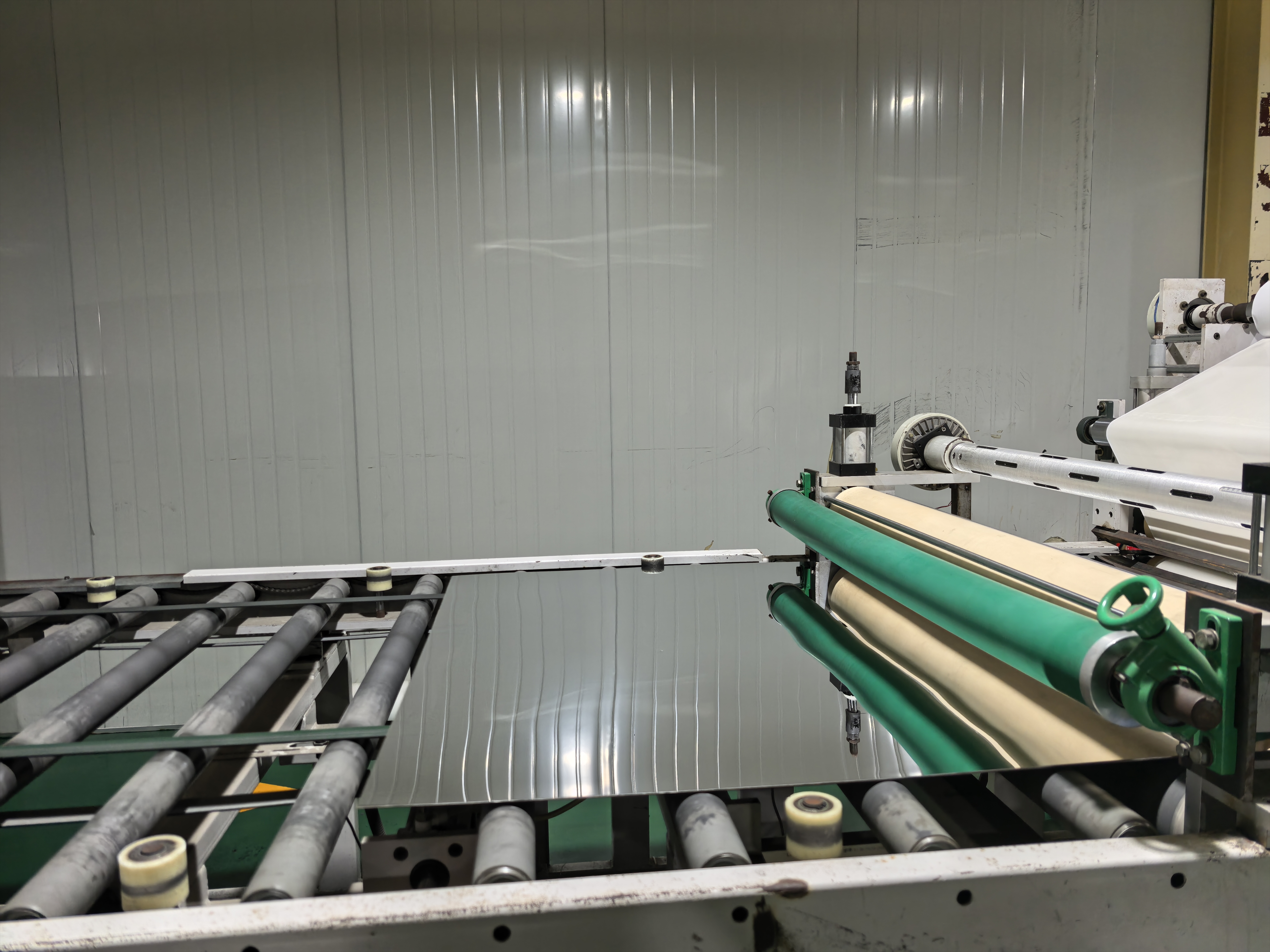
For large formats like acrylic mirror sheet 4×8, maintaining consistent reflection across the entire surface is challenging. Likebond addresses this by controlling sheet tension during metallization and backing processes. As a result, customers typically report even reflection without visible waves or localized distortion when the sheets are properly installed.
The backing paint plays a crucial role in determining how well an acrylic mirror performs over time. Likebond uses backing coatings formulated to resist peeling, cracking, and abrasion during normal handling and processing. This is especially important for customers who cut, drill, or laser-process acrylic mirror sheets after delivery.
During laser cutting, localized heat can stress the backing layer. Likebond acrylic mirror sheets are engineered so that the backing paint remains intact under recommended laser parameters. This reduces flaking along cut edges and helps maintain a clean finish. While any acrylic mirror requires appropriate processing settings, the backing strength contributes to higher yield rates during fabrication.

In indoor applications, the backing paint also acts as a barrier against moisture and environmental exposure. Although acrylic mirrors are primarily intended for interior use, the backing system helps extend service life in controlled environments such as shopping malls, offices, and exhibition spaces.
Acrylic mirror sheets are often selected for projects that involve custom shapes and detailed designs. Likebond acrylic mirror products are compatible with common fabrication methods including laser cutting, CNC routing, and mechanical sawing. The extruded PMMA base ensures predictable melting behavior during laser cutting, which is important for achieving smooth edges.
Customers who use Likebond acrylic mirror sheets in signage and display manufacturing often value the balance between rigidity and flexibility. The sheets maintain enough stiffness to stay flat during installation while remaining light enough for easy handling. This combination reduces installation time and minimizes the risk of breakage compared with traditional glass mirrors.

Protective film applied to the mirror surface helps prevent scratches during fabrication. Likebond selects protective films that adhere securely without leaving residue, ensuring that the mirror surface remains clean once the film is removed at the final stage of installation.
Packaging quality directly affects the condition of acrylic mirror sheets upon arrival. Likebond adopts a layered packaging approach designed for international shipping. Each acrylic mirror sheet is first wrapped with high-quality kraft paper to protect the surface and edges. This inner packaging reduces friction and absorbs minor impacts during transport.
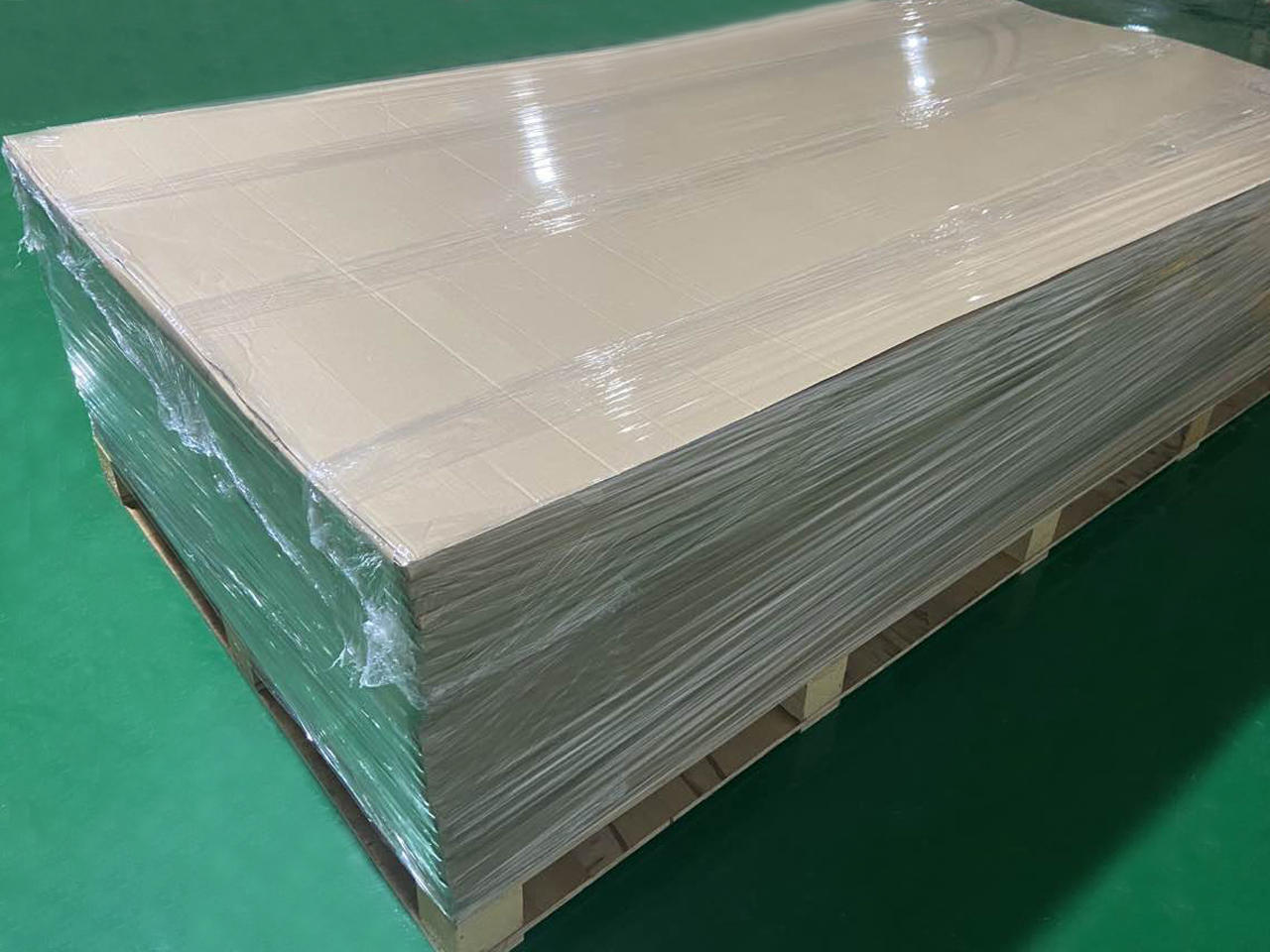
For bulk orders and large-format sheets such as acrylic mirror sheet 4×8, Likebond uses solid wooden crates as outer packaging. The wooden crates provide structural protection and help prevent bending or corner damage. This packaging method is especially important for overseas shipments where goods may pass through multiple handling stages.

Customers often note that proper packaging reduces waste and replacement costs. By focusing on packaging quality, Likebond supports stable delivery outcomes rather than relying solely on post-shipment claims.
Feedback from customers using Likebond acrylic mirror products tends to focus on consistency and reliability rather than dramatic performance claims. Many buyers appreciate that the acrylic mirror sheets they receive match previous orders in color, thickness, and reflective quality. This consistency is particularly important for projects that require repeat orders or phased installations.
In signage and display applications, customers report satisfactory mirror image quality and good processing behavior. Furniture and interior decoration clients often highlight the lightweight nature of the acrylic mirror compared with glass, which simplifies installation and reduces structural load.

Some customers also note that Likebond acrylic mirror sheets strike a practical balance between quality and cost. While they may not be positioned as the highest-end specialty mirror products, they meet the functional requirements of most commercial and decorative projects without unnecessary complexity.
Likebond does not aim to redefine what an acrylic mirror is, but rather to supply a dependable acrylic mirror sheet suitable for real-world use. By using PMMA extruded acrylic, applying controlled metallization, strengthening the backing paint, and improving packaging standards, Likebond focuses on areas that directly affect customer experience.
For buyers sourcing acrylic mirror sheets for signage, decoration, or display projects, the quality of Likebond acrylic mirror products can be understood as stable, honest, and application-oriented. The product is designed to perform as expected when processed and installed according to standard industry practices.
In this sense, the value of Likebond acrylic mirror lies not in exaggerated claims, but in predictable performance, repeatable quality, and transparent manufacturing practices. This approach aligns with the expectations of professional buyers who prioritize reliability over novelty.


