

Views: 0 Author: Site Editor Publish Time: 2026-01-05 Origin: Site


In the global market, acrylic mirror sheets are often treated as a standardized product. Buyers compare thickness, color, size, and price, assuming that an acrylic mirror is simply an acrylic mirror. Yet manufacturers and experienced project buyers know this assumption leads to frequent quality disputes, unexpected performance issues, and higher long-term costs. The core reason lies beneath the reflective surface: not all acrylic mirror sheets are made from the same PMMA, and that difference directly shapes durability, optical clarity, and application suitability.
At Likebond, we manufacture and supply acrylic mirror sheets for advertising displays, architectural decoration, retail fit-outs, and industrial fabrication. Through years of production and export experience, one fact remains consistent across markets: PMMA quality determines whether an acrylic mirror performs reliably or becomes a short-term compromise.
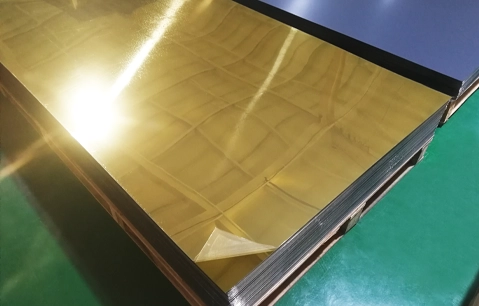
PMMA, commonly known as acrylic, exists in multiple grades, formulations, and production routes. In theory, all mirror acrylic sheets use PMMA as the base substrate. In practice, the molecular structure, purity level, and polymerization process vary widely between manufacturers. These variations influence how an acrylic mirror sheet reacts to cutting, heat forming, coating adhesion, and long-term exposure to light.

Some acrylic mirror sheets are produced using virgin PMMA derived from stable monomers, resulting in consistent transparency and predictable mechanical behavior. Others rely on recycled or blended PMMA to reduce costs, which often introduces internal stress, micro-impurities, and uneven density. On the surface, both may appear similar during initial inspection, especially when supplied with a mirrored acrylic coating. Over time, the differences become visible through warping, coating delamination, or surface distortion.
This distinction matters significantly for large-format applications such as acrylic mirror sheet 4x8 panels used in signage and interior wall installations, where material stability is critical.
Reflection accuracy is one of the main reasons buyers choose acrylic sheet mirror products over traditional glass. A high-quality acrylic mirror provides a smooth, distortion-free reflection while remaining lightweight and impact-resistant. That performance relies heavily on the flatness and internal consistency of the PMMA sheet before the mirror coating is applied.
Lower-grade PMMA often exhibits uneven shrinkage during production. When reflective coatings are applied to such substrates, even minor internal stress can cause visual ripples, especially under directional lighting commonly used in retail and exhibition environments. In contrast, mirror acrylic sheets made from stable PMMA maintain a uniform reflective plane, delivering consistent visual results across the entire surface.

In real projects, this difference becomes obvious in retail chain rollouts. Several clients sourcing mirrored acrylic panels for store refurbishment initially selected lower-cost materials. After installation, lighting reflections appeared distorted on wall-mounted mirror acrylic sheet panels, forcing costly replacements. Switching to higher-grade PMMA-based acrylic mirror sheets resolved the issue without changing design specifications.
Durability is often misunderstood when comparing acrylic mirror products. While PMMA itself is impact-resistant compared to glass, not all acrylic mirror sheets respond equally to environmental stress. Temperature fluctuations, humidity, and prolonged exposure to artificial lighting can accelerate material fatigue in inferior PMMA.
Advertising displays provide a clear example. Acrylic mirror sheet signage installed in shopping malls or transportation hubs experiences constant light exposure and occasional temperature changes. Low-grade PMMA substrates may gradually yellow, lose surface rigidity, or cause mirror coatings to crack microscopically. These defects rarely appear immediately but become visible after months of use.

Manufacturers using controlled PMMA formulations produce mirrored acrylic sheets that retain optical clarity and coating adhesion over longer service periods. For buyers focused on lifecycle cost rather than upfront pricing, PMMA quality becomes a decisive factor.
Fabricators often recognize PMMA quality long before end users do. Cutting, laser engraving, CNC routing, and thermoforming expose the internal properties of acrylic mirror sheet materials. Sheets made from inconsistent PMMA tend to chip during cutting, melt unevenly under laser processing, or develop stress whitening after bending.
In contrast, well-formulated acrylic sheet mirror products allow clean edges, predictable bending radii, and stable surface performance after forming. This processing reliability is particularly important for custom advertising letters, decorative panels, and OEM components where precision matters.

At Acrylic-Supplier.com, our production experience shows that mirror acrylic sheet returns and complaints are far more likely to originate from processing-stage failures than from final installation. PMMA consistency minimizes those risks and improves fabrication efficiency.
Large-format acrylic mirror sheet 4x8 sizes are widely used in architectural decoration, fitness studios, and commercial interiors. These applications magnify PMMA differences because even slight material instability becomes noticeable over a large surface area.
Acrylic mirror sheets produced with uneven PMMA density may appear flat when stacked but gradually bow once installed vertically. This phenomenon is not caused by installation error but by internal material stress. High-quality PMMA reduces this risk by maintaining structural balance throughout the sheet.

For projects requiring large mirrored acrylic surfaces, especially wall-mounted installations, PMMA selection should be treated as a structural decision rather than a cosmetic one.
The reflective layer on an acrylic mirror is only as reliable as the PMMA beneath it. Mirror acrylic sheets typically use vacuum metallization or chemical silvering, followed by protective coatings. If the PMMA surface chemistry is unstable or contaminated, coating adhesion weakens.
This issue often appears in humid environments where moisture penetration exploits microscopic bonding failures. Acrylic mirror sheets made from lower-grade PMMA may show peeling or spotting on the reflective layer after prolonged use. High-quality PMMA substrates provide better bonding surfaces, extending mirror lifespan even under challenging conditions.

For commercial buyers sourcing acrylic mirror products for export markets with varying climates, substrate quality directly impacts after-sales risk.
Global buyers are becoming more informed. Instead of asking only about thickness and color, procurement teams increasingly inquire about PMMA origin, production methods, and quality control. This shift reflects real market demand rather than marketing trends.
In competitive industries such as retail branding and architectural decoration, material failure translates into brand damage. Acrylic mirror sheets that maintain performance over time support consistent visual identity, which is why many established brands now specify PMMA grade requirements in their sourcing documents.
As a manufacturer, we see growing interest in documentation, testing standards, and application-specific recommendations for mirror acrylic sheet products.
Selecting the right acrylic mirror sheet is not about choosing the highest price or the lowest. It requires matching PMMA quality to real-world application demands. Decorative panels for short-term exhibitions may tolerate different material specifications than permanent installations in public spaces.
Understanding that not all acrylic mirror sheets use the same PMMA allows buyers to make informed decisions. This awareness reduces replacement cycles, improves project outcomes, and supports long-term cost efficiency.
At Acrylic-Supplier.com, our approach focuses on aligning PMMA formulation, coating technology, and sheet size options with practical use scenarios. Whether supplying acrylic mirror sheet 4x8 panels for architectural interiors or customized acrylic sheet mirror solutions for advertising displays, material transparency remains essential.
The acrylic mirror industry continues to evolve, but one principle remains unchanged: the base material determines the final product’s reliability. PMMA quality influences reflection accuracy, durability, processing behavior, and coating performance. Treating acrylic mirror sheets as interchangeable commodities ignores these realities.
For buyers seeking mirrored acrylic solutions that perform consistently beyond initial installation, understanding PMMA differences is no longer optional. It is the foundation of responsible sourcing and successful project delivery.


