

Views: 0 Author: Site Editor Publish Time: 2025-10-09 Origin: Site
Children naturally enjoy exploring reflections. From dress-up games to emotional learning and self-recognition, mirrors are an important part of early childhood development. However, traditional glass mirrors can break easily and create sharp edges, which raises safety concerns in playrooms, nurseries, and daycare centers.
Because of this, many educational toy manufacturers and preschool equipment suppliers are now choosing acrylic toy mirrors as a safer alternative.
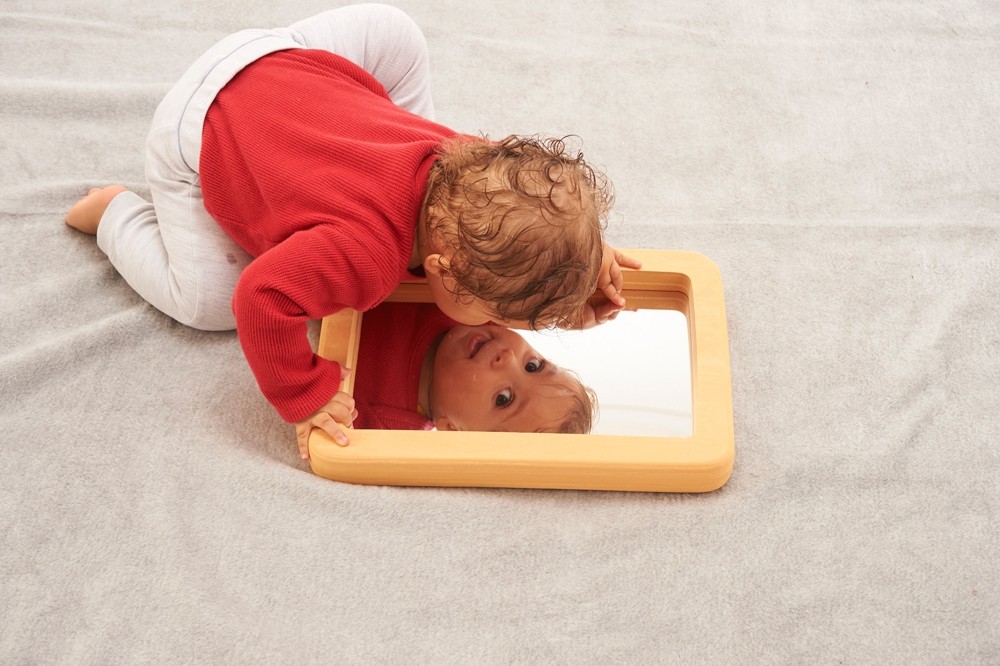
From a material perspective, acrylic mirror sheets are significantly lighter than glass and have strong impact resistance. In normal indoor use, acrylic mirrors are far less likely to shatter compared to traditional mirrors. Even under strong impact, acrylic typically cracks rather than breaking into dangerous sharp fragments.
In children’s toy applications, manufacturers usually select acrylic mirror thicknesses between 2mm and 3mm, depending on product size and mounting method. Thicker sheets are often used in wall-mounted play panels or daycare installations to improve rigidity and long-term durability.
Another important factor is edge finishing. In toy mirror production, polished or rounded edges are commonly used to reduce potential injury risks during handling or installation.
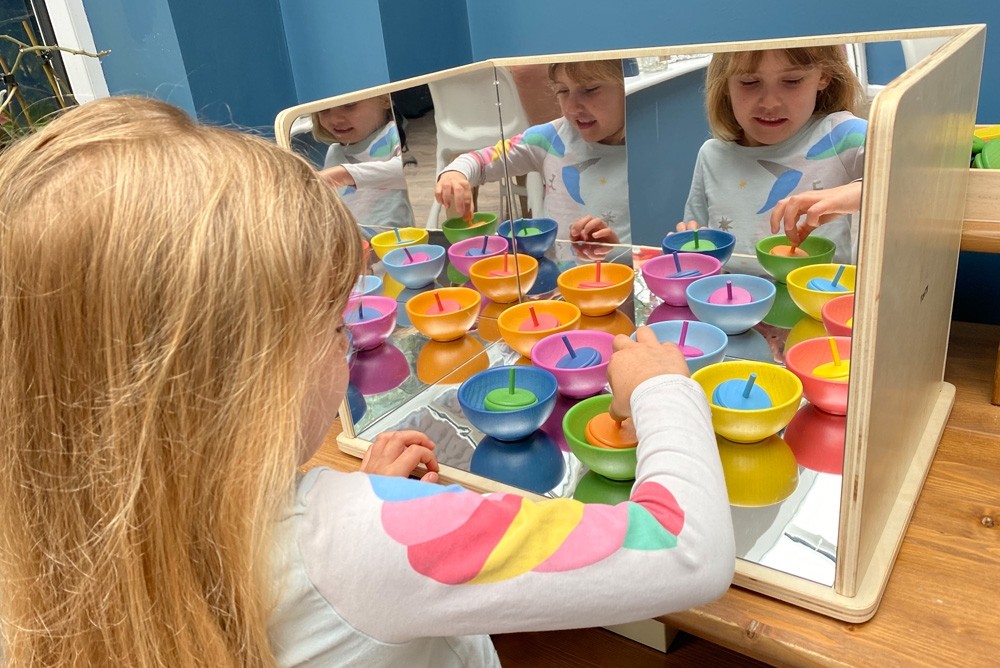
When comparing mirror materials for kids’ environments, safety and durability are usually more important than absolute reflection clarity.
Typical differences include:
Weight
Acrylic mirrors are about half the weight of glass mirrors of the same size, which makes installation easier and safer for wall-mounted toys or play panels.
Impact Resistance
Acrylic has much higher impact resistance, which is why it is widely used in safety-related applications such as protective panels and display covers.
Maintenance and Cleaning
Acrylic mirrors can be cleaned with mild soap and water. Many daycare centers prefer acrylic because broken glass replacement risks are eliminated.
While glass mirrors usually have slightly higher reflection clarity, acrylic mirrors provide more than sufficient reflection quality for children’s learning and play purposes.

Today, acrylic mirrors are widely integrated into:
Sensory play panels
Montessori learning toys
Kids dress-up stations
Pretend makeup toys
Emotional recognition learning tools
Daycare wall safety mirrors
Frames are often made from plastic, foam, or wood to further improve safety and product aesthetics.
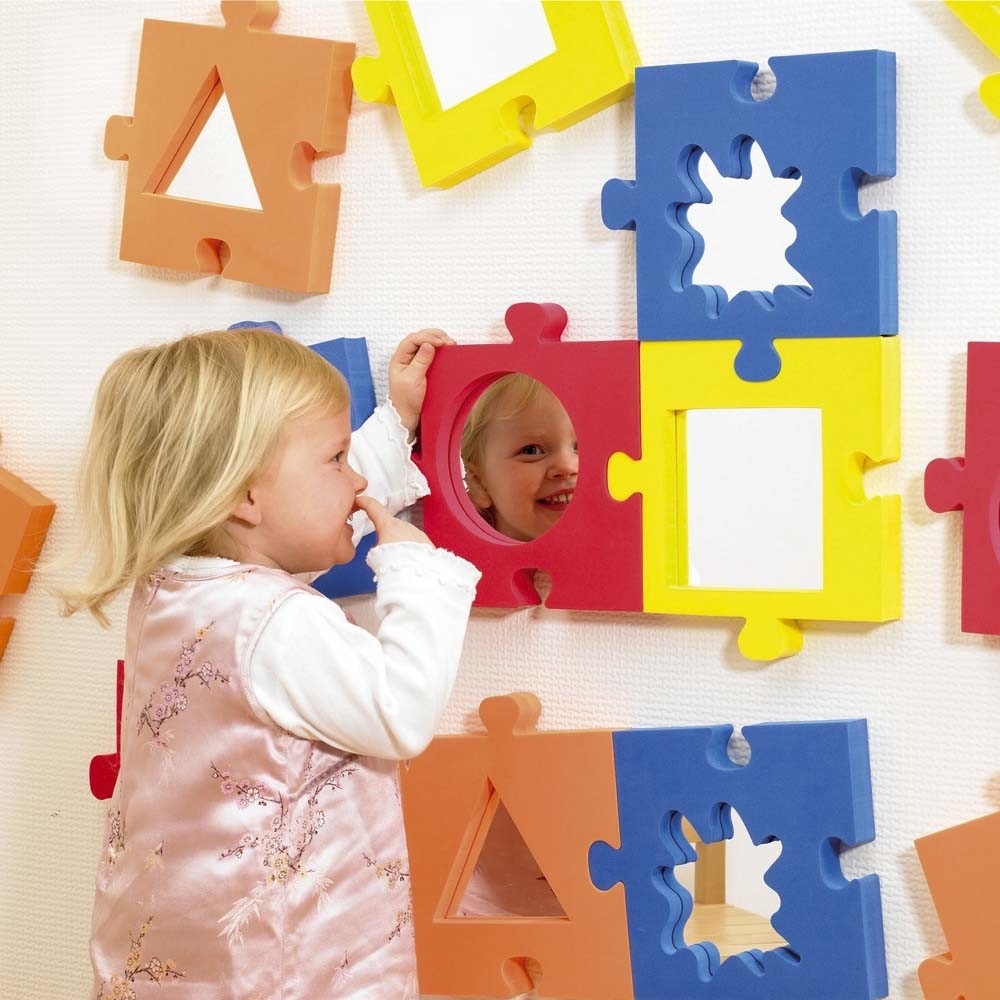
In acrylic mirror production, several factors are typically controlled to improve product safety and usability:
Smooth edge polishing after cutting
Protective film application during transport and assembly
Consistent mirror coating adhesion
Surface scratch resistance during normal indoor use
For toy and educational use, many buyers also check whether mirror materials meet common toy safety regulations such as EN71 (Europe) or CPSIA related material safety requirements (USA), depending on the final product category.
When selecting acrylic mirrors for children’s products, buyers usually focus on:
Stable sheet thickness tolerance
Consistent reflection coating quality
Edge finishing capability
Batch production consistency
Custom cutting and shaping support
For toy manufacturers and daycare equipment brands, working directly with an acrylic sheet supplier can help maintain consistent quality across large production runs.
Acrylic toy mirrors provide a practical balance between safety, durability, and functionality. While no material is completely indestructible, acrylic mirrors significantly reduce the risks associated with broken glass in children’s environments.
For educational toys, daycare installations, and home play areas, acrylic mirrors remain one of the most widely used mirror materials because they allow children to explore reflection, creativity, and self-recognition in a safer way.


