

Views: 0 Author: Site Editor Publish Time: 2026-01-06 Origin: Site


Acrylic mirrors are widely used in advertising displays, interior decoration, retail fixtures, and architectural projects where weight, safety, and flexibility matter. Compared with glass, an acrylic mirror offers excellent impact resistance and easier processing, especially when supplied as a full-size acrylic mirror sheet 4x8 for fabrication. Yet one issue continues to surface across different markets and applications: backing paint failure. When the paint layer on the back of an acrylic mirror begins to peel, bubble, or crack, the mirror’s appearance and service life are immediately compromised.

Understanding why backing paint fails on some acrylic mirrors requires looking beyond surface-level explanations. The causes often lie in material selection, manufacturing methods, coating chemistry, processing habits, and real-world installation environments. By examining these factors closely, buyers and fabricators can avoid costly mistakes and choose mirrored acrylic mirrors that perform reliably over time.
Backing paint is not a decorative afterthought. On an acrylic mirror sheet, the reflective layer—typically aluminum or silver—is extremely thin and sensitive. The backing paint acts as both protection and structural support, sealing the reflective coating from moisture, oxygen, and mechanical damage. When the acrylic mirror paint fails, the reflective layer becomes vulnerable, leading to visible discoloration, loss of reflectivity, and eventual mirror degradation.

In mirror acrylic sheet production, the adhesion between the paint, reflective layer, and PMMA substrate must be carefully controlled. Even a visually perfect acrylic mirror can fail prematurely if the backing system is poorly matched to the substrate or applied under unstable conditions.
One of the most common reasons backing paint fails on an acrylic mirror is insufficient adhesion to the PMMA surface. Acrylic has a naturally smooth, low-energy surface, which makes paint bonding more difficult than on porous materials. If surface treatment is inadequate, the acrylic mirror paint may initially appear solid but gradually lose grip under stress.
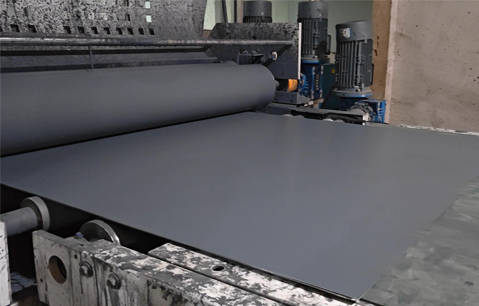
This problem is often seen in lower-grade mirror acrylic sheet products where surface preparation is rushed or inconsistent. Without proper cleaning, static removal, or surface activation, microscopic contaminants remain trapped between the reflective layer and the backing paint. Over time, temperature changes or vibration can cause the paint to separate, especially along cut edges.
Not all paints are suitable for use on acrylic mirror sheets. Some manufacturers use generic industrial coatings that were originally developed for metal or glass. While these paints may adhere temporarily, they often lack long-term compatibility with PMMA.
Chemical mismatch becomes more obvious when acrylic mirror sheets are exposed to heat or UV light. As the acrylic substrate expands and contracts, rigid or brittle paints cannot move at the same rate. This mismatch creates internal stress that gradually weakens adhesion, leading to cracking or peeling. In mirrored acrylic mirrors used for signage or shopfitting, this type of failure is frequently mistaken for installation error when the root cause lies in paint chemistry.
Acrylic expands more than glass under temperature changes. This characteristic is well known among experienced fabricators, yet it is still underestimated in mirror applications. When a mirror acrylic sheet is installed in an environment with large temperature swings, such as storefronts, exhibition halls, or semi-outdoor displays, thermal movement becomes a major factor.
If the backing paint layer lacks flexibility, it cannot accommodate the expansion of the acrylic mirror sheet 4x8 or smaller cut panels. Stress builds up silently behind the reflective layer until visible damage appears. In some cases, the paint lifts cleanly from the mirror, while in others it fractures into fine cracks that allow moisture to penetrate.

Cutting and fabrication play a critical role in backing paint durability. Once an acrylic mirror sheet is cut into custom shapes, the edges become the most vulnerable area. Moisture can enter through unsealed edges, especially in humid environments or during cleaning.
When water reaches the interface between the acrylic mirror paint and the reflective layer, adhesion deteriorates rapidly. This issue is common in applications such as bathroom décor, gym mirrors, or retail fixtures that undergo frequent cleaning. Even high-quality mirrored acrylic mirrors can fail prematurely if edges are left exposed without proper sealing.

Not all acrylic mirrors are manufactured using the same backing process. Some products rely on thin, multi-pass spray coatings that focus on appearance rather than durability. These thin layers may reduce cost but often lack the mechanical strength needed for long-term use.
Industrial-grade acrylic mirror sheets use mechanically applied or controlled-thickness backing systems designed to provide uniform coverage and stronger adhesion. This difference becomes particularly noticeable in large-format acrylic mirror sheet 4x8 panels used in commercial projects, where uneven backing thickness can result in localized stress points and early failure.
Ultraviolet radiation affects both acrylic and paint over time. While PMMA itself has good UV resistance, some backing paint formulations degrade under prolonged exposure. As the paint ages, it may become chalky or brittle, reducing its ability to protect the reflective layer.
This form of failure is often observed in mirrored acrylic mirrors used near windows, skylights, or illuminated signage. The damage usually starts subtly, with slight color changes or edge lifting, before spreading across the panel. Selecting UV-stable acrylic mirror paint is essential for applications with sustained light exposure.
In retail display projects, acrylic mirrors are often chosen for their lightweight and safety advantages. Problems arise when installers treat mirror acrylic sheets the same way they would glass mirrors. Over-tightened fixtures, rigid mounting frames, or incompatible adhesives can all contribute to backing paint failure.
Advertising signage offers another clear example. Large acrylic mirror sheet 4x8 panels mounted outdoors or in semi-enclosed spaces experience wind load, heat, and humidity simultaneously. When the backing system is not engineered for these conditions, peeling paint is almost inevitable. These failures are not defects in acrylic itself but consequences of mismatched production and application expectations.

The durability of backing paint on an acrylic mirror is ultimately determined during manufacturing. Consistent surface preparation, controlled coating environments, and compatible paint systems form the foundation of a reliable product. Manufacturers with automated production lines and strict quality control are better equipped to deliver mirror acrylic sheets that withstand real-world conditions.

At Likebond, the focus is on producing acrylic mirror sheets with stable backing systems designed for commercial and architectural use. By prioritizing mechanical coating processes and material compatibility, the risk of backing paint failure can be significantly reduced, even in demanding applications.
Backing paint failure is rarely caused by a single factor. It is the result of interactions between material properties, production methods, fabrication practices, and environmental exposure. Buyers who understand these relationships are better positioned to select mirrored acrylic mirrors that perform as expected.
When evaluating an acrylic mirror sheet, attention should extend beyond surface clarity and thickness. Questions about backing paint formulation, coating method, and intended application environment are equally important. A well-made acrylic mirror is not just reflective on day one but remains stable throughout its service life.
By recognizing why backing paint fails on some acrylic mirrors, project owners and fabricators can make informed decisions, reduce maintenance issues, and achieve consistent visual performance across advertising, retail, and architectural installations.


