

Views: 0 Author: Site Editor Publish Time: 2025-12-27 Origin: Site


In global sourcing conversations, “plastic mirror” is often treated as a single category. Buyers compare prices, thickness, and sheet size, then assume performance differences are minimal. In reality, acrylic mirror is only one type within a much broader group of plastic mirror materials, and confusing them at the specification stage leads to many of the problems reported after installation. Projects that fail are often not caused by acrylic mirror itself, but by incorrect assumptions about what acrylic mirror actually is — and how it differs from other plastic mirror sheets on the market.

As a source manufacturer supplying acrylic mirror sheets from China, we regularly see buyers revise their material choice after understanding how these products behave in real environments rather than in samples. The distinction matters most when projects move beyond small decorative uses and into full-wall, safety-critical, or long-term applications.
Plastic mirror is a commercial term, not a technical one. It is commonly used to describe any reflective sheet made from a polymer substrate instead of glass. This umbrella label can include acrylic mirror, PET mirror, PVC mirror, polystyrene mirror, and composite laminated products. Each behaves differently in terms of rigidity, optical clarity, surface hardness, and aging performance.
Acrylic mirror is produced using PMMA as the base material, followed by a reflective coating and protective backing. This structure is fundamentally different from lower-cost plastic mirror sheets that rely on softer polymers. When buyers request “plastic mirror sheet” without specifying acrylic mirror, suppliers may quote alternatives that meet the size and thickness requirements but not the performance expectations.This is one of the most common sources of confusion during bulk purchasing.

Acrylic mirror is often selected because it provides high reflectivity while remaining lighter and safer than glass. However, not all plastic mirror products deliver the same optical result. Acrylic mirror sheets are cast or extruded with optical-grade PMMA, which allows mirrored acrylic mirrors to achieve clear, undistorted reflections when installed correctly.
Other plastic mirror sheets frequently exhibit surface waviness or micro-distortion that becomes visible only after installation over large areas. Samples may appear acceptable under controlled lighting, but full-wall applications quickly expose inconsistencies. This is especially noticeable when comparing acrylic mirror sheet 4×8 panels against thinner PET or PVC mirrors in continuous installations.Buyers often assume distortion is an installation issue when, in fact, it originates from the base material.
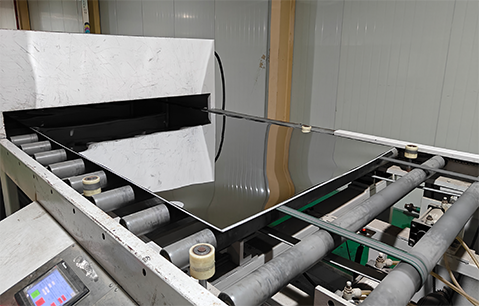
Another common misunderstanding involves thickness equivalence. A 3mm acrylic mirror sheet does not behave the same way as a 3mm PET mirror sheet or PVC mirror. Acrylic has a higher modulus of rigidity, allowing larger sheet sizes to remain flatter under their own weight.

In projects requiring large-format panels such as acrylic mirror sheet 4×8, substituting acrylic mirror with other plastic mirror materials increases the risk of bowing and edge deformation. This difference becomes critical in wall-mounted applications, dance studios, gyms, and retail environments where visual alignment matters.

The confusion arises when buyers compare thickness numbers without considering material stiffness.
Plastic mirrors are frequently grouped together in terms of surface durability, yet acrylic mirror has distinct scratch resistance compared to softer plastic mirror alternatives. While acrylic mirror is still more scratch-sensitive than glass, its surface hardness is significantly higher than that of PET or PVC mirrors.
Buyers who select low-cost plastic mirror sheets for high-contact environments often experience premature surface damage. Cleaning marks, fine scratches, and haze appear within months. These issues are then incorrectly attributed to “plastic mirrors in general,” when acrylic mirror would have performed differently under the same conditions.Understanding surface hardness differences is essential when specifying mirrors for public or commercial spaces.

One reason acrylic mirror is widely used in safety-sensitive environments is its predictable break behavior. Acrylic mirror does not shatter like glass, and it maintains structural integrity better than many other plastic mirrors that can crack or crease.
In children’s facilities, gyms, and mobile spaces, acrylic mirror sheets are frequently chosen because they meet safety requirements without introducing additional framing or protective layers. Other plastic mirror materials may technically be non-shattering but lack the impact resistance consistency required for regulated projects.This distinction explains why acrylic mirror appears in specifications where “plastic mirror” would otherwise seem acceptable.

Buyers often judge plastic mirrors based on initial appearance, overlooking how materials age. Acrylic mirror, when manufactured with stable PMMA and proper backing coatings, maintains clarity and reflectivity for many years in indoor environments.
Lower-grade plastic mirror sheets are more prone to yellowing, surface embrittlement, and reflective layer degradation. These changes usually occur gradually and become noticeable only after extended exposure to light, heat, or humidity. When this happens, the material is often blamed generically as “acrylic,” even if acrylic mirror was never used.
This confusion has contributed to misconceptions about the lifespan of acrylic mirror products.
Acrylic mirror reacts differently to installation stress compared to other plastic mirror materials. Its thermal expansion rate is predictable, allowing installers to accommodate movement through proper spacing and adhesive selection. Softer plastic mirror sheets are more sensitive to uneven substrates and adhesive shrinkage, leading to rippling or telegraphing.

When buyers substitute acrylic mirror with alternative plastic mirrors during value engineering, installation methods often remain unchanged. This mismatch increases failure risk. Acrylic mirror sheets are designed to work with specific mounting conditions that are not universally compatible with other plastic mirror materials.
At first glance, acrylic mirror typically costs more than other plastic mirror sheets. This leads some buyers to assume they are paying a premium for branding rather than performance. In practice, acrylic mirror often reduces total project cost by lowering replacement rates, minimizing installation corrections, and extending service life.
Plastic mirror alternatives may reduce initial material cost but introduce hidden expenses through increased labor, visual defects, or early replacement. These trade-offs become evident in large-area applications, particularly when using acrylic mirror sheet 4×8 panels where consistency matters.

Understanding total cost rather than unit price is critical for accurate material comparison.
The root of the confusion lies in how plastic mirrors are marketed and quoted. Many suppliers group acrylic mirror together with other plastic mirror products without clarifying material differences. Buyers unfamiliar with polymer behavior rely on thickness, size, and price as decision factors, assuming functional equivalence.
As a result, acrylic mirror is sometimes judged unfairly based on the performance of non-acrylic plastic mirror sheets. This misunderstanding persists until projects fail or specifications are revised.
Clear differentiation at the sourcing stage prevents most of these issues.
Acrylic mirror is not the correct solution for every project, but it is distinct from other plastic mirrors in ways that matter. Its optical clarity, structural stability, predictable aging, and safety performance place it in a different category from generic plastic mirror sheets.
Buyers who understand these differences are better equipped to specify the correct material, avoid unnecessary compromises, and achieve consistent project outcomes. Confusion disappears once acrylic mirror is evaluated as a defined material rather than a subset of plastic mirrors.


