

Views: 0 Author: Site Editor Publish Time: 2025-12-02 Origin: Site


Selecting the correct acrylic mirror for a commercial or industrial project is rarely a simple purchase decision. B2B buyers often deal with installation constraints, structural requirements, visual performance standards, and long-term maintenance expectations. The choice of thickness, size format, and backing process can directly influence durability, optical clarity, and ease of installation. As acrylic mirror sheet usage increases across signage manufacturing, retail environments, decorative construction, and large-scale display fabrication, procurement teams are placing greater focus on material specification accuracy.

The diversity of project types also means that a one-size-fits-all approach doesn’t work. A lightweight acrylic mirror 10x12 might be ideal for small display props or packaged sets, yet a large wall installation requires a completely different structural and optical profile. Understanding how thickness and manufacturing processes interact with installation methods — including the use of acrylic mirror adhesive — helps Business secure stable supply, reduce rework, and ensure finished projects maintain consistent visual performance.

Thickness remains one of the most crucial parameters in the procurement process. Acrylic mirror sheets typically range from 1 mm to 6 mm in commercial applications, but the behavior of the material changes significantly as thickness increases. Thin sheets offer excellent flexibility and are ideal for applications where gentle curves or lightweight components are required. They’re also preferred in projects with strict weight limits, such as suspended signage and temporary display structures.

Thicker acrylic mirror sheets support larger spans without introducing visual distortion. When the panel size increases, thickness becomes a direct safeguard against bending, warping, and pressure deformation. This is especially important in architectural elements, showroom backdrops, or retail wall installations where consistent reflection quality is a key requirement. B2B buyers who frequently handle large-format designs often choose reinforced thickness ranges to minimize the risk of reflective distortion, particularly in high-traffic or high-touch environments.
In environments with significant temperature variation, thicker mirrors maintain dimensional stability more effectively. Large projects in exhibition halls, shopping malls, and indoor-outdoor transitional spaces often need this added resistance. Thickness, therefore, is not merely an aesthetic choice; it acts as a structural guarantee for long-term performance.
Procurement often begins with common formats such as the acrylic mirror 10x12, which is widely used for crafting, small signage, display accents, and packaged retail sets. Its popularity stems from ease of handling, predictable cost, and reliability across multiple manufacturing environments. For high-volume buyers, standard sizes provide efficiency in both shipping and storage.

Commercial projects, however, rarely stick to typical formats. Custom dimensions allow production teams to reduce cutting waste, shorten installation time, and minimize the number of visible joints. Large-format acrylic mirror sheets can transform broad surfaces with uniform reflection, giving designers the freedom to integrate visual continuity into retail interiors, gym installations, dance studios, and brand-oriented display zones.
Size selection also links directly to transport conditions. Acrylic mirrors tolerate vibration and handling far better than glass, yet oversized sheets still require precise packaging configurations. Pallet design, edge reinforcement, and protective film quality all contribute to maintaining low breakage and scratch rates during long-distance shipping. Procurement managers who understand how size influences logistics can optimize both cost and material protection.
Backing techniques significantly influence the performance of an acrylic mirror sheet, especially in environments where stability, longevity, and reflection accuracy matter. The backing layer prevents the reflective coating from being damaged, shields the mirror from moisture exposure, and reduces sensitivity to surface irregularities during installation.
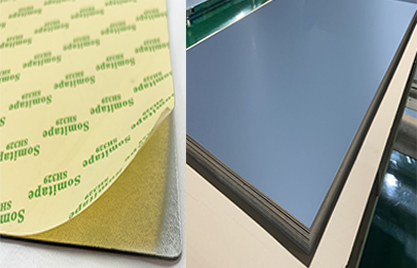
High-quality backing keeps the reflective surface intact when acrylic mirror adhesive is applied. This is essential for large wall-mounted projects where the adhesive must hold weight evenly across the surface. A properly engineered backing layer avoids chemical reactions, discoloration, or delamination, which can occur when adhesives interact poorly with low-quality coatings.
In moisture-prone environments — such as restrooms, hospitality spaces, or outdoor promotional setups — premium backing serves as a barrier against humidity. It prevents the mirror from absorbing environmental stress and maintains uniform reflectivity over time. Procurement specialists often evaluate backing specifications with the same scrutiny as thickness, because the integrity of the backing determines the long-term reliability of the entire installation.
Different industries rely on acrylic mirror sheets for very different reasons, which is why aligning material specs with project goals is essential.
In commercial signage production, lightweight acrylic mirror panels simplify fabrication and installation across high positions or complex design structures. Installers benefit from reduced load, and designers gain more freedom to explore layered effects or three-dimensional lettering. Here, flexibility and predictable reflection quality rank above extreme rigidity.
Retail spaces and branded interiors place priority on visual consistency, especially under strong lighting. Acrylic mirrors maintain a bright, clean reflection that complements modern retail design aesthetics. Thicker sheets with premium backing are typically favored to avoid warping under constant illumination or customer interaction.
In the exhibition and display industry, the need for frequent assembly and disassembly favors materials that resist cracking and can be reused. Acrylic mirror sheets perform exceptionally well in fast-paced build environments because the combination of reasonable weight and strong impact resistance minimizes accidental damage.
These varied requirements mean procurement managers must evaluate thickness, sheet size, and backing as interconnected elements rather than isolated attributes.
The preferred installation method often dictates which acrylic mirror specification is most appropriate. Acrylic mirror adhesive provides a strong, permanent bond for wall-mounted or large-area applications. For this installation type, backing quality must be compatible with adhesives and remain stable without peeling or reacting with the bonding surface.
In modular setups or temporary displays, removable mounting options are more common. Flexible thin sheets are often selected because they conform to curved structures and allow fast changes without risking breakage. In contrast, rigid large-format mirrors require controlled mounting environments and stable backing to maintain the integrity of the reflective surface.
Understanding how installation conditions influence material selection helps B2B buyers avoid mismatches that lead to warping, delamination, or uneven reflection.
For Business, material consistency is as important as product quality itself. Acrylic mirror sheets must arrive with predictable reflective uniformity, consistent thickness tolerances, and identical backing characteristics. Large projects often require hundreds or thousands of pieces, making batch consistency crucial.
Buyers increasingly value manufacturers who maintain automated coating lines, stable raw material sources, and predictable production cycles. These factors reduce project delays and ensure every sheet — from small acrylic mirror 10x12 formats to oversized architectural panels — matches required specifications.

Supplier stability also minimizes the risk of color deviation, reflection distortion, or surface waviness caused by variations in manufacturing processes. For multi-storerollouts, brand expansions, and national retail campaigns, this consistency becomes essential.
Cost evaluation in Business rarely revolves around unit price alone. The long-term performance of the mirror, installation efficiency, transportation reliability, and after-installation stability all contribute to the actual project cost. A well-chosen acrylic mirror sheet reduces maintenance downtime, avoids panel replacement, and secures stable visual performance over years of use.
By aligning thickness, size, backing technology, and installation conditions with project objectives, procurement teams can maximize both the functional and financial value of the material.
Acrylic mirror solutions continue to expand across modern commercial design, and understanding material specification is becoming a core skill for decision-makers tasked with balancing aesthetics, performance, and cost control.


