

Views: 0 Author: Site Editor Publish Time: 2026-11-07 Origin: Site


Fire safety is a key concern in modern building design. But does every aluminum composite panel meet fire safety requirements? The answer depends on its core material and tested construction. PE, FR, and A2 panels offer different fire performance. This guide explains fire ratings, testing standards, and facade requirements. You will also learn how to verify panel compliance before purchasing.
An aluminum composite panel can meet different fire performance requirements. However, its classification depends on the core, bonding materials, and complete construction.
Some panels use standard polyethylene cores. Others contain fire-retardant or mineral-based materials. These differences influence how the panel behaves during a fire.
Buyers should evaluate the complete product rather than its aluminum surface. They should also check whether its test results match the intended building application.
No. An aluminum composite panel does not automatically receive a fire rating. Its two aluminum skins cannot determine the fire behavior alone.
The core sits between these skins. It can influence ignition, flame spread, and heat release. Different core formulations therefore produce different fire performance.
Some conventional panels use polyethylene-based cores. These materials are combustible and may increase fire risks in certain applications. Buyers should never assume standard ACP meets high-rise facade requirements.
A PE core mainly contains polyethylene. It provides the central layer of a conventional composite panel.
Polyethylene is a combustible polymer. When exposed to sufficient heat, it can ignite and contribute to fire development. Its behavior depends on formulation and testing conditions.
Standard PE core panels may therefore face restrictions. Some building projects do not permit their use on exterior facades. Always check local regulations before specifying them.
An FR core aluminum composite panel contains fire-retardant components. Mineral fillers and other additives can reduce the core's combustible content.
These materials can improve fire performance compared with standard PE cores. However, FR products do not all achieve the same classification.
Their actual performance depends on the formulation and complete construction. Buyers should request relevant test reports before purchasing. A supplier's description alone cannot establish compliance.
An A2 aluminum composite panel is designed to meet the A2 reaction-to-fire class under EN 13501-1. Its core generally contains a high proportion of mineral-based materials.
A2 indicates limited contribution to fire under the classification system. It does not mean the panel is completely non-combustible. A1 represents a different and more stringent classification.
The final classification requires testing. Buyers should check the complete designation, including smoke and flaming droplet ratings. For example, A2-s1,d0 provides additional information about smoke and droplets.
These three categories describe different core constructions and fire performance expectations. They should not be treated as interchangeable product labels.
PE panels generally use combustible polymer cores. FR panels use modified formulations, while A2 panels must meet the relevant classification requirements.
The following table provides a practical comparison.
Panel Type | Core Characteristics | Fire Performance |
|---|---|---|
PE Core ACP | Polyethylene-based core | Combustible; classification requires verification |
FR Core ACP | Fire-retardant mineral-filled core | Improved fire performance; classification varies |
A2 ACP | High mineral-content core | Meets A2 only when properly classified |
Note: FR is a product description, not one universal fire classification. Always check the actual test result.
Several standards evaluate different aspects of fire performance. EN 13501-1 classifies construction products according to their reaction to fire.
ASTM E84 evaluates surface flame spread and smoke development. NFPA 285 examines fire propagation through exterior wall assemblies.
These standards measure different performance characteristics. Their results cannot be directly substituted for one another. Buyers must identify the standard required by their project.
Yes, some aluminum composite panels can meet demanding facade requirements. However, the required classification depends on local building regulations and project design.
High-rise projects may require specific panel classifications and facade assembly testing. Cavity barriers, insulation, joints, and supporting structures also influence compliance.
A panel certificate does not automatically approve the entire facade. The proposed assembly must satisfy the applicable project requirements.
Tip: Confirm the required fire classification before requesting quotations. This helps suppliers recommend suitable core constructions.
Fire testing standards help determine how building materials behave under defined conditions. They also help architects compare products against project requirements.
However, each standard has a specific testing purpose. Buyers should understand these differences before accepting supplier certificates or test reports.
EN 13501-1 is a European standard for reaction-to-fire classification. It groups construction products according to their tested fire behavior.
Its main classes range from A1 and A2 to B, C, D, E, and F. A1 represents the highest reaction-to-fire performance, while lower classes indicate greater contributions to fire.
The system also includes additional classifications. The smoke ratings are s1, s2, and s3. Flaming droplets are classified as d0, d1, and d2.
For example, A2-s1,d0 indicates an A2 classification, limited smoke production, and no flaming droplets under the specified test conditions.
ASTM E84 evaluates surface burning characteristics. It measures flame spread and smoke development under controlled laboratory conditions.
The results commonly include a Flame Spread Index (FSI) and Smoke Developed Index (SDI). These values help assess material behavior during the specified test.
However, ASTM E84 does not establish equivalence with EN 13501-1. A product meeting one standard does not automatically meet another. Buyers should follow the requirements of their project jurisdiction.
NFPA 285 evaluates fire propagation through exterior wall assemblies. It examines how fire may spread across and within a tested wall construction.
The assembly can include cladding, insulation, membranes, air cavities, and supporting components. Their combined behavior matters during testing.
A successful result applies to the tested configuration. Changing materials or construction details may affect compliance. Buyers should confirm that the proposed facade matches the approved assembly.
Note: A material reaction-to-fire classification and an assembly fire test answer different questions. Both may be necessary for exterior facade projects.
Fire performance depends on more than the core material. The complete composite construction can influence how a panel responds to heat.
Core formulation, aluminum skins, adhesives, and coatings all deserve attention. Buyers should compare these factors before approving product specifications.
The core is one of the most important parts of an aluminum composite panel. Its composition influences combustibility and heat release.
Conventional PE cores contain combustible polymer material. FR formulations incorporate fire-retardant components, while mineral-core products use a higher proportion of inorganic materials.
However, mineral content alone does not prove a specific classification. Manufacturers must provide test evidence for the actual product construction.
Aluminum face sheets protect the core and provide the panel's external surface. Their thickness and alloy affect mechanical properties.
Bonding layers connect the face sheets to the core. These adhesives also form part of the complete composite construction.
Their behavior under heat should not be ignored. Buyers should verify the tested panel structure rather than assessing individual materials separately.
Aluminum composite panels commonly use PE or PVDF coatings. Other finishes include FEVE, nano, and decorative surface treatments.
These coatings mainly influence appearance and environmental protection. They do not automatically improve the fire classification of the core.
A decorative finish cannot replace a tested fire-retardant construction. Buyers should check whether the coating matches the tested product specification.
Panel thickness includes both aluminum skins and the central core. A thicker panel does not automatically achieve a better fire rating.
The thickness of each aluminum skin also matters. Core thickness, adhesive selection, and manufacturing consistency affect the complete construction.
For example, one supplier lists a 4 mm ACP product. Its listed aluminum skin thickness ranges from 0.05 mm to 0.5 mm. These figures describe product options, not verified fire performance.
Tip: Request a complete cross-sectional specification. Compare it against the construction identified in the fire test report.
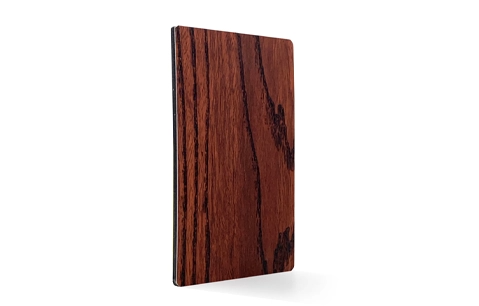
Choosing a suitable panel is only one part of facade fire safety. Its installation must also follow approved engineering and building requirements.
Exterior walls, curtain walls, and interior decorations have different conditions. Each application requires suitable material selection and installation details.
Exterior wall cladding can influence how fire spreads across a building. Panel classification should therefore match the applicable facade regulations.
Architects should consider building height and occupancy. Local codes may also specify acceptable materials and assembly configurations.
An aluminum composite panel should have traceable documentation. Its core, thickness, and coating should match the approved specification.
Curtain walls often contain cavities behind exterior panels. These spaces may affect fire and smoke movement.
Fire barriers and cavity closures help limit vertical fire spread. Their position and construction should follow the approved facade design.
Panel selection must also consider supporting frames and connections. A suitable product cannot compensate for an incorrectly designed facade system.
Interior applications may have different fire requirements. These include wall decoration, partitions, ceilings, and commercial interior surfaces.
The required classification depends on building use and local regulations. Public buildings may have stricter requirements than some private spaces.
Buyers should identify the intended installation location. A panel approved for interior use may not be suitable for an exterior facade.
Installation details can affect the performance of the complete facade. Incorrect joints and cavity arrangements may create additional fire pathways.
Contractors should follow approved fixing details and barrier locations. They should also use specified insulation and sealing materials.
Changes during construction require technical review. Substituting materials without approval may invalidate the original compliance evidence.
Note: Fire safety depends on the complete facade design. Do not evaluate the panel separately from surrounding construction.
Buyers need reliable evidence before accepting fire-rated materials. Product descriptions and marketing claims are not enough.
A proper verification process should cover test reports, material specifications, and production records. This helps reduce compliance risks during procurement and construction.
Ask suppliers for complete fire test reports. These documents should identify the testing laboratory and applicable standard.
Check the report number and issue date. Confirm the tested product name, thickness, core composition, and specimen construction.
Also review the classification and testing conditions. A certificate without matching product details may not support your project requirements.
Confirm whether the product uses PE, FR, or mineral-based core material. Request relevant technical specifications from the manufacturer.
Compare the offered panel against the tested sample. Check aluminum thickness, total panel thickness, core formulation, and bonding materials.
For example, one supplier lists B1 and A2 fire-related core options. These are product offerings, not independent proof of classification.
Review classification reports and applicable product declarations. Check whether the documents satisfy local building regulations.
For European projects, verify the relevant EN 13501-1 classification. For American projects, check applicable ASTM and NFPA requirements.
Do not assume one certificate covers every application. Exterior facade approval may require additional assembly testing.
Consistent production helps maintain product specifications. Buyers should review material traceability and inspection procedures.
Ask suppliers how they control core composition and panel bonding. Check whether production batches can be linked to relevant quality records.
Request samples before confirming large orders. Compare their construction against approved technical documents.
Tip: Keep test reports, approved drawings, and batch records together. They simplify future inspections and project compliance reviews.
The correct panel depends on project requirements. Buyers should balance fire classification, mechanical properties, appearance, and budget.
A suitable product should also have matching documentation. This makes procurement decisions easier to justify and verify.
Start by identifying the required fire classification. Consult the architect, facade engineer, or local building authority.
Do not choose products based only on descriptions such as fireproof or flame retardant. These terms do not replace recognized classifications.
Confirm the required standard before requesting quotations. This prevents comparisons between products tested under different methods.
FR and A2 panels may serve different project requirements. Their core compositions and tested fire performance can vary.
Compare mineral content, panel thickness, aluminum skin specifications, and classification reports. Also check whether the tested construction matches the offered product.
A2 may be necessary for certain demanding applications. However, buyers should follow project regulations rather than automatically choosing the highest advertised rating.
Architectural projects often require specific dimensions and colors. Common options include solid colors, metallic finishes, and decorative coatings.
One supplier lists panel thicknesses from 2 mm to 8 mm. It also offers customized dimensions and several surface finishes. These are supplier-specific options and require confirmation.
When ordering customized panels, verify their fire performance. Changes to core materials or construction may affect the original classification.
Explore aluminum composite panel products to compare available product configurations. Request technical documentation before making a final selection.
A reliable supplier should provide clear technical specifications. They should also explain available core options and testing documentation.
Ask whether samples and customization services are available. Confirm production details before approving the final order.
Technical communication matters throughout procurement. It helps ensure delivered panels match approved project requirements.
Tip: Include the required fire classification in your purchase specification. Identify the testing standard and exact product construction.
An aluminum composite panel can meet different fire ratings. Its performance depends on core materials, testing, and construction. Buyers should verify certificates and local building codes. Proper panel selection helps improve facade safety and project compliance.
Likebond Co., Ltd. offers aluminum composite panel solutions for different building applications. Contact the company for product specifications and technical support.
Note: Replace the company name and homepage URL with the actual information before publishing.
A: No. PE, FR, and A2 cores have different fire performance.
A: Check official EN 13501-1 or ASTM E84 test reports.
A: It may suit projects requiring A2 classification, subject to local codes.
A: Core composition, adhesives, coatings, and installation details affect performance.
A: No. Their fire classifications and test results may differ.


