

Views: 0 Author: Site Editor Publish Time: 2026-08-11 Origin: Site


Designing secure observation rooms, hidden digital displays, or custom teleprompters requires a precise balance of optical clarity, structural safety, and controlled lighting. While frequently searched and referred to interchangeably as a "one-way mirror," the industry-standard term is a 2 way acrylic mirror. Both terms describe the exact same semi-transparent, partially reflective substrate.
Specifying the wrong semi-reflective substrate can lead to compromised privacy, shattered installations, or severe optical distortion known as the "funhouse effect." These failures result in costly project rework and safety liabilities. Evaluating this material against traditional glass or applied films requires understanding its physical properties, lighting dependencies, and structural limitations. This guide breaks down the technical specifications, implementation risks, and procurement criteria for commercial, clinical, and custom display applications.
Lighting is the Operational Mechanism: A 2 way acrylic mirror does not function through material properties alone; it requires a strict lighting differential (typically 8:1 or 10:1) between the subject side and the observation side to render the darker side transparent.
Safety and Weight Advantages: Acrylic substrates offer up to 10-17 times the impact resistance of standard glass at half the weight, making them mandatory for high-traffic, overhead, or secure environments.
The Size and Rigidity Trade-off: A plexiglass acrylic mirror is structurally strongest and optically superior in small to moderate sizes. Large-format acrylic is prone to bowing and optical distortion, requiring precise thickness specification and rigid framing.
Application Versatility: From DIY maker smart displays to psychiatric observation rooms, the choice between factory vacuum-deposited coatings and aftermarket directional films dictates the panel's effectiveness and longevity.
The core functionality of a semi-reflective surface relies on advanced manufacturing techniques rather than the base plastic itself. Producers apply a micro-thin metallic coating to the acrylic substrate using a process called vacuum deposition. In a specialized vacuum chamber, the manufacturer evacuates all air and vaporizes metallic particles—typically aluminum or titanium. These particles bond to the acrylic surface at a molecular level. This creates a highly uniform, durable layer that dictates how the panel handles incident light.
The physics of partial reflection govern the material's performance in the field. When light strikes the coated surface, the metallic layer acts as a selective barrier. It allows a specific percentage of light to pass directly through the material, known as the transmission rate.
Simultaneously, it bounces the remaining light back toward the source, creating reflectance. A standard configuration offers 30% light transmission and 70% reflectance. This precise balance ensures the panel functions as a mirror on one side while remaining transparent from the opposite side, provided you control the environmental conditions.
Understanding the exact transmission and reflection percentages helps you specify the right panel for the job. If you select a panel with too much transmission for an observation room, the subjects will see through it. If you select a panel with too little transmission for a digital display, the screen will look dim and washed out.
| Transmission Rate | Reflectance Rate | Primary Application | Visual Effect |
|---|---|---|---|
| 10% - 15% | 85% - 90% | High-Security Observation | Maximum privacy for observers; requires intense subject lighting. |
| 20% - 30% | 70% - 80% | Standard Smart Mirrors | Balanced reflection with enough light pass-through for bright LCDs. |
| 40% - 50% | 50% - 60% | Teleprompters / Infinity Mirrors | High light pass-through to prevent camera lens darkening or ghosting. |
The most common misconception regarding semi-reflective panels is that they possess inherent one-way properties regardless of their environment. In reality, the fundamental rule of these installations dictates that the subject side must be brightly lit, while the observation or display side must remain dark. The panel only renders transparent from the darker side because the high volume of light reflecting off the bright side overpowers the small amount of light transmitting from the dark side.
Achieving successful observation requires strict adherence to baseline lighting criteria. You must design spaces to maintain a minimum 8:1 lighting ratio. This means the subject room must be eight times brighter than the observation room. For highly sensitive security environments, clinical observation, or law enforcement applications, you should push this differential up to a 15:1 ratio. Failing to maintain this light disparity causes "bleed-through," where subjects can see through the mirror into the observation space.
To establish and verify this lighting ratio on a job site, follow these practical steps:
Install high-output, directional LED track lighting in the subject room, aiming the fixtures directly at the subjects and away from the mirror surface to reduce glare.
Paint the observation room walls, ceiling, and floor in flat, matte dark colors (preferably black or dark grey) to absorb ambient light.
Eliminate all natural light sources in the observation room by installing blackout shades over any exterior windows.
Use a handheld lux meter to measure the light intensity hitting the mirror from the subject side.
Take a second reading inside the observation room. Divide the subject side lux value by the observation side lux value to confirm you meet the 8:1 minimum threshold.
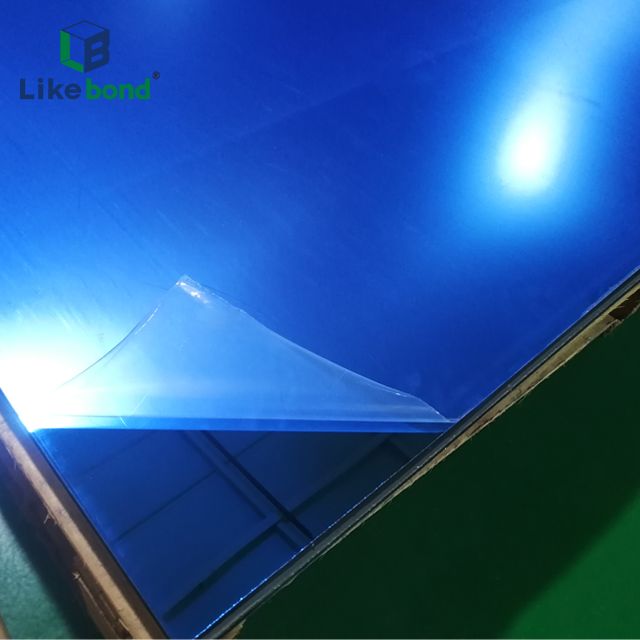
When comparing visual fidelity, traditional glass offers exceptional rigidity, which naturally prevents surface warping. However, high-grade acrylic provides comparable optical clarity when properly sized and mounted. The primary differentiator lies in how each material manages light transmission and color rendering. Standard glass mirrors often have a slight green tint due to iron content in the silica. This green hue alters color rendering, which becomes highly noticeable in digital display applications. Acrylic panels maintain strict color neutrality, making them highly effective for digital signage and smart mirrors where color accuracy matters.
Transmission rates also vary slightly between the two substrates based on how the coatings adhere. Acrylic allows for highly consistent vacuum deposition, ensuring the transmission rate remains uniform across the entire sheet. This uniformity prevents hot spots or dark patches when placing a large digital display behind the panel.
Safety regulations heavily influence material selection in commercial and institutional builds. A plexiglass acrylic mirror provides a massive advantage in impact resistance. Acrylic is inherently shatter-resistant, capable of withstanding blunt force impacts that would instantly destroy standard glass. When acrylic does break under extreme stress, it fractures into large, dull pieces rather than dangerous, microscopic shards.
This shatter resistance makes acrylic legally or practically mandatory in specific compliance scenarios. Psychiatric wards, correctional facilities, and police interrogation rooms require materials that cannot be weaponized if broken. Similarly, public retail displays, pediatric clinics, and animal observation enclosures rely on acrylic to protect both the subjects and the observers from accidental breakage. Building codes in many jurisdictions strictly prohibit standard annealed glass in overhead installations or high-traffic public corridors, forcing contractors to specify acrylic or expensive laminated safety glass.
Project managers must account for the logistical challenges of transporting and installing building materials. Acrylic weighs approximately half as much as standard glass of the same thickness. A 1/4-inch thick glass panel weighs roughly 3.2 pounds per square foot, whereas a 1/4-inch acrylic panel weighs only 1.5 pounds per square foot. This weight reduction significantly improves the logistics regarding shipping, handling, and structural support requirements. Installers can maneuver large acrylic panels without specialized heavy-lifting equipment or glass suction cups, reducing labor hours and site risks.
Furthermore, acrylic offers superior on-site machinability. Fabricators can drill, route, and precision-cut acrylic panels using standard woodworking tools. You can modify an acrylic panel on the job site if the rough opening dimensions change unexpectedly. Glass requires specialized cutting environments, water-cooled diamond bits, and cannot be modified at all once tempered.
When machining acrylic on-site, you must use the correct tooling to prevent melting or chipping the plastic:
Use a circular saw with a triple-chip grind (TCG) blade designed specifically for plastics, featuring at least 80 teeth.
When drilling holes for mounting hardware, use a drill bit with a 60-degree point angle rather than a standard 118-degree wood bit to prevent grabbing and cracking the material.
Run routers at a lower RPM and maintain a steady feed rate to prevent friction heat from melting the acrylic edge.
Always leave a 1/8-inch expansion gap around the perimeter of the panel within the frame to accommodate thermal expansion.
Maintaining absolute observer privacy without compromising the subject's natural behavior defines the core challenge of security and clinical observation. In pediatric psychology, focus group facilities, or law enforcement settings, subjects must feel they are in a standard room. Any indication of observation alters behavior and invalidates the process.
Evaluating materials for these environments involves multiple dimensions. Acoustic dampening is often required to prevent sound transmission between the rooms. While acrylic provides some sound insulation, double-pane setups might be necessary for complete acoustic isolation. You can achieve this by installing a standard clear acrylic panel on the subject side and the semi-reflective panel on the observation side, leaving a dead-air space between them.
Lighting control remains the most critical factor. The observation room must feature dark walls, dark flooring, and minimal monitor glare. Observers should wear dark clothing, and any computer monitors used in the observation room must have privacy hoods to prevent screen light from reflecting off the back of the mirror. Additionally, high-touch environments benefit from specifying hard-coated acrylic to prevent surface degradation from frequent cleaning or subject interaction.
The integration of digital interfaces into reflective surfaces has transformed retail environments, hotel lobbies, and the maker community. The primary problem involves hiding LCD or OLED screens behind a mirror when powered off, while allowing crisp, vibrant image transmission when powered on. This application is highly popular in commercial retail fitting rooms and custom smart home dashboards.
Success in digital signage relies heavily on matching the display's brightness output to the acrylic's transmission percentage. If the screen is too dim or the transmission rate is too low, the digital image washes out behind the reflective coating. You should source commercial-grade monitors capable of outputting at least 500 to 700 nits of brightness. Standard consumer desktop monitors often peak at 250 nits, which is insufficient for pushing a clear image through a 30% transmission mirror.
Builders must ensure the enclosure behind the mirror is completely light-sealed. Any ambient light leaking into the back of the display enclosure will become visible through the front of the mirror, ruining the seamless effect. Strip the plastic bezels off the monitor so the actual screen sits perfectly flush against the back of the acrylic. Use black foam weatherstripping tape around the perimeter of the screen to block light bleed and cushion the monitor against the plastic.
The entertainment and production industries utilize semi-reflective panels to create lightweight, large-scale optical illusions or portable camera teleprompter setups. Teleprompters require a piece of angled acrylic placed in front of a camera lens. The talent reads scrolling text reflected off the acrylic, while the camera films through the transparent side without capturing the text.
Evaluation dimensions for studio applications prioritize portability and structural framing. Camera rigs must remain lightweight for mobility, making acrylic the only viable choice for field teleprompters. Managing multiple reflection points without light bleed is essential for infinity mirrors, which use parallel reflective surfaces to create the illusion of endless depth.
For teleprompters, ensuring the camera lens does not capture substrate distortion is paramount. Even minor warping in the acrylic can cause the final video footage to appear stretched or out of focus. You must mount the acrylic at a precise 45-degree angle using a rigid, tension-free frame. Use a panel with a higher transmission rate (e.g., 40% to 50%) to ensure the camera sensor receives enough light, preventing grainy or underexposed video footage.
The most significant risk when specifying acrylic is its inherent flexibility. Large sheets of plastic will naturally bow under their own weight or due to temperature fluctuations. This minor bowing distorts the reflected image, creating a "funhouse effect." This distortion is highly problematic for full-length mirrors in retail environments, dance studios, or large architectural installations.
Mitigating this risk requires strict adherence to sizing and thickness guidelines. Limit acrylic to small-to-moderate panel sizes whenever possible. For panels exceeding 24x36 inches, you must specify thicker material. Upgrading from a standard 1/8-inch thickness to a 1/4-inch thickness significantly increases rigidity and reduces optical distortion.
Furthermore, implement rigid, perfectly plumb framing systems. The frame must support the acrylic evenly across all edges without pinching or forcing the material into an unnatural curve. Never drive screws directly through the acrylic to mount it to a wall. The pressure from the screw heads will instantly warp the plastic. Instead, use a floating frame design. Seat the acrylic inside a U-channel frame lined with soft neoprene gaskets. This allows the plastic to expand and contract with temperature changes without bowing.
| Panel Size (Inches) | Recommended Minimum Thickness | Framing Requirement |
|---|---|---|
| Up to 12 x 12 | 1/8 inch (3mm) | Standard edge support; VHB tape acceptable. |
| 12 x 12 to 24 x 36 | 3/16 inch (4.5mm) | Full perimeter frame; no direct mechanical fasteners. |
| 24 x 36 to 48 x 96 | 1/4 inch (6mm) | Heavy-duty U-channel frame with neoprene gaskets; allow 1/8" expansion gap. |
| Over 48 x 96 | Not Recommended in Acrylic | Switch to glass or accept significant optical distortion. |
Semi-reflective panels are strictly directional. Installing the panel backward exposes the delicate metallic coating to the subject side, leading to rapid degradation, scratching, and eventual failure of the reflective properties. The coated side is highly vulnerable to physical abrasion, chemical damage, and vandalism.
To prevent installation errors, teams must establish standard operating procedures for identifying the coated side before mounting the panel. The industry standard is the "fingernail test." Place a fingernail against the surface of the mirror. If there is a visible gap between your actual fingernail and the reflection, you are touching the uncoated, clear plastic side. If your fingernail touches the reflection directly with no gap, you are touching the coated side.
The coated side must always face the secure, dark observation room or the interior of the sealed display enclosure. The uncoated, highly reflective side must face the brightly lit subject area or the retail floor. Mark the protective masking film with arrows indicating the coated side before cutting the panel to ensure the installation crew mounts it correctly.
Because acrylic is a thermoplastic, it is softer than glass and highly susceptible to micro-abrasions from improper cleaning techniques. Using standard paper towels, rough rags, or aggressive chemical cleaners will quickly cloud the surface, ruining both the reflective and transmissive properties of the panel.
Mitigation strategies center on strict maintenance protocols. Facility managers must mandate the use of clean, high-quality microfiber cloths. Cleaning solutions must be specifically formulated for plastics. Ammonia-based glass cleaners (like standard Windex) will cause the acrylic to craze, developing microscopic cracks across the surface. Use dedicated plastic polishes like Novus 1 or a simple mixture of mild dish soap and warm water. For environments where subjects might touch or strike the mirror, consider sourcing hard-coated acrylic options that feature an additional clear protective layer over the plastic substrate.
Procurement strategies depend on the fabrication capabilities of the project team. Assessing the trade-offs between ordering bulk standard sheets and requesting CNC precision-cut panels is critical for budget and timeline management.
Ordering bulk standard sheets (such as 4x8 foot panels) makes sense for in-house fabrication teams equipped with panel saws and routing tables. This approach allows for rapid prototyping and on-the-fly adjustments during custom builds. However, cutting acrylic in-house requires proper dust collection and edge finishing. A saw blade leaves a rough edge that you must route or scrape smooth to prevent stress fractures.
For exact display enclosures, smart mirrors, or tight-tolerance architectural frames, ordering CNC precision-cut panels directly from the supplier eliminates on-site cutting risks. Factory cuts ensure perfectly square edges and exact dimensional tolerances. Suppliers can also provide polished edges. Avoid flame-polishing the edges of a semi-reflective panel, as the intense heat can damage the metallic coating and induce stress crazing if the plastic is not properly annealed afterward.
The market offers two primary methods for achieving a semi-reflective surface: factory-applied vacuum deposition and aftermarket applied window films. Differentiating between these options is vital for long-term project success.
Cheap applied window films are often used in low-budget DIY setups. You apply these films to a standard piece of clear acrylic or glass using a wet-mount solution. These films are notoriously difficult to apply without trapping dust, hair, or air bubbles. Over time, aftermarket films are prone to peeling at the edges, shrinking from UV exposure, and poor incident light management, resulting in a cloudy appearance.
High-grade vacuum-metalized acrylic features a coating bonded at the molecular level. It will not peel, bubble, or shrink. When defining overall value, the slightly higher upfront cost of factory-coated acrylic vastly outweighs the constant replacement, labor costs, and poor optical consistency associated with DIY films.
Audit your installation environment's lighting capabilities with a lux meter to guarantee you can maintain a minimum 8:1 brightness ratio between the subject and observation sides.
Determine the exact dimensions of your frame and upgrade to a 1/4-inch thickness if the panel exceeds 24x36 inches to prevent the funhouse effect.
Request a material sample to test light transmission against your specific LCD screen brightness or observation room conditions before ordering full sheets.
Establish and document a strict microfiber-only cleaning protocol for facility maintenance staff before the panel is installed to prevent surface scratching.
A: A minimum 8:1 lighting ratio is required. The subject side must be at least eight times brighter than the observation side. For complete privacy in sensitive environments, a 10:1 or 15:1 ratio is highly recommended.
A: Yes, you can cut acrylic on-site using standard woodworking tools like a circular saw or router. However, you must use plastics-specific blades with high tooth counts to prevent chipping. For seamless display integration, factory precision cuts are recommended.
A: The uncoated, highly reflective side should face the brightly lit subject area. The delicate, coated side should face the dark observation room or the inside of the display enclosure to protect it from scratches and physical damage.
A: Keep applications to small or moderate sizes when possible. For larger panels, increase the material thickness to a minimum of 1/4 inch. Ensure the mounting frame is perfectly flat and avoid over-tightening the hardware, which induces stress bowing.
A: No, there is no physical difference. The terms "one-way mirror" and "two-way mirror" are used interchangeably in the industry to describe the exact same semi-transparent, partially reflective substrate.
A: Factory-coated acrylic offers superior optical clarity, longevity, and scratch resistance. Aftermarket reflective films applied to clear glass or plastic are prone to bubbling, peeling, and visual distortion over time, making them unsuitable for professional installations.


