

Views: 0 Author: Site Editor Publish Time: 2025-12-30 Origin: Site


Cutting acrylic glass sheets efficiently and cleanly is fundamental for professional fabrication, signage, custom displays, and high-quality DIY projects. While traditional manual methods have their place, modern manufacturing and serious hobbyists now rely on advanced techniques to achieve superior precision, edge quality, and efficiency. This guide focuses on the best practices for cutting acrylic, highlighting why laser cutting has become the industry standard for professional results.
The first step is choosing the right material, as its type significantly impacts the cutting process and final outcome.
Cast Acrylic: Produced by pouring liquid acrylic into a mold. It offers superior optical clarity, higher chemical resistance, and is more forgiving during fabrication. When cut properly, its edges polish to a brilliant, glass-like finish. It is the preferred choice for high-end displays, awards, and precision applications.
Extruded Acrylic: Made by pushing acrylic resin through a die in a continuous sheet. It is generally more economical, has excellent consistency in thickness, and is well-suited for larger applications like signage and skylights. It can be more prone to stress cracking and melting if cut with excessive heat.

For B2B applications, prototyping, and any project demanding high precision, laser cutting is the unequivocally preferred method.
How It Works: A high-powered CO2 laser beam, guided by computer numerical control (CNC), vaporizes the acrylic along a programmed path. This is a non-contact process, meaning no physical force is applied to the sheet.
Key Advantages of Laser Cutting:
Unmatched Precision: Capable of producing incredibly intricate designs, sharp corners, and perfect circles with tolerances within fractions of a millimeter.
Sealed, Flame-Polished Edge: The laser's heat instantly melts the cut edge, leaving it remarkably smooth and transparent directly from the machine, often eliminating the need for post-processing.
No Tooling or Blades: There is no risk of chipping, cracking from pressure, or blade-related marks.
Efficiency & Automation: Ideal for cutting multiple parts from a large sheet (like a standard 4' x 8' panel) with minimal waste and no setup changes between designs.
Consistency: Every cut in a batch is perfectly identical.
Process Overview:
Design: Create a vector file (e.g., .DXF, .AI, .SVG) outlining the cut paths.
Setup: The acrylic sheet, often with a protective paper or film layer, is placed on the laser bed.
Calibration: Machine power, speed, and frequency are set based on material type and thickness.
Cutting: The laser executes the design automatically. Proper extraction systems remove fumes.
Finishing: The protective layer is peeled away, revealing pristine cuts.
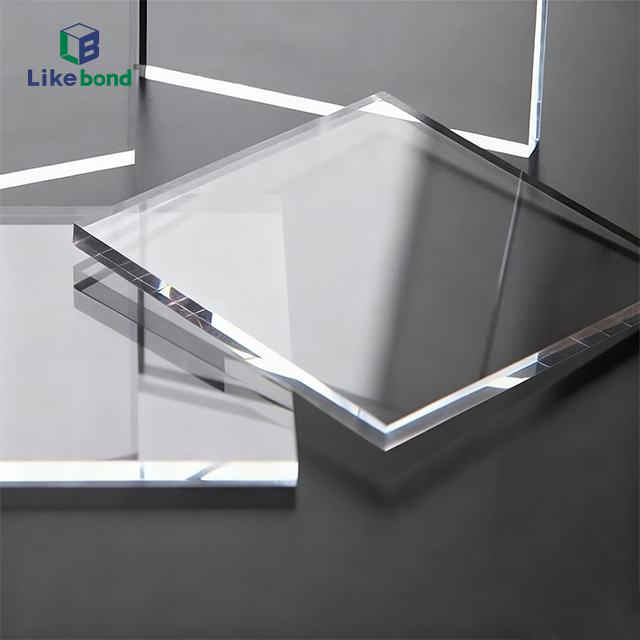
While laser cutting dominates professional spaces, other tools are still used in specific contexts.
Scoring & Snapping (Using a Scoring Tool):
Best For: Making simple, straight cuts on thin extruded acrylic (≤ 3mm / 1/8").
Process: A dedicated acrylic scorer or utility knife is used to repeatedly score a deep line along a straightedge. The sheet is then snapped over the edge of a table.
Limitation: Only works for straight lines; edges are rough and require significant sanding and polishing to achieve clarity.
Sawing (Using a Circular Saw, Jigsaw, or Table Saw):
Best For: Rough cutting large sheets (e.g., a 4x8 acrylic sheet) to a manageable size before final laser or router finishing.
Critical Requirement: Must use a blade with fine, triple-chip-grind (TCG) or high-tooth-count carbide teeth designed for plastics. Standard wood blades will cause melting, chipping, and dangerous kicking.
Process: The sheet must be firmly clamped. Apply masking tape over the cut line to reduce chipping. Feed the material slowly to prevent heat buildup.
Limitation: Edges are machined and opaque, requiring extensive sanding and polishing. High risk of melting, rough edges, and inaccuracy compared to laser cutting.
Safety First: Always wear protective eyewear and gloves when handling cut sheets. Use hearing protection and a dust mask when sawing. Laser cutting requires proper fume extraction.
Finishing Saw-Cut Edges: If using traditional saws, you must finish the edge. Start with progressively finer grits of wet/dry sandpaper (from 220 to 600 grit), then polish with a plastic polishing compound and a buffing wheel, or carefully use a flame polisher for acrylic.
Achieving clean, professional cuts in acrylic glass sheets is defined by the choice of technology. For hobbyists with thin sheets and simple needs, scoring can suffice. However, for precision, efficiency, and flawless edges—especially in professional, B2B, or complex project contexts—laser cutting is the modern, superior solution. Companies like Likebond Co., Ltd. specialize in providing the advanced materials and fabrication expertise necessary to leverage these technologies, ensuring your projects meet the highest standards of quality and precision.
Q: What is the absolute best way to cut acrylic sheets for a clear, smooth edge?
A: Laser cutting provides the clearest, most polished edge directly from the machine, without additional finishing.
Q: Can I cut acrylic sheets at home without a laser cutter?
A: Yes, for thin sheets and straight lines, a scoring tool is a low-cost option. For thicker sheets or shapes, a jigsaw or circular saw with a fine plastic-cutting blade is necessary, but expect to spend significant time sanding and polishing the edges.
Q: Why does my saw blade melt the acrylic instead of cutting it?
A: You are likely using a blade with too few teeth or the wrong tooth geometry, creating excessive friction. Use a blade specifically marked for plastics or acrylic, and cut at a slower feed rate.
Q: Where can I get acrylic sheets laser cut?
A: Many local plastic supply distributors, sign shops, and online fabrication services (like those offered by Likebond) offer laser cutting. Provide them with your vector design file and material specifications.
Q: How do I prevent cracking when cutting acrylic?
A: Avoid excessive force. When scoring, use multiple light passes. When sawing, use sharp, correct blades and support the material fully. Laser cutting eliminates this risk as it applies no physical pressure.


