

Views: 63 Author: Site Editor Publish Time: 2026-11-04 Origin: Site


Ask ten suppliers for a price on "3mm clear acrylic sheet" and you will get ten numbers. At least three of those numbers will be for different materials.
That is not a figure of speech. "Acrylic" names a chemical family. The sheet in the container is one specific member of it. And the process that made that sheet — cast or extruded — decides most of how it will behave, in ways that never appear on a quotation.
Most of the confusion in this trade is not technical. It is linguistic.
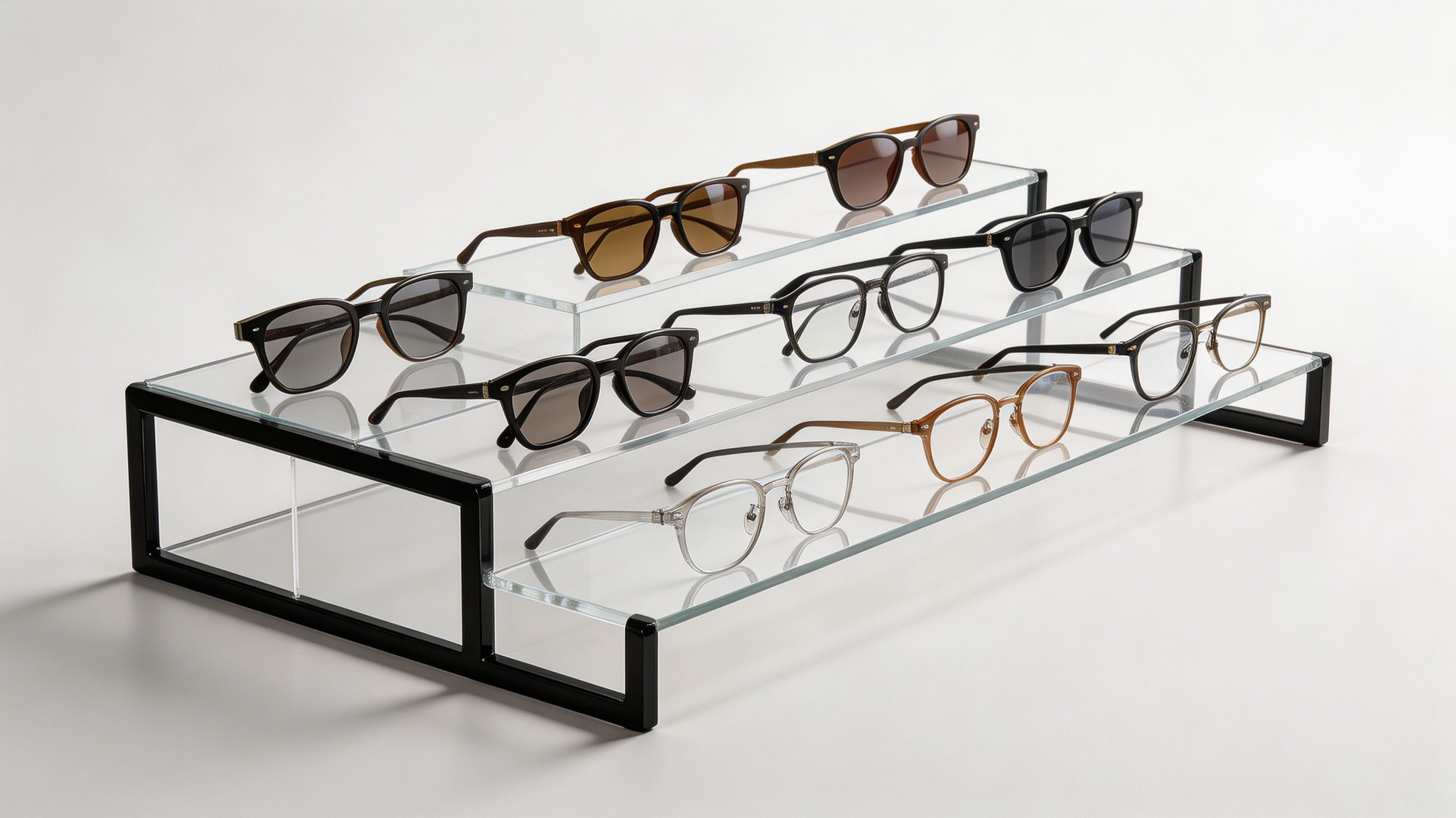
Acrylic paint is acrylic. So is the yarn in a sweater, the gel on a nail, the adhesive on a tape, and the panel in a shop window. They share a common chemistry — polymers built from acrylate and methacrylate monomers — and almost nothing else.
The sheet you buy is PMMA, poly(methyl methacrylate). One monomer, one polymer, one predictable set of properties. When the sheet trade says "acrylic", it means PMMA. When a chemical catalogue says "acrylic", it means the whole family, which is much wider.
That gap is where substitutions happen. Polystyrene sheet is not an acrylic in any chemical sense, but it is sold into the same applications, at a lower price, and occasionally under the same word.
Write PMMA into a specification and you have closed that door. Write acrylic and you have left it open.
Plexiglas. Perspex. Lucite. Three brand names from the 1930s that became the everyday word for the material in three different markets — Germany, Britain, the United States. Each is still a registered trademark owned by one company. None of them made your sheet.
This is not trivia, because it changes what you find when you search. A buyer who searches for "plexiglass sheet supplier" gets craft shops, cut-to-size resellers and consumer pricing. A buyer who searches for "cast PMMA sheet, 3mm, batch certificate" gets mills. Same material, different world, and the second one quotes differently.
There is also "organic glass" — a literal translation used widely across Asia. It means PMMA. It has nothing to do with organic solvents and nothing to do with glass. If a supplier's English is imperfect, this is usually the phrase behind it.
If you take one thing from this article, take this. Cast and extruded acrylic are the same polymer made two different ways, and the difference between them is bigger than the difference between most brands.
Cast sheet is made by pouring monomer between two glass plates and polymerising it in a water bath or an oven. The chains grow where they sit. Nothing flows, nothing orients, nothing is left stressed. What you get is a high molecular weight material with no built-in direction.
Extruded sheet is made by melting pellets, pushing them through a die, and polishing between rolls. To flow, the polymer has to be shorter. To pass a die, it has to be oriented. And when it cools, some of that orientation stays in the sheet as residual stress.
| Cast | Extruded | |
|---|---|---|
| Molecular weight | High | Lower, narrower distribution |
| Outdoor life | Depends on raw material quality, UV additives, and environmental conditions — cast retains clarity longer due to higher molecular weight, but no fixed year figure applies universally | Same variables apply; extruded tends to show earlier yellowing under prolonged UV exposure due to lower molecular weight |
| Thickness tolerance | ±0.2mm | ±0.05mm |
| Maximum thickness | 25mm routinely, 100mm+ available | Generally up to 12mm |
| Optical quality | Best — no flow lines, no stress pattern | Flow marks and stress pattern possible |
| Thermoforming | Good, deep draws hold | Limited by oriented stress |
| Solvent bonding | Strong, reliable joint | Joint can craze under stress |
| Price | Higher | 20–40% lower |
| Typical use | Aquariums, architecture, thick sections, mirror substrate, high-end display | Signage, light boxes, partitions, standard repeat parts |
Here is the part that surprises people. Extruded sheet holds thickness far better than cast, and that does not make it the better sheet.
Buyers see "±0.05mm" next to "±0.2mm" and read it as a quality ranking. It is not. Thickness precision is a manufacturing artifact. Cast tolerances are looser because the glass mould sets the nominal thickness while polymerisation shrinkage — which varies with batch, oven temperature and section thickness — moves the actual number. Nobody holds ±0.05mm on a 20mm cast block, and nobody tries.
Meanwhile the property that decides whether a panel still looks right after years of outdoor exposure is molecular weight, and there cast wins by a wide margin. But how long any sheet actually lasts outdoors is not a number you can look up in a table. It depends on the quality of the raw monomer, whether the formulation includes UV absorbers and stabilisers, and the specific environment — sun intensity, humidity, pollution, temperature cycling. A well-formulated extruded sheet with a proper UV package can outlast a cast sheet made from cheap monomer with no additives. The process sets the ceiling; the formulation and the environment decide where inside that ceiling you land.
Both sheets can be clear, gloss, 3mm, and stacked in the same rack. Three checks separate them in a workshop.
Look along the surface at a grazing angle under a single light. Extruded sheet often shows faint parallel lines running the length of the sheet — die lines from the extrusion head, polished over but not removed. Cast sheet has no direction in it at all.
Put a drop of dichloromethane, or any solvent-based acrylic cement, on a machined edge. Extruded sheet will craze, with fine cracks spreading out from the cut within seconds, because residual orientation is being released. Cast sheet tends to soften and sit there.
Flame-polish a cut edge. Both go clear, but extruded sheet is more likely to bubble, draw back, or re-craze as it cools.
None of these are laboratory methods, and none of them beat a written statement of process on the quotation. But they are enough to tell you whether the conversation you are about to have is worth having.
Two suppliers can both quote "cast PMMA, 3mm, clear" and be quoting genuinely different products, because grade is a separate axis.
General purpose sheet runs around 90% light transmission with haze under 2%. Optical grade runs 92% with haze below 0.3% and a controlled limit on inclusions. The difference is invisible on a bench and obvious in a light box, which is why optical grade is specified for light guides and display faces and wasted on a partition.
Weathering grade carries a UV package and a controlled yellowness index. Food contact grade has to meet FDA 21 CFR 177.1010 in the US or EU 10/2011 in Europe, and the paperwork matters more than the sheet. Medical grade adds sterilisation tolerance.
If a quote does not name a grade, it is a general purpose quote. Assume that until told otherwise.
The same polymer arrives in a lot of shapes, and the shape changes the specification more than the name does.
Clear sheet is the default — over 90% of what moves. Coloured sheet is pigmented through the thickness and can be matched to RAL or Pantone. Opal and white sheet are for light boxes, where hiding the light source matters more than transmitting it. Mirror is a separate product: a PMMA substrate with a metallised layer and a protective back coat. Light guide and diffuser grades are optical products with printed or dispersed patterns. Textured surfaces — frosted, reeded, linen, stone — are made on the roll or the press plate.
Then there are the modified grades. High impact sheet adds a rubber phase and gains three to ten times the impact resistance at the cost of some clarity and weathering. Flame retardant sheet adds phosphorus or bromine chemistry and can reach GB 8624 B1 or UL 94 V-0.
One caution on that last one. Pure PMMA is a combustible material — oxygen index around 17.3%, against 21% for air. Modified FR grades are a different formulation, not the same sheet with a better label. Any claim of a fire classification needs a test report where the grade, thickness and colour match what you are buying. Without that, "fire rated acrylic" is a sentence, not a specification.
The market has a habit of stretching the word. These four look similar at a metre and behave nothing alike. Polystyrene in particular is not an acrylic in any chemical sense, but it is sold into the same applications, at a lower price, and occasionally under the same word.
| PMMA | PS | PC | PETG | |
|---|---|---|---|---|
| Density, g/cm³ | 1.19 | 1.05 | 1.20 | 1.27 |
| Light transmission | 92% | 88–90% | 89% | 89% |
| Impact | Moderate — cracks, no shards | Poor, very brittle | Excellent, does not break | Good |
| Outdoor life | Years, depends on UV package and formulation | 1–2 years, yellows badly | 3–5 years, needs UV coat | 2–3 years |
A specification is not a description. It is a set of conditions that a substitute has to fail. This wording covers the axes that actually differ:
Material: PMMA (poly(methyl methacrylate)), virgin, no post-consumer content.
Process: cast sheet, not extruded.
Grade: [general purpose / optical / weathering / food contact]
Thickness: 3mm ±0.2mm (cast), nominal, measured on the finished sheet.
Colour: clear, light transmission ≥90%, haze ≤2% to ASTM D1003.
Surface: gloss both faces, PE masking one face.
Documentation: batch certificate with grade and thickness.
Six lines, and each one closes a door. Process stops the extruded-for-cast swap, which is the most common substitution in this trade because the price gap is 20–40% and the sheet looks identical from the front. Grade stops a general purpose sheet arriving against an optical requirement.
The thickness line does something different. It puts a number on the table without pretending the number explains itself, because where you put the callipers changes the answer — a sheet read at the centre and a sheet read at the edge are not the same reading. That is a conversation to have before the order is confirmed, not after the container has sailed. Any supplier who will not discuss how a tolerance is measured is telling you something about how the claim will be handled later.
Five lines, and they cover most enquiries we get.
Outdoor, anything that will see sun for years: cast. Aquariums, thick sections, load-bearing panels: cast, and nothing else will do. Deep thermoforming, complex bends, routed shapes that will be solvent bonded: cast, because oriented stress in extruded sheet will find the corner you machined. Flat signage, light boxes, partitions, repeat parts where the drawing is fixed: extruded, and the 20–40% saving is real. Large panels wider than 2050mm: extruded, because cast sheet sizes are limited by the glass plate.
Two quotes for "3mm clear acrylic" that differ by 40% are not necessarily one honest supplier and one dishonest one. They may be quoting an extruded sheet against a cast one, a general purpose grade against optical, or a 2.7mm sheet against a 3.0mm one that both call 3mm.
The fix is not to distrust the cheaper number. It is to make the quote answerable. Name the polymer, name the process, name the grade, and ask for the measurement standard. Suppliers who can answer that in writing are the ones worth negotiating with, because they are the ones who know what they are selling.
If you have read this far, you already know more about acrylic than most buyers who send us an inquiry. That is the kind of conversation we prefer.
Cast Acrylic Sheet — thickness from 2mm to 100mm, in clear, coloured, opal, and textured finishes. High molecular weight, optical grade available, suitable for aquariums, architecture, thick sections, and mirror substrate.
Extruded Acrylic Sheet — thickness from 1.5mm to 12mm, held to ±0.05mm tolerance. The right material for flat signage, light boxes, partitions, and repeat production parts where the drawing is fixed and the saving matters.
Acrylic Mirror Sheet — PMMA substrate with a metallised reflective layer and a protective back coat. Available in silver, gold, rose gold, blue, and other colours. Two-way mirror and safety mirror options for specific applications.
Multiple thickness, colour, and size options are available across all three product lines. Standard sheet sizes up to 2050×3050mm; custom cut-to-size and CNC routing on request.
If you have a specification — or even a rough idea of what you need — send it to us and we will come back with a quote that names the polymer, the process, and the grade.
WhatsApp: +86 137 1331 0094
Email: kelly@likebond.cn


