

Views: 0 Author: Site Editor Publish Time: 2025-12-24 Origin: Site


In recent years, acrylic mirror products have become a popular alternative to traditional glass mirrors across retail, fitness, advertising, and interior decoration projects. Lightweight, impact-resistant, and easy to fabricate, acrylic mirror sheets are now widely used in both small decorative applications and large-scale commercial installations. However, as demand grows, so does confusion—especially when buyers discover that some acrylic mirrors scratch far more easily than expected.
This leads to a common but misleading conclusion: acrylic mirrors are inherently easy to scratch. In reality, the issue is rarely the material itself. What most buyers experience is the result of quality differences that are not visible at first glance. Understanding why cheap acrylic mirrors scratch faster requires looking beyond surface appearance and into how mirror acrylic sheets are produced, coated, handled, and ultimately used.

One of the biggest misconceptions in the market is that all acrylic mirror sheets share the same surface properties. While most acrylic mirrors are made from PMMA, the surface hardness can vary significantly depending on raw material grade, production control, and finishing processes.
Low-cost acrylic mirror products often prioritize price over consistency. In these cases, manufacturers may use recycled or mixed-grade PMMA, which reduces surface density and scratch resistance. Even though the mirror may look clear and reflective when new, the softer surface becomes vulnerable during normal cleaning, installation, or transportation. Over time, light abrasions accumulate and degrade reflection quality.

Higher-quality acrylic mirror sheets are produced using virgin PMMA with tighter molecular structure. This results in a harder, more stable surface that performs better under repeated contact. When buyers compare two mirror acrylic panels side by side, the difference may not be immediately visible, but it becomes obvious after months of real-world use.
Scratching is often blamed on the front surface alone, but the durability of an acrylic mirror is also influenced by its back coating. In mirrored acrylic mirrors, the reflective layer and protective backing are critical for long-term performance.

Cheap acrylic mirror sheets typically use thinner or inconsistent back coatings. These coatings may lack proper adhesion or curing, leading to internal stress within the sheet. When internal stress is present, the surface becomes more sensitive to pressure and friction, increasing the likelihood of scratches even during normal handling.
In contrast, professionally manufactured acrylic mirror products use multi-layer back coatings designed to stabilize the reflective layer and reduce stress across the sheet. This is especially important for large formats such as acrylic mirror sheet 4×8, where uneven coating can amplify distortion and surface weakness over time.

Buyers often compare acrylic mirrors based on thickness and price, assuming thicker sheets automatically offer better durability. While thickness matters structurally, scratch resistance is far more dependent on manufacturing tolerances and surface finishing.
Low-cost acrylic mirror sheets may have micro-surface inconsistencies caused by rushed polishing or insufficient temperature control during extrusion. These microscopic imperfections act as weak points where scratches begin. Even gentle wiping with a standard cloth can leave visible marks once these flaws exist.
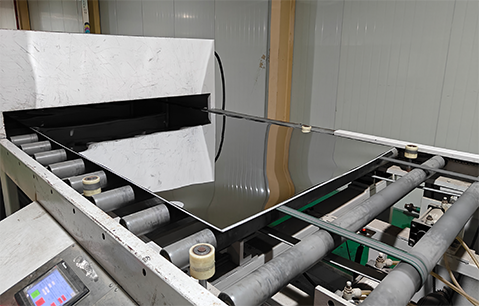
Well-produced acrylic mirror sheets go through controlled polishing and cooling stages to ensure a uniform surface. This results in mirror acrylic panels that are more resistant to daily wear, especially in commercial environments where frequent cleaning is unavoidable.
Another reason cheap acrylic mirrors scratch faster lies in how they are handled before installation. Protective film quality varies widely across suppliers. Inferior films can trap dust particles or adhere unevenly to the surface, causing micro-abrasions when removed.
In bulk orders of acrylic mirror sheet 4×8, improper stacking and insufficient spacing between sheets during transport can also lead to friction damage. These scratches may not be visible until the protective film is removed at the job site, leaving installers and buyers frustrated.

Reputable acrylic mirror manufacturers pay close attention to packaging methods, using appropriate interleaving materials and stable protective films. These details are rarely highlighted in product listings, yet they directly affect whether a mirror arrives scratch-free.
Many buyers only discover quality differences after installation, when routine cleaning begins. Acrylic mirrors require different care compared to glass, but higher-quality acrylic mirror sheets are far more forgiving than cheap alternatives.
Poor-quality mirror acrylic surfaces tend to scratch even when cleaned with soft cloths, especially if dust particles are present. This leads to the mistaken belief that acrylic mirrors are unsuitable for high-use areas. In reality, properly manufactured acrylic mirror products maintain surface clarity when cleaned with appropriate materials.
Commercial buyers using mirrored acrylic mirrors in gyms, retail stores, or public spaces often report that higher-grade acrylic mirrors retain their appearance far longer, even under frequent maintenance schedules. The difference is not technique alone, but surface integrity.
Large panels such as acrylic mirror sheet 4×8 are particularly revealing when it comes to scratch resistance. Any inconsistency in surface hardness, coating thickness, or internal stress becomes more noticeable across a wider area.
Cheap large-format acrylic mirror sheets may arrive looking acceptable, but once installed, minor surface flaws become obvious under lighting. Over time, scratches appear unevenly, creating visual distortion that affects the overall project quality.

This is why experienced project buyers often focus less on unit price and more on production consistency when sourcing large mirrored acrylic mirrors. The cost of replacement, reinstallation, and reputational damage far outweighs initial savings.
Many purchasing decisions are made based on photos, samples, or short-term inspections. Unfortunately, these methods rarely reveal long-term scratch behavior. Two acrylic mirror sheets can look identical on day one and perform very differently after six months.
Buyers who work directly with experienced acrylic mirror manufacturers gain access to technical guidance, material transparency, and realistic performance expectations. This partnership approach helps ensure that mirror acrylic products are matched to their intended use, whether decorative, commercial, or industrial.
On professional supplier websites like Likebond, product specifications, production control, and application guidance help buyers make informed decisions rather than relying solely on price.
It is important to clarify that scratching is not an inherent flaw of acrylic mirrors. It is a quality indicator. When cheap acrylic mirrors scratch faster, the issue lies in shortcuts taken during material selection, coating, polishing, or packaging.
Well-made acrylic mirror sheets are trusted across industries precisely because they balance safety, weight, and durability. When buyers understand what affects scratch resistance, they are better equipped to choose products that perform reliably over time.
Acrylic mirrors continue to replace glass in many applications for good reason. Their performance depends not on marketing claims, but on manufacturing discipline and material integrity. Buyers who look beyond surface appearance and consider how acrylic mirror sheets are made are far less likely to encounter scratching issues.
By recognizing what is often missed—surface hardness variation, coating quality, production tolerances, and handling practices—buyers can avoid the hidden costs of cheap acrylic mirrors and select mirror acrylic products that deliver long-term value.


