

Views: 0 Author: Site Editor Publish Time: 2026-08-26 Origin: Site


Walk into a well-designed boutique, hotel lobby, restaurant, showroom, or retail store and you may notice something before you consciously notice the furniture or lighting. It is the way the space feels.
Some interiors feel bright and energetic. Others are quiet, warm, dramatic, or almost futuristic. Light moves differently across every surface, and materials play a much bigger role in that experience than they are often given credit for.
This is where acrylic art panels are finding a new place in commercial design.
An acrylic panel is no longer simply a practical sheet material used for signage or fabrication. With the right color, finish, texture, thickness, and cutting method, it can become part of the visual identity of an interior. An Art Acrylic Sheet can add depth to a wall, soften a lighting installation, create a colorful retail display, or turn an otherwise ordinary surface into something people remember.
For designers, fabricators, sign makers, and material buyers, the attraction is not only appearance. An Acrylic Sheet offers a useful balance between visual flexibility and practical fabrication, making it suitable for projects where material performance and design freedom have to exist side by side.
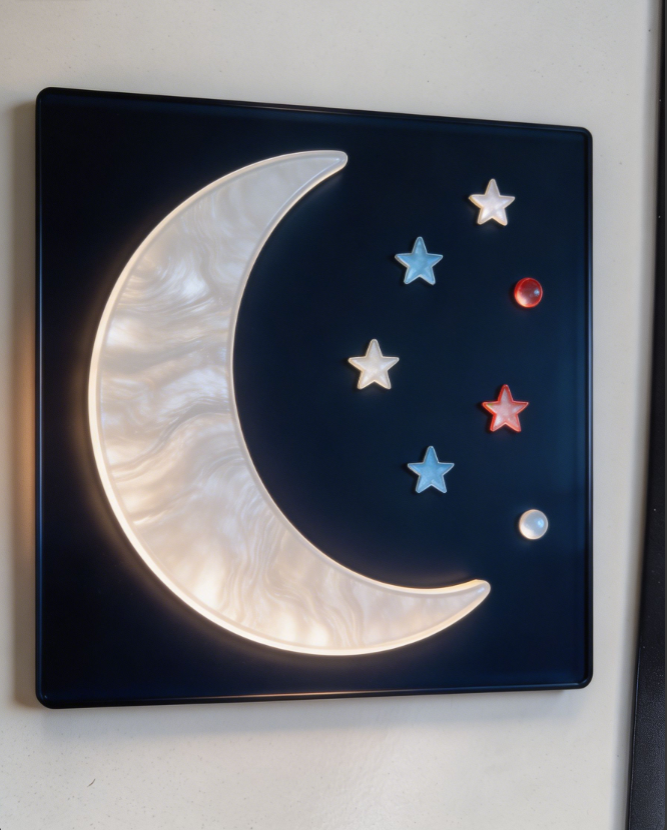
Commercial interiors are experienced rather than simply looked at.
A customer walking into a fashion store may not stop to examine the wall material, but they will notice whether the environment feels modern or dated. A hotel guest may not know what creates the softness of a reception area, yet the combination of color, reflected light, texture, and proportion can influence how welcoming the space feels.
Acrylic art panels work particularly well in this environment because they interact with light.
A solid-colored acrylic surface can give a wall a clean architectural character. A translucent or decorative surface can allow light to pass through softly, creating a more layered effect. A glitter acrylic finish can introduce movement when the lighting changes, while an acrylic mirror can bring reflection and visual depth into a compact space.
The material does not have to dominate the room. Sometimes its role is much quieter. A carefully selected panel behind a reception desk, inside a display cabinet, or around a lighting feature can provide just enough contrast to make the overall design feel complete.
That subtlety is one reason acrylic continues to attract commercial designers.
Traditional wall materials tend to have a fixed visual character. Wood looks like wood. Metal has its own texture and reflection. Glass has its own transparency and weight.
An Art Acrylic Sheet is different because its appearance can be developed in many directions.
Color is one of the most obvious possibilities. Strong solid colors can create a bold visual statement in retail interiors, while softer shades can be used in hospitality and lifestyle spaces where the atmosphere matters more than visual impact.
Texture changes the experience again.
A decorative acrylic panel with glitter or special visual effects can catch small changes in lighting throughout the day. Under direct illumination, tiny reflective elements may become more noticeable. Under softer ambient light, the same panel can appear much calmer. This creates a surface that does not always look exactly the same from every angle.
That quality can be valuable in commercial spaces because people rarely experience an interior from one fixed viewpoint.
Likebond's product range includes decorative acrylic options such as colored acrylic sheets and glitter acrylic sheets, giving buyers different directions for developing a visual concept rather than limiting a project to conventional clear plastic panels.
Designers often think about lighting and materials as separate decisions. In reality, they influence one another.
A light source can completely change how an acrylic surface is perceived. A pale panel may look understated under daylight and become more expressive under warm artificial lighting. A darker color can absorb much of the surrounding visual energy while producing a stronger sense of depth.
This makes acrylic particularly interesting for restaurants, retail stores, exhibition spaces, and hospitality interiors.
An Acrylic Sheet can be used as a decorative wall element, a partition, a backlit feature, or part of a display structure. The same basic material can therefore take on very different roles depending on how it is fabricated and illuminated.
For commercial projects, this flexibility matters because spaces are rarely designed around one visual condition. A retail store may receive strong daylight during the afternoon and rely almost entirely on artificial lighting after sunset. A hotel lobby may need to feel calm in the morning and sophisticated during evening hours.
A well-chosen acrylic surface can respond to those changes instead of remaining visually static.
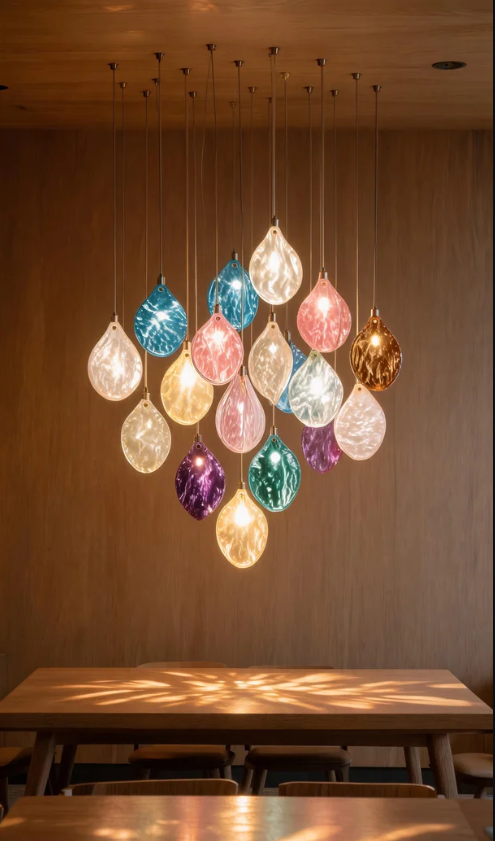
There is a practical reason designers pay so much attention to color: people react to it immediately.
A deep blue acrylic panel can give a reception area a more refined character. Warm tones can make a restaurant feel more intimate. Clean whites and neutral colors can support a minimalist retail concept without competing with merchandise.
The advantage of colored acrylic is that color becomes part of the material itself rather than something that has to be added as a separate decorative layer.
For large commercial projects, consistency becomes just as important as creativity. A beautiful color on a sample board is not enough if the finished panels vary noticeably from one another.
This is where material control becomes important for buyers. Likebond describes its custom color service as using professional color-mixing technology, with attention to color consistency and the choice between light-transmitting and solid-color effects.
For a designer working on a branded retail environment, that kind of control can make the difference between a concept that looks good on paper and one that actually feels cohesive after installation.
Color attracts attention, but texture encourages people to look closer.
A perfectly smooth surface reflects light in a predictable way. A textured or decorative acrylic surface introduces small variations that can change with viewing angle and illumination.
This is particularly useful when a commercial interior needs visual richness without becoming crowded.
Imagine a long wall inside a boutique. Leaving it completely plain may make the space feel unfinished, while covering it with too many decorative elements could overwhelm the products. A textured acrylic panel can occupy the middle ground. It gives the wall something to say without turning it into the main character.
The same idea can be applied to display counters, feature walls, decorative screens, signage backgrounds, and branded installations.
An Art Acrylic Sheet can therefore become less like a conventional building material and more like a component of the interior's visual language.
One of the strengths of acrylic is that it does not need to be used on a massive scale to make an impression.
A small decorative panel behind a logo can create separation between a brand mark and the wall. A shaped acrylic insert can add personality to a display stand. Colored panels can be combined to create geometric compositions, while reflective acrylic can visually expand areas where floor space is limited.
For fabricators, the ability to cut acrylic into different shapes is particularly useful.
Likebond states that its automatic cutting system supports customized geometric and figurative shapes based on customer drawings, allowing acrylic materials to move beyond standard rectangular panels.
That opens up more possibilities for commercial projects. Instead of asking a design to fit the limitations of a standard sheet, the material can be processed around the design concept.
It is a small change in thinking, but it can lead to very different results.
Retail spaces are constantly competing for attention.
Products need to stand out, brand colors need to remain recognizable, and the environment has to encourage people to stay a little longer. Materials used in these spaces therefore need to do more than simply cover a surface.
An Acrylic Sheet can serve as a background, display component, signage element, decorative partition, or part of a product presentation system.
A colored panel behind merchandise can reinforce a seasonal campaign. A glitter acrylic surface can add energy to a beauty or fashion display. A mirror acrylic element can create reflection without the weight and handling considerations associated with conventional glass mirrors.
Because acrylic can be fabricated into different forms, the material can also follow the shape of a particular brand concept.
For companies producing displays at scale, material consistency becomes especially important. When dozens or hundreds of panels are installed across multiple stores, differences in color, surface appearance, or fabrication quality can become surprisingly visible.
That is why commercial buyers should look beyond the appearance of a single sample and consider the manufacturer's production capability as part of the material decision.
Hotels, cafés, restaurants, and leisure spaces have a different challenge.
People do not visit these places only to buy something. They stay, talk, eat, wait, take photographs, and create memories.
The environment becomes part of the experience.
Acrylic art panels can contribute to that experience without making a space feel overly technical. A softly colored wall panel can warm up a modern interior. A decorative translucent element can break up harsh lighting. A reflective acrylic feature can add a little drama around a bar or entrance.
The goal is not to make everything shiny or visually spectacular. Good material selection often works in a quieter way.
A surface may simply catch the light at the right moment.
Someone walks past it, notices the change, and keeps moving. That small interaction is easy to overlook when discussing materials in technical terms, but it is exactly what makes an interior feel alive.
Commercial design rarely follows a universal formula.
A hotel may require one color family, a retail chain another. A signage company may need large standard sheets, while an interior fabricator may require unusual shapes and finishes.
This is why customization has become an important part of acrylic sourcing.
Likebond works with several material types, including PMMA acrylic and other substrates, allowing material selection to be matched to different application requirements. The company also provides custom substrates, colors, and shapes as part of its service.
For buyers, this means the conversation can move beyond “Which acrylic sheet do you sell?” toward a more useful question: “Which material and finish make sense for this particular project?”
That distinction can save time during development and help avoid choosing a material simply because it happens to be familiar.
The best acrylic material is not necessarily the most eye-catching one.
A dramatic finish may be perfect for a fashion display but unsuitable for a quiet hotel corridor. A highly reflective surface may work beautifully around a retail feature while creating unwanted reflections near a screen or information counter.
The surrounding environment should always be part of the decision.
Consider the amount of natural light, the artificial lighting temperature, the viewing distance, the expected cleaning routine, the shape of the installation, and the visual identity of the space. Think about what people will see from three meters away, but also what they may notice when they stand only a few centimeters from the surface.
These details influence whether an Acrylic Sheet feels premium, ordinary, warm, playful, or cold once it becomes part of the finished environment.
Acrylic is only the starting point. Fabrication and design determine much of the final character.
Commercial spaces are changing.
They are becoming more visual, more experiential, and more closely connected to brand identity. A wall is no longer simply a wall. A display is not merely a shelf. Even a partition can become an opportunity to introduce color, light, reflection, and texture.
That is where acrylic art panels have a particularly interesting role.
An Art Acrylic Sheet gives designers a material that can be colorful without being heavy, decorative without being excessively complicated, and adaptable enough to move between signage, display, decoration, and interior applications.
Likebond's focus on advertising and decorative materials reflects this broader use of acrylic. The company has worked in the field for around 20 years and provides acrylic sheets, acrylic mirrors, aluminum composite panels, and other materials for commercial applications.
For a material buyer, the value is not simply having another type of plastic sheet available.
It is having a material that leaves room for ideas.
Acrylic can catch a changing beam of light, hold a carefully selected brand color, carry a custom shape, or quietly add texture to a surface that once felt empty. In the right commercial space, these small details can become part of what people remember.
That may be the real appeal of acrylic art panels. They do not need to shout to transform a space.
Sometimes, they simply give light and texture somewhere interesting to go.


