

Views: 0 Author: Site Editor Publish Time: 2026-03-11 Origin: Site


Acrylic mirrors are widely used in interior decoration, retail displays, advertising signs, exhibitions, schools, and creative design projects. They provide a reflective appearance similar to traditional mirrors while being lighter, safer, and easier to customize than glass.
So, are acrylic mirrors any good? Yes—especially for indoor projects where low weight, impact resistance, installation convenience, and customized shapes are important. However, they also have limitations. Acrylic mirrors scratch more easily than glass, may distort if installed incorrectly, and are not recommended for outdoor use.
This guide explains their advantages, disadvantages, applications, and selection factors to help you decide whether they are suitable for your project.
An acrylic mirror is made from a PMMA sheet with a reflective coating applied to one side. The reflective layer is usually protected by paint, adhesive backing, or another protective material.
Because its base is acrylic rather than glass, the mirror is lightweight and impact-resistant. It can also be cut, drilled, engraved, and shaped more easily than a glass mirror.
Common types include:
Silver acrylic mirrors
Gold and colored acrylic mirrors
Self-adhesive acrylic mirrors
Paint-backed acrylic mirrors
Hardened acrylic mirrors
Double-sided and two-way mirrors
Patterned decorative mirrors
Silver mirrors provide a conventional reflective effect, while colored products such as gold, blue, green, and purple are mainly used for decoration, signs, displays, and branded environments.
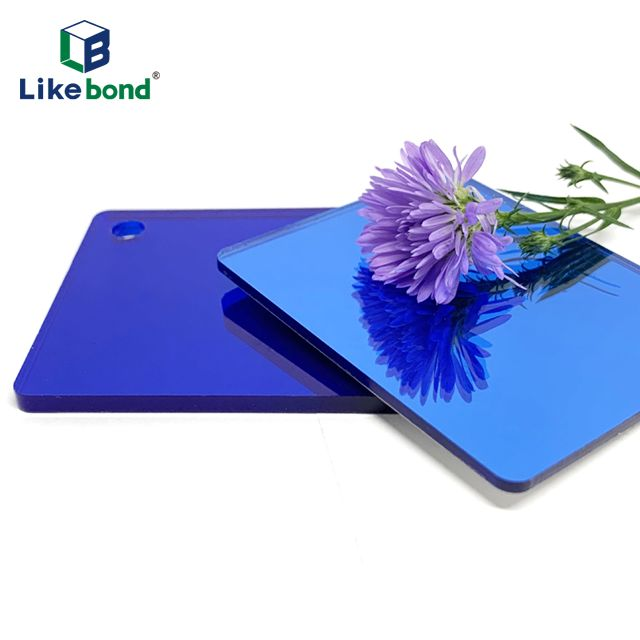
Likebond blue mirror coating acrylic sheet for indoor decoration and commercial displays.
| Feature | Acrylic Mirror | Glass Mirror |
|---|---|---|
| Weight | Lightweight | Heavier |
| Impact resistance | Highly resistant to breakage | May break into sharp pieces |
| Scratch resistance | More easily scratched | More scratch-resistant |
| Reflection | Good when properly installed | Usually flatter and more accurate |
| Customization | Easy to cut and shape | Requires specialized processing |
| Installation | Easier to lift and mount | Requires stronger support |
| Outdoor use | Not recommended | Depends on mirror construction |
| Typical use | Indoor décor, displays and signs | Bathrooms and precision reflection |
Acrylic mirrors are not better than glass in every situation. Glass is generally more suitable when accurate reflection and surface hardness are the main priorities. Acrylic is often the better option when safety, reduced weight, easy processing, and custom design matter most.
Acrylic mirrors are considerably lighter than glass mirrors of a similar size. This makes them easier to transport, lift, position, and install.
Their low weight is especially useful for decorative walls, ceilings, furniture, exhibition booths, retail displays, and temporary installations. It also reduces the load placed on walls and supporting structures.
Acrylic mirrors offer greater impact resistance than conventional glass mirrors. They do not normally break into dangerous sharp fragments, making them a safer option in areas where accidental impact may occur.
Typical applications include schools, children’s rooms, retail stores, gyms, exhibitions, and public interior spaces. Acrylic mirrors are not unbreakable, however. Strong impact can still crack, bend, or damage the sheet, so secure installation remains necessary.
Acrylic mirror sheets can be processed into letters, logos, circles, geometric patterns, decorative panels, and other custom shapes. This gives designers more freedom than standard glass mirrors.
They can be used for wall art, signs, display backgrounds, furniture details, and exhibition structures. Colored acrylic mirrors also allow the reflective surface to match a particular interior style or brand identity.
Acrylic mirrors can be mounted with compatible adhesive, self-adhesive backing, mechanical fasteners, or a supporting frame. Their low weight makes them easier to position during installation.
However, the supporting surface must be clean, dry, rigid, and completely flat. An uneven wall can cause the sheet to bend and produce a wavy reflection. Any adhesive used must also be compatible with acrylic and the reflective backing.
Large glass mirrors are heavy and difficult to transport safely. Acrylic mirror sheets are easier to handle, making them useful for large indoor feature walls and display panels.
Larger acrylic sheets are more likely to bend, so the correct thickness and full, even support are important. Selecting the thinnest sheet only to reduce cost may result in poor reflection quality.
Acrylic mirrors are available in silver, gold, blue, green, red, purple, and other colors. Different backing and surface options are also available.
Self-adhesive mirrors simplify certain installations, while hardened acrylic mirrors provide better resistance to light surface wear than standard acrylic. Two-way, double-sided, and patterned products are suitable for more specialized projects.
Standard acrylic is softer than glass. Its surface may be scratched by rough cloths, abrasive cleaners, brushes, or improper handling.
The protective film should remain on the sheet during transportation, cutting, and most of the installation process. For cleaning, use a soft microfiber cloth with mild soapy water. Avoid scouring pads, abrasive powders, strong chemicals, and rough paper towels.
Acrylic mirrors provide good reflectivity, but they are more flexible than glass. Large or thin sheets may bend slightly and create a distorted image.
Distortion can be caused by an insufficient sheet thickness, an uneven wall, uneven adhesive, overtightened fasteners, or inadequate support. Using a suitable thickness and a flat, rigid backing can improve the final result.
For close-range applications requiring highly accurate reflection, glass is usually the better choice.
Acrylic mirrors are not recommended for outdoor use. Sunlight, rain, moisture, and temperature changes may damage the reflective coating, backing, or adhesive.
Although PMMA itself may provide some weather resistance, this does not mean the complete mirror construction is suitable for long-term outdoor exposure. Acrylic mirrors should primarily be installed in dry, controlled indoor environments.
Strong solvents and incompatible cleaning products can make acrylic cloudy or cause surface cracks. Some adhesives may also damage the sheet or reflective backing.
Only cleaners, tapes, and adhesives suitable for acrylic mirrors should be used. If compatibility is uncertain, test the material on a small hidden area first.
Acrylic mirrors can be cost-effective for lightweight, custom-shaped, or large decorative projects, but they are not always cheaper than glass. Price depends on thickness, color, coating, size, backing, processing, and order quantity.
Buyers should consider transportation, fabrication, installation, and support costs instead of comparing sheet prices alone.
Acrylic mirrors can be installed on walls, ceilings, doors, cabinets, furniture, and decorative panels. Their low weight and customizable shapes make them suitable for modern interiors and creative spaces.
Retailers use acrylic mirrors for product backgrounds, window displays, signs, logos, lettering, and visual merchandising. Colored mirror sheets can add visual impact without the weight of glass.
Their impact resistance and reduced risk of sharp fragments make acrylic mirrors suitable for many schools, playrooms, childcare facilities, and children’s activity spaces.
Lightweight mirror panels are easy to transport, install, remove, and reuse. They can also be cut into custom shapes that match an exhibition booth or promotional theme.
Acrylic mirrors may be used in selected indoor activity areas where safety and reduced weight are priorities. Large installations require adequate thickness and a completely flat backing.
Acrylic mirrors can be incorporated into cabinets, shelves, wall panels, decorative objects, and furniture surfaces. Their easy processing supports both standard and customized designs.
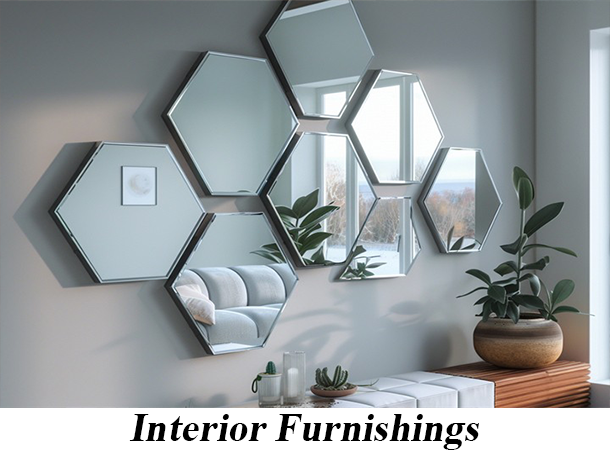
Decorative acrylic mirror panels used to add depth and visual interest to an indoor wall.
Thickness affects rigidity and reflection quality. Small decorative pieces may use thinner sheets, while larger mirrors normally need greater thickness and stronger backing.
The installation surface must be smooth, clean, dry, stable, and flat. Irregularities behind the sheet may affect the final reflection.
Silver mirrors suit conventional reflective decoration, while colored mirrors are mainly used for signs and displays. Self-adhesive, paint-backed, hardened, two-way, and double-sided mirrors serve different requirements.
Before ordering, confirm the required size, thickness, color, shape, edge treatment, backing, holes, and quantity. Accurate drawings are helpful when producing logos or complex shapes.
Quality acrylic mirror sheets should be supplied with protective film. Keep it in place during processing and installation to reduce the risk of scratches.
The Likebond acrylic mirror range includes different colors, thicknesses, backings, and customized options for indoor decoration and advertising applications.
Remove loose dust before wiping the surface. Use clean water, mild soap, and a soft microfiber cloth. Clean gently without applying excessive pressure.
Do not use abrasive pads, stiff brushes, strong solvents, or unsuitable glass cleaners. In busy commercial areas, regularly inspect the edges, fixings, and adhesive.
Are acrylic mirrors any good? Yes. They are lightweight, impact-resistant, easy to customize, and convenient to install. These qualities make them a practical option for indoor decoration, retail displays, schools, exhibitions, furniture, and selected activity spaces.
However, acrylic mirrors scratch more easily than glass and may produce distortion if they are too thin or installed on an uneven surface. They are also not recommended for outdoor use.
Acrylic mirrors are not a universal replacement for glass. They are most valuable when safety, low weight, flexible processing, and decorative customization are the main priorities.
Acrylic mirrors provide good reflectivity, but glass generally offers a flatter and more accurate reflection.
No. Acrylic mirrors are not recommended for outdoor use because sunlight, rain, moisture, and temperature changes may damage the coating, backing, or adhesive.
They are more prone to scratching than glass. Clean them with a soft microfiber cloth and avoid abrasive products.
Yes. Their impact resistance and reduced risk of sharp fragments make them safer than conventional glass mirrors for many children’s areas.
Yes. They can be cut into different sizes, letters, logos, patterns, and decorative shapes.
Distortion may occur when the sheet is too thin, incorrectly fixed, or installed on an uneven surface. A suitable thickness and flat backing can improve the result.


