

Views: 0 Author: Site Editor Publish Time: 2026-11-16 Origin: Site


Acrylic parts can look perfectly smooth after CNC machining and still develop cracks during assembly or later use. The problem is particularly frustrating when a component has already passed dimensional inspection, only to develop fine cracks around drilled holes, milled edges, or bonded joints.
In many cases, the problem is related to residual stress inside the material. Acrylic sheets can contain stress from manufacturing, while cutting, drilling, routing, and polishing may introduce additional stress during fabrication. When these stresses interact with unsuitable chemicals, mechanical loads, or temperature changes, the material becomes more susceptible to crazing and cracking.
Annealing is a controlled heat-treatment process used to reduce internal stress in acrylic. By heating the material within a suitable temperature range and allowing it to cool gradually, fabricators can improve dimensional stability and reduce the risk of stress-related defects.
This guide explains why machining cracks occur, how acrylic sheet annealing works, when to apply heat treatment, and which CNC machining practices help produce more reliable finished components.
Residual Stress: Manufacturing and machining can leave internal stress in acrylic sheets, increasing the possibility of cracking during fabrication and assembly.
Annealing Benefits: Controlled heating and slow cooling help relax internal stress, reducing the likelihood of crazing and stress-related cracking.
Processing Sequence: Depending on the material and machining requirements, stress relief may be considered before or after machining, particularly for complex components.
Temperature Control: Annealing temperature and holding time must follow the material manufacturer's recommendations. A single heating schedule is not suitable for every acrylic grade and thickness.
Machining Quality: Sharp tools, stable equipment, effective chip removal, and proper cooling are still essential. Annealing cannot compensate for poor cutting conditions.
Understanding the causes of machining cracks is the first step toward preventing them. Acrylic is a rigid thermoplastic with good optical properties, but it responds differently from metals during cutting and drilling.
Residual stress can develop during acrylic sheet production.
During extrusion, molten PMMA passes through a forming die and is subsequently cooled and drawn into sheet form. The continuous production process can introduce molecular orientation and internal stress.
Cast acrylic is produced through polymerization in molds. Temperature differences during curing and cooling can also create internal stress within the sheet.
These stresses may not be visible during ordinary inspection. A sheet can appear flat and transparent while still containing stress that becomes noticeable during machining or chemical exposure.
This is why material selection matters before production begins.
CNC machining removes material through cutting forces and friction.
When a cutter moves through acrylic, the cutting edge applies localized pressure to the workpiece. If the tool is dull, the feed rate is unsuitable, or chips cannot escape efficiently, frictional heat can build up around the cutting area.
This may cause several problems.
Excessive Heat: Acrylic can soften locally when machining temperatures become too high. The material may smear, melt, or develop irregular cut surfaces.
Mechanical Pressure: Excessive cutting force can create localized stress, especially around narrow features and unsupported sections.
Tool Vibration: Machine vibration and poor workpiece support can produce chatter marks and uneven cutting forces.
Sharp Internal Corners: Tight internal corners and drilled holes can concentrate stress, making these areas more vulnerable to cracking.
The result may be visible immediately or appear later when the component is drilled, fastened, bonded, or exposed to chemicals.
Crazing is a form of localized damage that appears as fine, often silvery or web-like lines within acrylic.
It develops when stressed regions of the polymer undergo localized deformation. Microscopic voids and stretched polymer fibrils form within the material, scattering light and creating a cloudy appearance.
Crazing is not the same as a complete crack, but it should not be ignored.
A crazed area may become more damaged when the component experiences additional mechanical loading or contact with incompatible chemicals.
For example, a machined acrylic housing may look acceptable before cleaning but develop visible crazing after exposure to an unsuitable solvent-based cleaner.
Reducing residual stress through suitable annealing can lower this risk, although chemical compatibility and machining quality must still be controlled.
Annealing is a controlled process in which acrylic is heated to a specified temperature, held for an appropriate period, and cooled gradually.
The purpose is to allow the polymer structure to relax without causing the component to soften excessively or lose its intended shape.
At ordinary workshop temperatures, PMMA behaves as a rigid thermoplastic. When heated within a suitable stress-relief range, molecular movement becomes easier, allowing some of the locked-in stresses to dissipate.
This process does not make the material completely stress-free in every case. Its effectiveness depends on the original material condition, component geometry, heating uniformity, and cooling procedure.
Controlled Heating: The workpiece is heated gradually in a suitable oven. Uniform temperature distribution helps prevent large temperature differences between the surface and the interior.
Temperature Holding: The material remains at the specified temperature long enough for the relevant section to reach the required thermal condition and for stress relaxation to occur.
Controlled Cooling: The component cools gradually under controlled conditions. Removing it too early or exposing it to rapid temperature changes can introduce additional stress.
All three stages matter. A correct heating temperature cannot compensate for uneven heating or uncontrolled cooling.
Annealing can significantly reduce the likelihood of stress-related cracking, but it should not be considered a complete solution to every machining problem.
Machining creates localized stress around cut surfaces, drilled holes, and milled features.
If these areas already contain residual manufacturing stress, the combined stress may increase the risk of cracking.
Annealing helps relax some of the internal stress created during production and fabrication.
This is particularly useful for components with complex machining features, close dimensional requirements, or subsequent chemical bonding operations.
However, excessive mechanical loads, sharp notches, incorrect fastening, and poor cutting conditions can still cause failure.
Chemical exposure is another reason fabricators use annealing.
Certain solvents, adhesives, cleaning products, and coating materials can trigger crazing when they contact stressed acrylic surfaces.
The risk depends on the chemical formulation, material grade, contact time, and existing stress level.
By reducing residual stress, annealing can improve the material's resistance to stress-assisted chemical damage.
However, annealing does not make acrylic resistant to every solvent. Chemical compatibility should always be checked before selecting cleaners, adhesives, or processing fluids.
Residual stress can also affect acrylic cementing.
When solvent cement is applied to a stressed surface, localized crazing may develop around the joint. This can affect the appearance and reliability of the finished assembly.
Suitable stress relief before bonding can help reduce this risk.
The bonding process still requires clean surfaces, compatible cement, accurate joint fitting, and sufficient curing time.
The correct timing depends on how much material will be removed and what operations will follow.
Pre-machining annealing may be considered when the starting material contains significant residual stress or when the project involves heavy material removal.
This is particularly relevant for thick acrylic blocks, large panels, and components with deep asymmetrical pockets.
When a large amount of material is removed from one side, the stress distribution inside the remaining workpiece may change. This can cause the blank to bend or move out of tolerance.
Stress relief before machining may help stabilize the stock, but it should be evaluated according to the material grade and dimensional requirements.
For precision components, test machining a representative sample can help determine whether pre-treatment is necessary.
Machining can introduce additional stress around cut edges and drilled features.
Post-machining annealing is therefore worth considering when the component will undergo further operations that are sensitive to internal stress.
Solvent Bonding: Stress relief may help reduce crazing around bonded joints.
Polishing: Flame polishing and other finishing operations can introduce localized heat. Stress management before or after these operations may be necessary depending on the process.
Printing and Painting: Certain inks, coatings, and cleaning chemicals may cause stress-related surface defects.
Precision Assembly: Components with drilled holes, internal channels, or threaded features may benefit from stress-relief treatment when dimensional stability and crack resistance are important.
The exact sequence should be established with reference to the material manufacturer's fabrication recommendations.
For complex components, a staged machining process can be more suitable than performing all cutting operations in one session.
Initial Material Assessment: Confirm the acrylic grade, thickness, manufacturing process, and existing stress condition.
Rough Machining: Remove the main volume of material while leaving sufficient finishing allowance around critical dimensions.
Intermediate Stress Assessment: If heavy material removal has caused distortion or the component has demanding tolerances, evaluate whether another stress-relief cycle is required.
Finish Machining: Complete the final surfaces, holes, and critical dimensions using suitable cutting conditions.
Final Inspection: Check flatness, dimensions, surface quality, and visible signs of crazing before assembly.
This workflow allows fabricators to identify dimensional changes before they become expensive production problems.
There is no universal annealing schedule that applies to every acrylic sheet.
The appropriate temperature and holding time depend on the material grade, thickness, component geometry, manufacturing history, and intended fabrication process.
Annealing temperatures need to be high enough to allow stress relaxation but low enough to avoid unacceptable deformation.
If the temperature is too low, stress relief may be insufficient.
If it is too high, the component may soften, warp, shrink, or lose dimensional accuracy.
This is particularly important for parts with narrow tolerances, thin walls, unsupported sections, and complex geometries.
Always use the temperature range recommended for the specific acrylic material.
Heat does not reach the center of a thick acrylic component as quickly as it reaches the surface.
A thin sheet may reach a relatively uniform temperature sooner, while a thick block requires more time for the internal section to heat evenly.
Therefore, holding time should be based on the thickest relevant section rather than simply the nominal sheet thickness.
For parts with varying wall dimensions, the geometry and support arrangement should also be considered.
Cooling is not simply the final step before removing the component.
If the surface cools significantly faster than the interior, temperature differences can create new internal stress.
A controlled cooling cycle helps maintain more uniform temperature changes throughout the workpiece.
Parts should remain in the controlled environment until the manufacturer's recommended removal conditions are reached.
A forced-air circulating oven is generally recommended for acrylic annealing because it helps distribute heat more evenly.
The equipment should provide accurate temperature control, adequate air circulation, and sufficient space for the components.
Parts also need appropriate support. Large panels and formed components should not be left unsupported if softening during the heating cycle could cause sagging or distortion.
Paper masking and other protective materials must be handled according to the material manufacturer's instructions. Paper masking may need to be removed before heating, while some plastic films may tolerate the specified cycle. A sample test is advisable when masking compatibility is uncertain.
Cast and extruded acrylic are both PMMA materials, but their production processes create different fabrication characteristics.
The choice should depend on the machining requirements rather than assuming that one type is always suitable for every project.
Cast acrylic is produced through a batch polymerization process.
It is commonly selected for fabrication involving engraving, drilling, routing, and other machining operations.
Its processing behavior can be advantageous for components requiring detailed machining and finishing.
However, cast acrylic is not automatically free from residual stress. Cooling conditions during manufacturing and subsequent machining can still affect the final component.
Stress relief may be necessary when the application involves close tolerances, solvent bonding, or demanding surface finishes.
Extruded acrylic is manufactured through a continuous process.
Its thickness consistency can be useful when producing repeated components that need to fit into fixed assemblies.
However, the material may have different stress characteristics and machining responses from cast acrylic.
Tool selection, cutting conditions, and annealing requirements should therefore be confirmed for the specific grade.
Detailed Machining: Consider cast acrylic when the project requires extensive machining, engraving, or complex component fabrication.
Repeated Components: Extruded acrylic may be suitable when thickness consistency and production efficiency are important.
Chemical Bonding: Evaluate stress conditions and chemical compatibility before selecting either material.
Precision Applications: Request material specifications and test samples before committing to large production quantities.
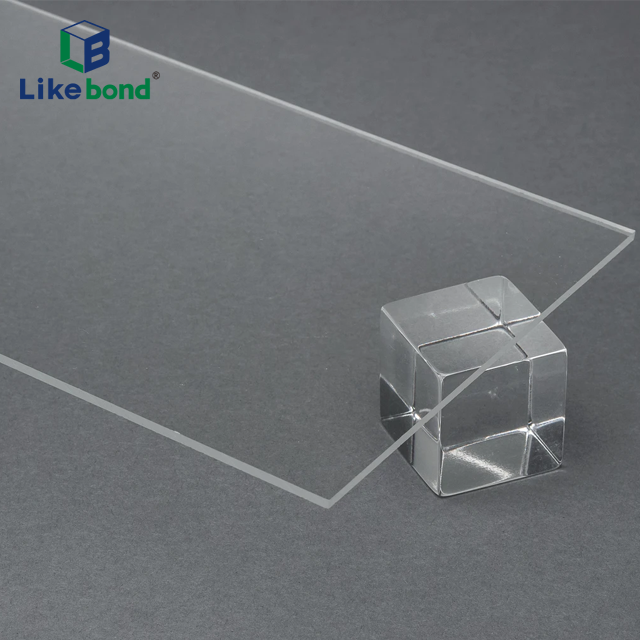
Our transparent acrylic sheet is one product option to review when planning clear acrylic fabrication. Confirm the available grade and processing requirements with our team before selecting material for a precision machining project.
Annealing is only one part of a reliable acrylic fabrication process. Cutting conditions must also be controlled to avoid introducing unnecessary stress.
Acrylic requires cutting tools that can produce clean chips without excessive friction.
Dull tools may rub against the material instead of cutting efficiently. This generates heat and can leave melted edges, rough surfaces, and localized stress.
Use sharp tools with geometry suitable for plastics. Single-flute or double-flute cutters may be appropriate for certain routing operations, depending on the machine, material thickness, and cutting strategy.
Tool condition should be checked regularly, particularly during long production runs.
Feed rate and spindle speed should be adjusted together.
If the cutter moves too slowly relative to its rotation, friction can increase and cause the acrylic to soften. Excessive feed pressure can also produce chipping and edge damage.
The correct settings depend on cutter diameter, flute geometry, material thickness, machine rigidity, and the required finish.
Rather than applying one fixed speed and feed value to every acrylic sheet, test the cutting conditions on representative material and inspect the resulting chips and edges.
Acrylic chips can accumulate around the cutter and increase friction.
Compressed air, suitable extraction systems, or compatible cooling methods can help remove chips from the cutting area.
This is especially important when machining deep pockets, narrow channels, and enclosed features.
For coolant applications, confirm chemical compatibility before use. Some cutting fluids and additives may cause crazing or discoloration.
Acrylic sheets should be adequately supported during machining.
Insufficient clamping or uneven vacuum support can allow the workpiece to move or vibrate. This may lead to chatter marks, inaccurate dimensions, and localized stress.
For large panels, check that the support surface is clean and flat. For small components, use fixtures that distribute clamping pressure without creating concentrated loads.
Drilling creates localized stress, particularly around hole edges.
Use suitable drill geometry, sharp cutting edges, and controlled feed conditions. Remove chips regularly to prevent friction and heat accumulation inside the bore.
Acrylic is also sensitive to sharp notches. Threaded features should be designed carefully, and acrylic threads should not automatically be treated as load-bearing connections.
For applications involving repeated fastening or higher loads, consider suitable inserts or reinforced connections.
A component may look transparent and dimensionally correct while still containing internal stress.
Inspection methods can help identify potential problems before final assembly.
Inspect milled edges, drilled holes, internal corners, and bonded areas under consistent lighting.
Look for fine cracks, cloudy patches, silver-like lines, and other irregularities.
Visual inspection is useful for identifying visible damage but cannot reveal every internal stress condition.
A polariscope or suitable polarized-light inspection setup can help reveal stress patterns in transparent acrylic.
When polarized light passes through stressed material, optical effects may produce visible patterns.
These patterns can help identify areas where stress is concentrated, particularly around holes, corners, and machined features.
However, the appearance of the patterns depends on part geometry, thickness, and the inspection arrangement. Interpretation should be carried out by personnel familiar with the method.
For precision components, dimensional checks should be performed before and after annealing.
This helps identify any warpage, shrinkage, or movement caused by the heat-treatment process.
If the component changes beyond the allowable tolerance, review the heating temperature, support arrangement, and original fabrication conditions before repeating the process.
Annealing is an important part of acrylic fabrication when residual stress creates a risk of machining cracks, crazing, or dimensional changes.
Controlled heating and gradual cooling allow internal stress to relax, improving the stability of suitable acrylic components. However, annealing cannot replace proper cutting tools, effective chip removal, stable workholding, and compatible chemicals.
The best results come from treating material selection, machining, heat treatment, and inspection as connected stages of one manufacturing process.
For fabricators working with complex or precision acrylic components, confirming the sheet grade and its processing requirements before production can reduce avoidable defects and improve manufacturing consistency.
No. Annealing reduces residual stress and lowers the likelihood of stress-related cracking and crazing. However, excessive mechanical loads, poor machining, unsuitable chemicals, and incorrect assembly can still cause cracks.
It depends on the material condition and machining requirements. Pre-machining stress relief may help stabilize certain blanks, while post-machining annealing can reduce stresses introduced during cutting. Complex parts may require a staged approach.
A household kitchen oven is not recommended as a substitute for controlled industrial processing. Acrylic annealing requires suitable air circulation, accurate temperature control, adequate ventilation, and a controlled cooling process. Use equipment appropriate for processing thermoplastics and follow the material manufacturer's instructions.
A correctly controlled annealing cycle should preserve the intended optical appearance. Excessive temperature, uneven heating, poor support, or unsuitable protective masking can cause distortion or surface defects.
Cast acrylic is commonly selected for detailed machining and fabrication, while extruded acrylic offers useful thickness consistency for repeated components. Actual performance depends on the specific grade, machining conditions, and application.
Certain chemicals can trigger stress-related crazing when they contact acrylic containing residual stress. Chemical compatibility varies by material grade and formulation. Check the manufacturer's recommendations before using alcohol-based or solvent-based cleaners.
Annealing may be appropriate when the component has undergone machining, thermoforming, bonding, or other stress-inducing operations, particularly if it will later contact chemicals. Review the material manufacturer's recommendations and consider stress inspection for critical components.
Some colored acrylic sheets can undergo annealing, but the correct conditions depend on their material formulation and production specifications. Test representative samples and confirm the recommended temperature cycle before processing a large batch.
At Likebond, we manufacture and supply acrylic sheets, acrylic mirrors, and other advertising and decorative materials for commercial applications.
Our production facilities use automated manufacturing and processing equipment. We also support material selection, sample preparation, custom colors, and cutting services according to project requirements.
When sourcing acrylic for CNC machining, it is important to consider the material grade, thickness, dimensional requirements, and intended fabrication process.


