

Views: 0 Author: Site Editor Publish Time: 2026-11-19 Origin: Site


An aluminum composite panel may look good when it leaves the factory, but its appearance can change after years of exposure to sunlight, rain, humidity, and urban pollution. For architects, contractors, and material distributors, choosing the right surface finish is therefore an important part of an exterior cladding project.
PVDF coating is widely used on aluminum composite panels (ACP) designed for outdoor applications. It helps the aluminum surface retain its color and finish while providing resistance to weathering, UV exposure, and environmental pollutants.
However, not every product labeled as PVDF-coated offers the same level of protection. Resin content, coating layers, surface preparation, curing conditions, and quality control all influence the final performance.
This guide explains how PVDF coating works, how it compares with other coating options, and what buyers should check before ordering aluminum composite panels for architectural projects.
Weather Protection: PVDF coating helps protect aluminum surfaces against prolonged outdoor exposure, including sunlight, rain, humidity, and atmospheric pollutants.
Color Retention: Its fluoropolymer chemistry provides good resistance to fading and chalking, helping architectural panels maintain a consistent appearance over time.
Coating Composition: High-performance architectural PVDF systems commonly specify at least 70% PVDF resin within the resin binder. This figure does not represent 70% of the entire liquid paint formulation.
Manufacturing Quality: Surface preparation, primer application, coating thickness, and curing conditions all affect adhesion and long-term performance.
Project Specifications: Buyers should check the coating system, applicable performance standards, aluminum skin thickness, core material, and warranty conditions rather than relying on the PVDF label alone.
PVDF stands for polyvinylidene fluoride. It is a fluoropolymer resin known for its chemical stability and resistance to environmental degradation.
In architectural applications, PVDF is used as a binder in protective coating formulations for aluminum surfaces. The finished coating also contains other ingredients, including acrylic resin, pigments, solvents, and additives, depending on the formulation.
One specification commonly used for high-performance architectural coatings is a 70% PVDF resin content within the resin binder. The remaining resin portion is generally made up of compatible acrylic resin.
It is important to understand what this percentage means. It refers to the resin component, not 70% of the total wet paint. Pigments, solvents, and other additives are separate parts of the coating formulation.
This distinction matters when comparing supplier quotations. Two products may both be described as PVDF-coated ACP, but their actual coating formulations and performance qualifications may differ.
The main reason PVDF performs well outdoors is its chemical structure.
Fluoropolymer resins contain strong carbon-fluorine bonds. These bonds contribute to the coating's resistance to ultraviolet exposure, chemical attack, and weathering.
When sunlight reaches an exterior panel, the coating is exposed to UV radiation that can gradually degrade less durable organic finishes. This may cause pigment fading, loss of gloss, and chalking.
A properly formulated PVDF coating slows these changes and helps maintain the appearance of the aluminum surface.
The coating also acts as a protective layer against moisture and environmental contaminants. However, it does not make the entire panel immune to corrosion. Pretreatment, coating adhesion, panel edges, installation details, and maintenance remain important.
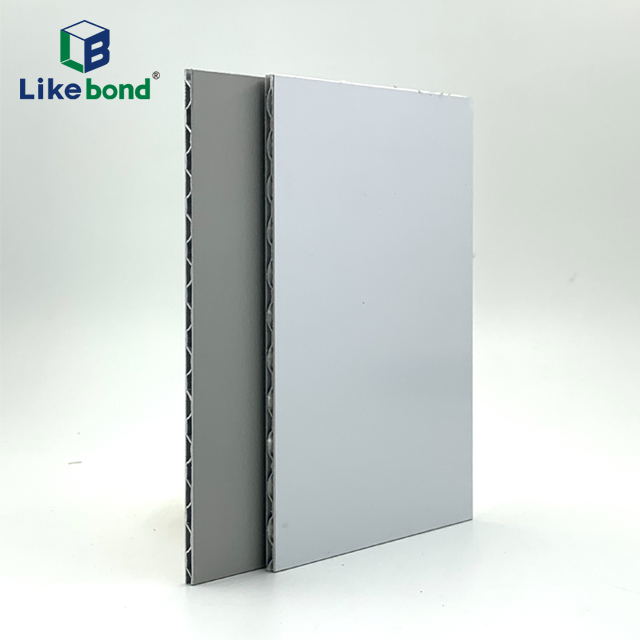
An aluminum composite panel generally consists of two aluminum skins bonded to a central core. The front aluminum surface receives the decorative and protective coating.
The coating is therefore different from the core material. It protects the exposed aluminum face, while the core contributes to the panel's overall structure and other product characteristics.
Depending on the product configuration, the core may be standard polyethylene or a fire-retardant formulation.
Buyers should evaluate these components separately. A PVDF finish does not automatically mean that the complete ACP has a particular fire-resistance classification.
For an overview of our available Aluminum Composite Panel products, you can review the different panel categories and surface options.
Sunlight is one of the main factors affecting the appearance of exterior building materials.
Continuous UV exposure can break down coating binders and pigments. Over time, this may result in fading, chalking, and reduced gloss.
PVDF coatings are formulated to resist these effects. This makes them suitable for projects where the facade needs to retain a relatively consistent appearance over extended outdoor use.
For commercial buildings with large exterior surfaces, color retention is especially important. Replacing or refinishing facade panels after installation can involve substantial labor, access equipment, and project disruption.
Exterior panels are regularly exposed to rainwater, dust, airborne pollutants, and changes in humidity.
A suitable PVDF coating helps reduce the impact of these environmental conditions on the exposed aluminum surface.
In industrial and urban areas, airborne contaminants may accumulate on the facade and affect its appearance. In coastal locations, salt-containing moisture creates additional corrosion concerns.
PVDF provides a useful protective finish, but the complete coating system must be properly selected for the installation environment.
For particularly aggressive coastal or industrial conditions, buyers should also confirm the aluminum pretreatment, coating specification, and installation details.
Chalking occurs when the coating binder gradually degrades and pigment particles become exposed at the surface. It can leave a powdery residue and make the panel look faded or uneven.
PVDF coatings are designed to resist this process more effectively than many conventional exterior paint formulations.
This is useful for projects with large areas of solid color, metallic finishes, or corporate brand colors.
For multi-building projects, consistent color selection and batch control are also important. Buyers should approve a physical sample and establish color acceptance requirements before production.
ACP panels often need to be routed, folded, bent, and cut before installation.
The coating must remain suitable for the intended fabrication process. A poorly matched coating system may crack, peel, or show visible damage around processed areas.
PVDF coating systems are designed to provide a balance between surface durability and flexibility. However, the actual result depends on the coating formulation, film thickness, bending radius, and fabrication conditions.
Before processing a large quantity of panels, it is advisable to test a sample using the planned routing and folding method.
A durable surface finish can reduce the need for frequent repainting and intensive cleaning.
Some advanced coating systems also incorporate protective surface treatments designed to reduce dirt adhesion.
Rain may remove loose dust from exposed surfaces, but it should not be treated as a complete cleaning solution. Buildings in industrial areas or locations with limited rainfall may still require periodic washing.
Use cleaning methods recommended by the panel manufacturer. Abrasive tools and aggressive chemicals can damage the finish.
Different coating technologies serve different purposes. The best choice depends on the building environment, appearance requirements, project budget, and expected maintenance conditions.
| Comparison Factor | PVDF Coating | Polyester Coating | Powder Coating |
|---|---|---|---|
| Coating type | Fluoropolymer-based | Polyester resin-based | Dry powder application process |
| UV resistance | Generally high | Depends on formulation | Depends on resin chemistry |
| Color retention | Designed for long-term exterior use | Varies by grade | Varies by coating formulation |
| Weather resistance | Suitable for demanding exterior applications | Depends on specification | Depends on resin and system |
| Processing | Available in factory coating systems | Available in factory coating systems | Commonly applied to prepared metal components |
| Typical consideration | Long-term exterior performance | Cost and application requirements | Film uniformity and application compatibility |
PVDF is commonly selected when long-term outdoor appearance is a priority.
Its resistance to UV exposure and weathering makes it suitable for building facades, commercial exterior walls, and outdoor signage.
For demanding projects, the coating should be specified according to an appropriate performance standard rather than selected based on its name alone.
Polyester coatings are used in various metal finishing applications.
They can be a practical option when project requirements, environmental exposure, and budget allow for a less demanding coating specification.
However, buyers should not assume that every polyester coating has the same outdoor performance. Formulation, film thickness, substrate preparation, and testing results all matter.
Powder coating is an application method rather than a single resin chemistry.
Different powder formulations may use polyester, epoxy, or other resin systems. Their performance therefore depends on the specific material and curing process.
When comparing powder-coated products with PVDF-coated ACP, buyers should compare the actual coating chemistry, applicable standards, and intended application.
The important question is not simply which coating sounds more advanced, but which coating system meets the project's requirements.
The quality of a coated ACP depends on more than the paint formulation. Manufacturing conditions also influence adhesion, appearance, and durability.
Before coating, the aluminum surface needs to be cleaned and prepared.
Oil, dust, oxidation, and other contaminants can interfere with coating adhesion. Industrial pretreatment processes help create a suitable surface for the subsequent coating layers.
The exact pretreatment system depends on the aluminum substrate and coating manufacturer's requirements.
A primer may be applied to improve adhesion between the aluminum surface and the subsequent coating layers.
It also forms part of the overall protective system.
The primer formulation and application conditions need to be compatible with the selected topcoat.
The PVDF coating is applied to achieve the required color, gloss, and protective properties.
Depending on the specification, the coating system may include a primer, color coat, and clear protective layer.
Some architectural coating systems use two-coat structures, while others use three-coat systems. The number of coats should be confirmed from the product specification.
After application, the coated aluminum passes through a controlled curing process.
The curing conditions depend on the coating formulation and production equipment. Temperature and line speed must be controlled to achieve the required film formation and adhesion.
A fixed oven temperature should not be applied to every PVDF system.
After coating and curing, the material should be inspected for appearance and coating quality.
Surface Appearance: Check for visible color differences, scratches, pinholes, and uneven coating.
Film Thickness: Verify that the dry film thickness meets the agreed product specification.
Adhesion: Confirm that the coating is properly bonded to the aluminum substrate.
Color Consistency: Compare samples against the approved color standard.
Processing Suitability: Where folding or routing is required, evaluate the coating after fabrication.
At Likebond, our ACP manufacturing process includes automated production and surface treatment. Our product range describes a PVDF three-coat, three-bake process combined with a nano-protective layer. The specific coating structure and available finish should be confirmed for the selected product.
Large commercial buildings require exterior materials that can maintain their appearance under continuous environmental exposure.
PVDF-coated ACP can be used for facade cladding, decorative exterior panels, and architectural feature surfaces.
Its relatively lightweight composite structure also gives designers flexibility when planning panel layouts and installation systems.
However, the complete facade design must account for wind loads, support spacing, fixing methods, thermal movement, and local building regulations.
Shopping centers, office buildings, and retail chains often use ACP to create consistent exterior branding.
Color options and different surface finishes make it possible to coordinate facade panels with company logos, architectural features, and storefront designs.
For projects involving multiple locations, sample approval and batch color control help maintain a consistent visual result.
Outdoor signs need to maintain their appearance despite exposure to sunlight, rain, and dust.
Coated aluminum composite panels are used for signboards, advertising structures, commercial displays, and directional signage.
The selection should consider the panel dimensions, installation method, local weather conditions, and required service life.
Coastal areas expose building materials to salt-containing moisture, while industrial locations may contain airborne chemicals and pollutants.
A suitable PVDF coating can provide additional protection for the exposed aluminum surface.
Nevertheless, coating selection should be combined with appropriate substrate preparation, edge protection, installation details, and maintenance planning.
A product description that simply says PVDF coating is not enough for a technically demanding project.
Procurement teams should request clear specifications before confirming an order.
For high-performance architectural applications, a common specification is a coating containing at least 70% PVDF resin within the resin binder.
Ask the supplier to clarify how the percentage is calculated and request supporting technical documentation.
Do not confuse the resin percentage with the total weight of the wet paint formulation.
AAMA 2605 is commonly referenced for high-performance organic coatings on architectural aluminum.
If a project requires this standard, request relevant compliance documentation or test reports for the specified coating system.
A product should not be assumed to meet AAMA 2605 simply because its description includes the term PVDF.
Coating thickness influences the protective performance of the finished surface.
Ask for the specified dry film thickness and confirm whether the figure applies to the complete coating system or an individual layer.
The required value should follow the selected coating system and project specification.
The coating is only one part of an ACP.
Buyers should also confirm the overall panel thickness, aluminum skin thickness, core composition, and required fire-performance classification.
For fire-sensitive projects, request the relevant test reports for the complete panel assembly. A PVDF finish alone does not establish the fire rating of the product.
Our ACP Aluminum Composite Material Panels 4×8 provide a product reference for reviewing panel construction, available dimensions, and surface treatment options.
A warranty should clearly identify the covered performance, applicable environment, and maintenance conditions.
Buyers should check whether the warranty covers color fading, chalking, adhesion failure, or other specific coating defects.
For projects with custom colors, request a physical sample and agree on the acceptable color variation before bulk production.
PVDF-coated panels are designed for relatively low maintenance, but they still require appropriate care.
Routine Cleaning: Wash the surface with clean water and a mild, non-abrasive detergent when necessary.
Remove Accumulated Dirt: Buildings near roads, industrial facilities, or coastal areas may require more frequent cleaning.
Avoid Aggressive Chemicals: Strong solvents and unsuitable cleaning agents can damage the coating. Always follow the manufacturer's cleaning recommendations.
Inspect Panel Joints: Check sealants, joints, fasteners, and exposed edges as part of routine facade maintenance.
Repair Installation Damage: Scratches or damaged areas should be assessed promptly. Use compatible repair materials recommended by the panel supplier.
A regular maintenance schedule helps identify problems before they affect larger areas of the building.
PVDF coating plays an important role in the long-term performance of aluminum composite panels used outdoors. Its fluoropolymer chemistry provides resistance to UV exposure, weathering, and environmental pollutants while helping maintain color and surface appearance.
However, the performance of a coated ACP depends on the complete system. Resin content, coating layers, aluminum pretreatment, curing conditions, panel construction, and installation quality all need to be considered.
For architects, contractors, and distributors, reviewing the actual coating specification is more reliable than choosing a product based on the PVDF label alone.
At Likebond, we manufacture and supply aluminum composite panels with different surface treatments, colors, and specifications. Our automated production and coating capabilities support projects involving architectural decoration, exterior cladding, and advertising applications.
PVDF coating is a fluoropolymer-based protective finish applied to the exposed aluminum surface of an ACP. It helps improve resistance to UV radiation, weathering, fading, and environmental pollutants.
High-performance architectural PVDF coatings commonly specify at least 70% PVDF resin within the resin binder. This does not mean that PVDF accounts for 70% of the entire paint formulation. Buyers should check the coating manufacturer's technical documentation.
Service life depends on coating quality, aluminum substrate, environmental exposure, installation, and maintenance. Likebond's ACP product information lists an indicative outdoor service life of 15–20 years under normal conditions, but project-specific performance should be confirmed through the product specification and warranty.
PVDF generally offers better long-term weathering and color retention for demanding exterior applications. Polyester may be suitable for less demanding projects where cost and application requirements are different. The final decision should be based on coating specifications and performance testing.
Yes. PVDF-coated ACP is used for exterior wall decoration, commercial building facades, and outdoor advertising. The complete panel structure, fixing system, wind-load requirements, and local building codes must also be considered.
No. PVDF is a surface coating and does not determine the fire classification of the complete panel. Fire performance depends primarily on the core composition and the tested panel assembly. Buyers should request the relevant fire-test documentation.
PVDF coatings provide good weathering and chemical resistance, but they are not scratch-proof. Sharp objects, improper handling, and abrasive cleaning can still damage the surface. Protective film should remain in place during transportation and installation where appropriate.
Yes. Depending on the selected product and production requirements, ACP can be customized in dimensions, colors, surface finishes, and certain structural specifications. Buyers should provide drawings and project requirements for confirmation.
At Likebond, we manufacture and supply aluminum composite panels, acrylic sheets, and decorative advertising materials for commercial and architectural applications.
Our ACP production capabilities include automated lamination, surface coating, and panel processing. We offer different coating and decorative finish options, including PVDF and polyester systems, subject to product configuration.
We also support sample requests, color selection, customized dimensions, and production coordination to help buyers confirm their requirements before placing bulk orders.
Whether you are sourcing panels for building exteriors, commercial storefronts, or outdoor signage, our team can help you review the available specifications.


