

Views: 0 Author: Site Editor Publish Time: 2026-01-27 Origin: Site


In environments where visibility and privacy must coexist, the acrylic two-way mirror stands out as a remarkable solution. Unlike a standard mirror that simply reflects, this kind of mirror allows light to pass through from one side while reflecting on the other, creating a unique visual effect that serves both practical and aesthetic needs. The acrylic two-way mirror is manufactured from high-quality extruded acrylic sheet, engineered to deliver controlled transparency while maintaining the durability and clarity needed for demanding applications. This introduces questions that often arise for clients and designers alike: What is a two way mirror, and what makes the acrylic version different? How can you tell if a mirror is two way? And in what scenarios does this specialized material truly shine?

To truly understand the value of an acrylic two-way mirror, it helps to explore its properties, how it works, and the everyday applications where it transforms spaces.
When people search for a two way mirror, they are usually imagining a surface that reflects like a regular mirror but also allows observation through the reflective surface under specific lighting conditions. The term two-way mirror refers to a partially reflective, partially transparent surface. Standard mirrors use a thick metal coating behind glass or acrylic to reflect almost all incident light. In contrast, a two-way mirror uses a semi-reflective coating that splits incoming light: part of it reflects back, providing a mirrored appearance, while another portion passes through.

The scientific principle behind this effect relates to how the coating balances reflectivity and transmissivity. Acrylic two-way mirrors are designed to achieve just the right ratio—enough reflection to look like a mirror to observers in bright conditions, and enough transmission to let a viewer on the less illuminated side see through.
This delicate interplay between reflection and transmission explains why the acrylic version is so useful. Acrylic as a base material offers clarity, UV resistance, shatter resistance, and ease of fabrication that glass can’t match. Those attributes make the acrylic two-way mirror ideal for contexts where both performance and safety are priorities.
One of the most common questions customers ask is what is an acrylic two way mirror compared to conventional glass? The answer lies in the inherent advantages of acrylic itself. Acrylic is a polymer that is lighter and tougher than glass while preserving excellent optical clarity. These qualities make acrylic two-way mirrors significantly easier to handle during manufacturing, transportation, and installation.

Acrylic is also much more impact-resistant than glass, reducing the risk of breakage in busy environments or high-traffic installations. For applications that require customized shape, size, or curvature, acrylic can be cut, thermoformed, and finished precisely with mechanical tools. This flexibility in fabrication means that architects and designers are not constrained by standard mirror sizes—they can specify custom acrylic semi-transparent mirrors to meet creative and functional requirements.
In addition, acrylic performs better in many outdoor and high-moisture environments because it resists corrosion and fogging more effectively than traditional materials. These advantages combine to make the acrylic two-way mirror a go-to choice in a wide array of industries, from retail displays to research labs.
People who are new to this material often ask how to tell if a mirror is two way. Because two-way mirrors look like regular mirrors at first glance, distinguishing them requires specific conditions or simple tests. The most reliable method involves observing the lighting contrast between the two sides. If the mirror faces a bright room on one side and a darker area on the other, a person in the darker zone will be able to see through the mirror, while someone in the brighter area sees only their reflection. The effect depends on lighting balance—when both sides have equal brightness, the mirror looks reflective from both directions.
Another way to check is to use a small flashlight or phone light at close range. In a typical setup, if you place a light source directly against the mirror and look for a visible light spot from the other side, this indicates that a portion of light transmits through the coating. While not perfect under all circumstances, this simple observation can help confirm whether a surface functions as a two-way mirror.
Professional installations also rely on measured reflectance and transmission values. These technical specifications describe exactly how much light the acrylic two-way mirror reflects versus how much it transmits, and are essential for precision-sensitive projects like surveillance rooms or theatrical lighting design.
The acrylic two-way mirror accomplishes its effect by controlling how light interacts with its surface. A high-performance semi-reflective coating is applied to the acrylic substrate with precision. Unlike a standard mirror where most photons bounce back immediately, the two-way mirror’s coating allows a portion of light energy to pass through. The actual ratio can be engineered based on specific needs. Some applications require a stronger mirror effect, while others need greater transparency.
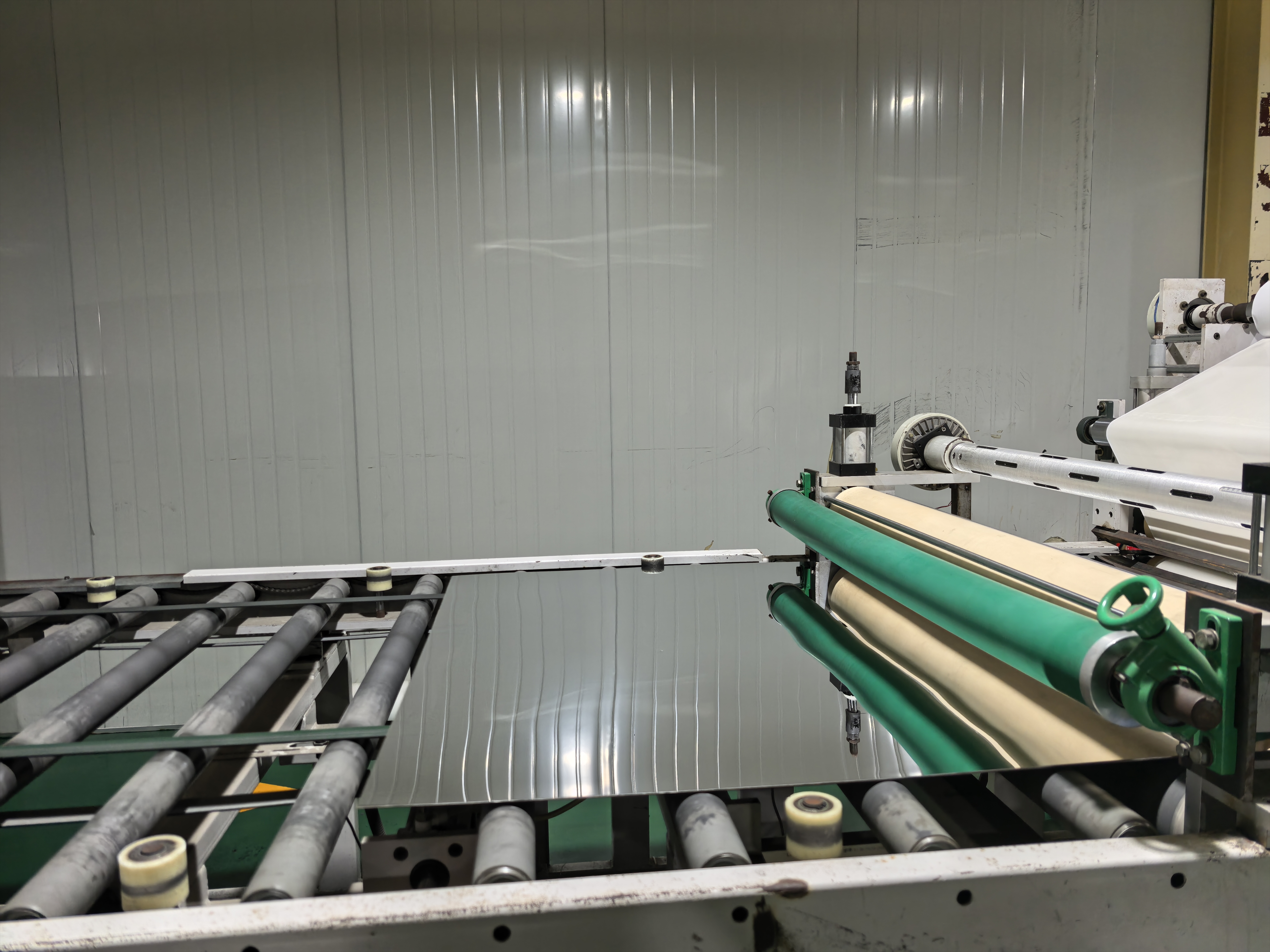
These optical characteristics depend on both the quality of the acrylic sheet and the coating process. The base acrylic sheet must be optically clear, free of bubbles and distortions. Extruded acrylic, used by professional manufacturers, ensures uniform material properties that support consistent optical performance across large surfaces. When the semi-reflective coating is applied evenly and cured properly, the result is an acrylic two-way mirror that delivers reliable semi-transparency at scale.
Any variation in material quality or coating integrity can undermine the effect, leading to uneven reflectivity or reduced clarity. That’s why sourcing acrylic two-way mirrors from experienced suppliers is essential for achieving repeatable, high-quality outcomes.
Once designers and engineers understand what is a two way mirror, the next question becomes: Where can it be applied? The answer is that the acrylic two-way mirror plays roles in many sectors because it balances concealment and visibility in a way that ordinary mirrors or transparent panels cannot.
In commercial security, two-way mirrors are widely used in observation rooms where supervisors monitor activities without being seen. For example, law enforcement training facilities utilize semi-transparent mirrors to observe recruits in simulated environments without intruding on their performance. Research labs and usability testing booths also incorporate two-way mirrors so that observers can watch subjects without affecting their natural behavior.

Retail and exhibit designers have found creative uses for acrylic two-way mirrors in storefronts and displays. By integrating them into signage or display cases, they can create visual depth while hiding mechanical or digital elements behind a reflective surface. Some flagship stores of well-known fashion brands have used semi-transparent mirrors to create spaces that feel both open and mysterious, blurring the lines between display and reflection in immersive store experiences.

In entertainment and stage design, two-way mirror effects are used to produce illusions and depth on set. Lighting designers take advantage of the controlled reflection to generate special visual effects that respond dynamically to changing light conditions.
High-end residential architecture has also embraced acrylic two-way mirrors for interior features such as bathroom partitions, media walls, and artistic installations that shift appearance as viewers move through the space.
Several real-world cases demonstrate how transformative the acrylic two-way mirror can be when deployed thoughtfully. At internationally recognized research institutions, two-way observation panels allow psychologists and sociologists to conduct behavioral studies while preserving natural subject responses. The success of these facilities depends on mirrors that deliver both pass-through visibility and high optical quality, a combination that acrylic two-way mirrors provide without the weight and fragility of glass.
In the retail world, flagship locations of major technology brands have installed large acrylic two-way mirror panels near interactive product showcases. These installations create the perception of floating digital content while concealing the hardware and lighting systems behind them. The result is a blend of form and function that enhances the customer experience without sacrificing practicality.
The entertainment industry frequently features applications of acrylic two-way mirrors in illusion effects, museum exhibits, and immersive art installations. These projects push the boundaries of perception and challenge viewers to reconsider what they see, all grounded in the controlled optical behavior of semi-transparent mirror surfaces.
Creating a high-quality acrylic two-way mirror begins with selecting premium extruded acrylic sheets. These sheets offer consistent thickness and optical purity, making them suitable for precision coating. The acrylic substrate must be free of internal stresses, foreign particles, and distortions.

Once the base acrylic sheet is prepared, manufacturers apply a semi-reflective metallic coating. This process typically uses vacuum deposition techniques, where metal atoms are deposited onto the acrylic surface in an ultra-clean environment. The thickness of this coating directly influences how much light is reflected versus transmitted. Adjustments in the deposition parameters allow manufacturers to tailor the performance characteristics of the final product to specific applications.
After coating, the acrylic two-way mirror undergoes quality inspection and finishing. Edges are polished, surfaces are cleaned, and protective films may be applied to ensure safe handling. Clients can then cut or fabricate the sheet into the desired shape, whether for large architectural panels or smaller components for specialized installations.
In modern architectural, commercial, and scientific applications, the acrylic two-way mirror has emerged as a versatile material that bridges function and aesthetics. Understanding what a two way mirror is, how it achieves its semi-transparent effect, and where best to use it empowers designers and decision-makers to employ this solution effectively. From observation rooms to immersive retail environments, the controlled visibility and reflectivity of acrylic semi-transparent mirrors open up possibilities that traditional mirrors or glass simply cannot match.
As demand for innovative spatial experiences grows, the role of materials like the acrylic two-way mirror continues to expand. With proper specification and installation, these mirrors can enhance privacy, support observational needs, and contribute to visual storytelling in ways that are both practical and inspiring.


