

Views: 0 Author: Site Editor Publish Time: 2026-08-20 Origin: Site


The fundamental tension in reflective material selection is balancing optical perfection against structural safety and weight limits. Specifying the wrong mirror material leads to costly project failures—either through shattered glass creating safety liabilities, or improperly mounted acrylic causing severe visual distortion (the "funhouse effect"). An objective, side-by-side technical breakdown of material properties, installation requirements, and lifecycle factors determines which substrate aligns with your project's safety, aesthetic, and structural requirements. Choosing the right material requires understanding the physical limitations of each option. We evaluate impact resistance, optical clarity, and machinability to help you make the right engineering decision for your specific site conditions.
Weight & Safety: Acrylic mirrors are approximately 50% lighter and up to 17x to 20x more impact-resistant than traditional glass, virtually eliminating shatter liabilities and reducing structural load on mounting surfaces.
Optical Precision: Glass provides unmatched, distortion-free clarity across long distances because it resists bending and warping, whereas acrylic requires rigid, perfectly flat backing to maintain true reflections.
Machinability: A plastic mirror sheet can be easily cut, drilled, routed, and bent on-site using standard tools, unlike glass which requires specialized fabrication and cannot be modified once tempered.
Environmental Resistance: Glass offers superior long-term weather resistance, thermal stability, and scratch resistance, while standard acrylic is susceptible to thermal expansion, moisture-induced warping, and micro-scratching.
Application Suitability: Glass remains the gold standard for high-humidity, outdoor, or high-precision environments; acrylic is the preferred choice for high-traffic, commercial, weight-restricted, or seismic-prone installations.
Manufacturers create an Acrylic Mirror using an extruded or cast acrylic substrate. They coat this substrate with a vacuum-metallized layer, usually aluminum, to create the reflective surface. A tough, opaque backing protects this metallic layer from physical damage and oxidation. Professionals often refer to this material interchangeably as a Plastic Mirror Sheet or Plexiglass mirror. The inherent flexibility of the acrylic polymer gives the sheet its unique physical properties, making it highly adaptable for various construction environments.
The manufacturing process dictates the final quality of the reflection. Cast acrylic generally provides better optical clarity and machines cleaner than extruded acrylic. When specifying materials for a job site, understanding this distinction helps prevent issues during fabrication. The metallized backing is sensitive to certain chemicals, which heavily influences adhesive selection during installation.
Traditional mirrors start as standard float glass. Manufacturers coat the back of the silica-based glass with a thin layer of silver or aluminum. They seal this reflective coating with a layer of copper and finish it with protective paint. Silica-based glass possesses inherent rigidity, high density, and absolute flatness. These properties make glass highly stable but also heavy and brittle.
The rigidity of glass ensures that the reflective surface remains perfectly flat, regardless of the mounting substrate. This structural stiffness is why glass provides flawless reflections over long distances. However, this same rigidity means the material cannot absorb impact energy, leading to catastrophic failure when struck.
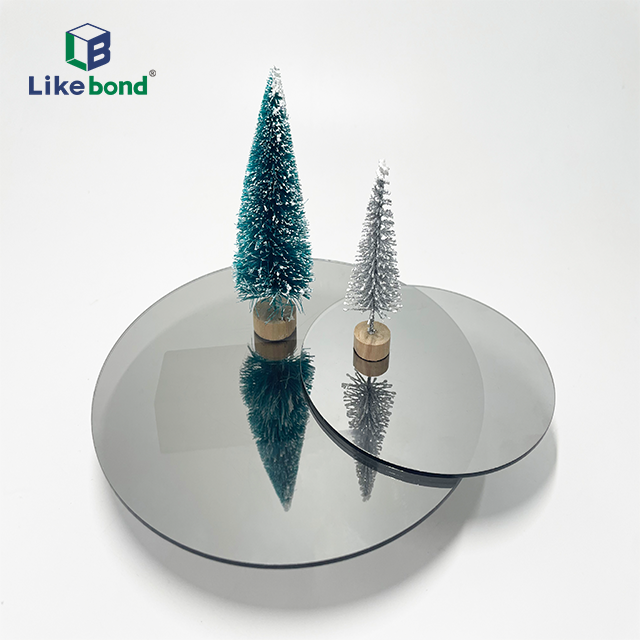
An acrylic mirror holds a massive advantage in tensile and impact strength. It offers 17x to 20x the impact resistance of traditional glass. Acrylic handles physical bending and flex-stress without structural failure. It absorbs kinetic energy by flexing. Glass has a zero-flex tolerance and reaches its fracture point instantly upon heavy impact.
Failure modes differ drastically between the two materials. Glass shatters into dangerous, jagged shards. This creates severe physical liability in public spaces, gyms, and retail environments. Acrylic may crack or fracture under extreme blunt force, but it does not shatter. This shatterproof characteristic mitigates injury risks in high-traffic environments and simplifies safety compliance on commercial job sites.
Glass maintains absolute surface rigidity. It stays perfectly flat and exhibits zero bend. This ensures a 100% accurate, crystal-clear reflection regardless of the viewing distance. Glass does not conform to the shape of the wall behind it, making it the only choice for high-end residential or optical applications where visual perfection is mandatory.
Acrylic is highly flexible. A plastic mirror sheet is prone to visual distortion over distance. If the mounting surface is even slightly uneven, the acrylic will conform to those imperfections. Environmental pressure or improper adhesive application also causes the material to flex. This creates a warped reflection commonly known as the "funhouse effect." Installers must take specific precautions to mitigate this flexibility.
Acrylic is exactly half the weight of glass of the same thickness. This reduced density heavily impacts structural load calculations. Lower weight reduces mounting hardware requirements and simplifies shipping logistics. It makes acrylic highly suitable for ceiling installations, elevator cabs, or mobile applications where heavy materials fail or exceed weight limits.
Mounting surface stress is a critical factor for interior walls. Acrylic's low weight minimizes shear stress on vertical drywall, plaster, and temporary partition walls. It drastically reduces the risk of structural pulling or anchor failure over time. When retrofitting older buildings, this weight reduction often eliminates the need for additional structural blocking.
Glass features a high surface hardness. It is highly resistant to scratches and tolerates standard chemical cleaners well. Standard acrylic is a softer polymer. It is highly susceptible to micro-scratches and hazing. Ammonia-based cleaners will permanently damage an acrylic surface, requiring strict maintenance protocols.
Thermal expansion and contraction affect plastics heavily. Acrylic has a high coefficient of thermal expansion. It expands and contracts significantly with temperature fluctuations. Glass maintains excellent thermal stability. Furthermore, acrylic absorbs moisture in high-humidity environments. This absorption causes differential expansion and warping. Glass remains completely unaffected by moisture, making it superior for wet environments.
| Property | Acrylic Mirror | Glass Mirror |
|---|---|---|
| Impact Resistance | 17x to 20x higher than glass; shatterproof | Low; shatters into dangerous shards |
| Weight | 50% lighter than glass | Heavy; requires strong structural support |
| Optical Clarity | Prone to distortion if not mounted flat | Perfect clarity; zero distortion over distance |
| Machinability | Easy to cut, drill, and route on-site | Requires specialized tools; cannot modify tempered glass |
| Scratch Resistance | Low; susceptible to micro-scratches | High; resists scratching and harsh chemicals |
Glass presents severe limitations for on-site fabrication. It requires scoring and snapping techniques. Drilling holes demands specialized diamond drill bits and constant water lubrication. Edges require professional polishing. Tempered safety glass cannot be altered, cut, or drilled on-site under any circumstances. If a measurement is off by a fraction of an inch, you must order a completely new piece.
Acrylic offers distinct machinability advantages. You can easily cut a plastic mirror sheet with standard circular saws, routers, or lasers. This allows for complex custom shapes, curves, and rapid on-site adjustments. Installers can drill holes using standard plastic drill bits without risking catastrophic shattering. This flexibility keeps projects on schedule when field conditions differ from architectural plans.
Substrate preparation dictates the success of an acrylic installation. You must use a perfectly flat, rigid backing. Materials like MDF or thick plywood work best. Installing acrylic directly over uneven drywall guarantees physical distortion and warping. The substrate must be free of debris and sealed to prevent moisture transfer.
Adhesive compatibility is crucial. Never use standard construction adhesives on acrylic. Harsh solvents will chemically attack and eat through the metallized backing. You must use specialized, acrylic-safe mirror mastics. Additionally, you must accommodate thermal expansion. Leave expansion gaps in frames or oversize your screw holes when mounting acrylic mirrors outdoors or in variable temperature zones.
Follow these steps for a successful acrylic installation:
Verify the substrate is perfectly flat using a long level or straight edge.
Seal the mounting surface with a high-quality primer to prevent moisture transfer.
Apply acrylic-safe mirror mastic in vertical beads, not horizontal lines or globs, to allow for air circulation.
Press the sheet firmly into place using a J-roller to ensure even adhesive distribution.
Leave a 1/8-inch expansion gap around the perimeter if framing the mirror.
Commercial gyms, dance studios, and martial arts centers where safety and impact resistance are paramount.
Prisons, detention centers, hospitals, and psychiatric wards requiring strict anti-shatter safety protocols.
Retail displays, point-of-purchase fixtures, exhibition booths, and lightweight signage.
DIY projects, RVs, motorhomes, and marine applications where vibration and movement occur frequently.
High-vibration industrial environments where glass would fracture.
Residential bathrooms, spas, steam rooms, and other high-humidity environments prone to moisture warping.
High-end interior design, hotels, and residential living spaces requiring long-distance, distortion-free reflection.
Optical instruments, solar reflectors, and high-precision engineering projects.
Unprotected exterior environments subject to extreme temperature swings and high UV exposure.
Specify the correct material thickness to prevent the funhouse effect. Opt for 1/4-inch rather than 1/8-inch thickness for larger wall spans. Thicker sheets increase rigidity and resist conforming to wall imperfections. Detail proper adhesive application techniques for your installers. Avoid applying globs or uneven lines of mastic. Uneven adhesive pulls the flexible sheet unevenly as it cures, creating permanent visual ripples.
Establish strict cleaning protocols immediately after installation. Use only clean microfiber cloths and specialized anti-static plastic cleaners. Strictly prohibit paper towels or ammonia-based sprays, which cause permanent hazing. For premium, high-touch public projects, specify hard-coated acrylic mirror options. These specialized sheets feature an anti-scratch coating that significantly extends the material's lifespan in demanding environments.
Order physical material samples to evaluate weight, flexibility, and clarity in your specific lighting conditions.
Consult with a fabricator to determine the exact acrylic thickness required for your intended wall span.
Verify substrate flatness using a long level before beginning any acrylic installation.
Procure only specialized, acrylic-safe mirror mastic to prevent chemical damage to the reflective backing.
A: Yes. You can cut an acrylic mirror using standard woodworking tools. A circular saw with a fine-tooth plastic-cutting blade works best for straight lines. You can use a router for curved edges. Always leave the protective film on while cutting to prevent surface scratches.
A: It can. Because acrylic is flexible, it conforms to the surface behind it. If the mounting wall is uneven, or if the adhesive is applied in thick, uneven globs, the plastic mirror sheet will warp. This creates a distorted, funhouse-style reflection.
A: It is not recommended. Acrylic absorbs moisture over time. In high-humidity environments like bathrooms, the front face absorbs moisture faster than the sealed back. This differential causes the sheet to bow and warp outward, ruining the reflection.
A: Use a clean, soft microfiber cloth and a dedicated plastic cleaner or mild dish soap with water. Never use paper towels, standard glass cleaners, or ammonia-based products. Ammonia causes the acrylic polymer to craze, resulting in a permanent cloudy haze.
A: For large wall installations, such as gym mirrors, use at least 1/4-inch (6mm) thick acrylic. Thinner sheets, like 1/8-inch (3mm), are highly flexible and will show distortion easily over large spans. Thicker sheets provide the necessary rigidity.
A: You must use a premium, solvent-free mirror mastic specifically formulated for acrylic. Standard construction adhesives contain harsh solvents that will eat through the protective backing and dissolve the reflective metallic layer, leaving permanent dark spots on the mirror.


