

Views: 0 Author: Site Editor Publish Time: 2026-08-12 Origin: Site


Specifying the wrong thickness for your project can cause disastrous results. You might compromise structural integrity, resulting in severe warping and bowing. Alternatively, you risk wasting your budget on over-engineered materials and inflated shipping weights. Modern Art Acrylic Sheet options offer superior optical clarity and unmatched aesthetic versatility compared to traditional glass. However, the exact thickness dictates both machining behavior and long-term installation stability. Misjudging this dimension often leads to sagging displays, cracked mounting holes, or uneven edge lighting.
This comprehensive guide provides an evidence-based framework to evaluate span, mounting styles, and specific application environments. We will explore how different gauges behave under physical stress and thermal changes. You will learn how to evaluate these variables carefully to determine the precise thickness required for a flawless, durable installation.
1/16” (1.5mm) to 1/8” (3mm): Optimal for fully supported applications (e.g., standard frame sizes, cabinet inserts, protective overlays) where weight is a primary constraint.
1/4” (6mm): The industry standard for standalone acrylic decorative panels, offering the best balance of rigidity, routing ease, and visual depth.
3/8” (9mm) to 1/2” (12mm)+: Required for frameless architectural installations, high-end gallery mounting, and large-span freestanding displays to prevent deflection.
The Span-to-Thickness Rule: Unframed or edge-mounted panels require exponential thickness increases relative to their total surface area to resist environmental warping.
Manufacturers divide acrylic sheets into several standard gauge categories. Each thickness tier serves distinct functional and aesthetic purposes. Selecting the proper gauge ensures your installation remains stable and visually striking.
Thin gauge acrylic works perfectly for fully framed artworks and small-scale signage. Designers frequently use these sheets for indoor protective glazing over delicate prints. Because it weighs very little, thin acrylic reduces the physical strain on traditional picture frames and hanging wires.
However, thin gauge materials carry significant structural limitations. They remain highly susceptible to bowing if you leave them unsupported over distances greater than 24 inches. Gravity simply pulls the center downward. Furthermore, fabricators face a high risk of shattering these thin sheets during aggressive CNC machining. High-speed router bits can easily catch and snap the fragile material.
This thickness represents the industry sweet spot. Medium gauge is best for wall-mounted Art Acrylic Sheet installations, backlit displays, and standard retail fixtures. The 1/4" thickness dominates commercial design because it perfectly balances cost and performance.
The primary advantage of medium gauge acrylic is high structural stability for most standard interior applications. It stays remarkably flat under normal conditions. Additionally, 1/4" acrylic handles structural hardware beautifully. You can tighten metal standoffs against it without inducing the micro-fracturing common in thinner sheets.
Heavy gauge sheets serve demanding architectural requirements. They are best for frameless architectural dividers, large gallery-grade art mounting (often called face mounting), and completely freestanding installations. Museums and luxury retailers rely heavily on this category.
These thick panels offer incredible advantages. You will see zero visible deflection, even across wide spans. The substantial edge profile also maximizes edge-lighting and optical refraction effects, creating a premium glass-like appearance. The trade-offs involve demanding logistics. Heavy gauge sheets are significantly heavier, requiring heavy-duty wall anchoring systems. They also incur substantially higher freight costs during shipping.
| Gauge Category | Thickness Range | Best Applications | Primary Limitation |
|---|---|---|---|
| Thin Gauge | 1.5mm – 3mm | Framed art, small signage, cabinet inserts | Bows over spans > 24 inches |
| Medium Gauge | 4.5mm – 6mm | Wall-mounted panels, retail displays | Lacks visual depth of thick architectural slabs |
| Heavy Gauge | 9mm – 12mm+ | Frameless dividers, gallery face mounting | Requires heavy-duty wall anchors, higher weight |
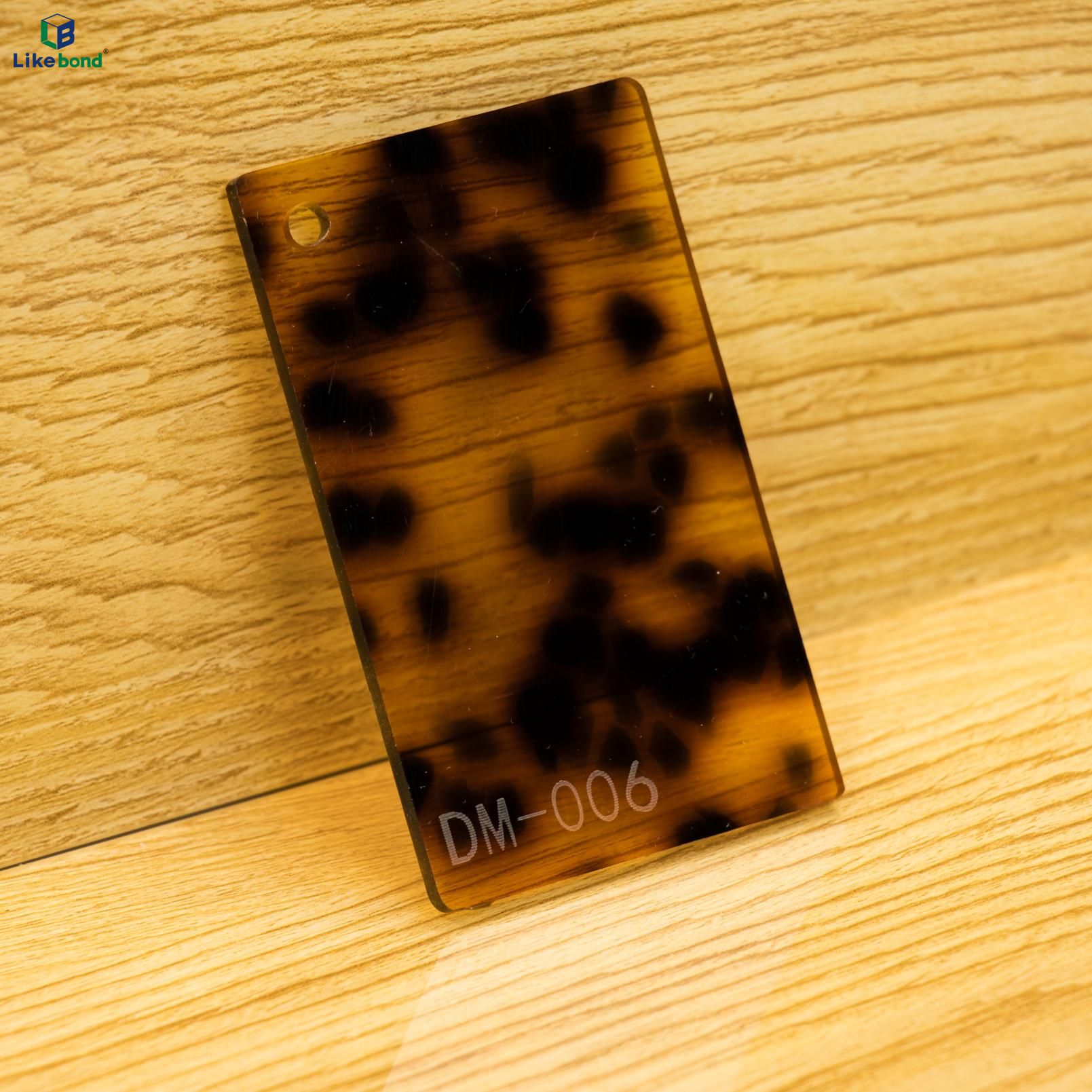
Choosing a specific thickness requires looking beyond general categories. You must evaluate how your panel will interact with its physical environment. Support structures, spanning distances, and desired visual effects all dictate your final choice.
Your chosen mounting method drastically alters the required sheet thickness. Framed installations provide continuous four-sided support. The frame pinches the perimeter, locking the material in place. This comprehensive edge support allows for much thinner sheets, saving weight and material costs.
Frameless setups behave entirely differently. Point-supported panels relying on corner standoffs require substantially higher rigidity. If you use a thin sheet on corner standoffs, the unsupported center will sag. Industry standards dictate a minimum thickness of 1/4" for standoff mounting. This prevents the "pillowing" effect, where the panel droops between the isolated mounting nodes.
Engineers define deflection as the physical bowing of a material under its own weight or environmental stress. Over time, gravity exerts a constant downward force. Unframed panels naturally want to curve toward the floor.
To prevent this, fabricators use strict baseline metrics. For example, panels exceeding 36" x 36" that rely solely on edge standoffs generally fail visual deflection tests if they are under 1/4" thick. The larger the unsupported surface area, the thicker the sheet must be. Exponential surface area growth requires exponential thickness increases to maintain absolute flatness.
Thickness directly impacts the perceived premium quality of an Acrylic Decorative Panel. Designers often choose heavy gauge sheets purely for aesthetic reasons. Thicker panels naturally capture and bend more ambient light along their polished edges.
This refraction process enhances the vibrancy of reverse-printed graphics or embedded art. A 1/2" thick clear acrylic panel acts like a prism. It gives flat artwork a stunning, three-dimensional presence. Thin materials simply lack the physical mass to produce these high-end optical effects.
Theoretical structural limits are only part of the equation. Once your design moves to the fabrication floor, physical material properties dictate what is actually possible. Machining, thermal movement, and hardware integration all restrict your thickness options.
Acrylic reacts actively to ambient temperature changes. The material expands in warm environments and contracts in cold ones. Thinner panels warp much more noticeably if they expand while constrained tightly within rigid frames. They buckle outward when they run out of room.
Proper expansion gaps must be calculated alongside your thickness specification. Fabricators typically allow 1/8" of expansion space per foot of acrylic. Thicker panels handle temperature stress better because their internal rigidity resists buckling, transferring the expansion force laterally rather than warping outward.
Fabrication techniques vary dramatically based on gauge. During routing and cutting, thinner sheets (under 1/8") are highly prone to chatter and vibration. The rapid spinning of CNC router bits pulls on the thin plastic, often leaving jagged, imperfect cuts.
Polishing also demands substantial material thickness. Flame polishing or automated diamond edge polishing yields vastly superior aesthetic results on panels 1/4" or thicker. The polishing equipment requires a wide enough edge surface to track smoothly. Thin edges melt unevenly under a polishing torch, ruining the optical clarity.
Installing structural hardware into acrylic requires sufficient material depth. Many designs call for countersinking screws so the hardware sits flush with the panel surface. Attempting to countersink a screw into 1/8" material removes almost the entire depth of the sheet, leaving it structurally unsafe.
Similarly, using threaded inserts requires thick walls. Tapping threads into thin acrylic provides virtually no "bite" for the metal hardware. Any lateral pressure will strip the threads immediately. You must use 1/4" material or thicker if your design requires threaded inserts or deep countersinks.
When you introduce color, tint, or frosting to your design, thickness calculations become even more complicated. The physical mass of the plastic directly alters how light travels through the installation.
Clear acrylic maintains an impressive 92% light transmission rate regardless of its thickness. However, colored or frosted sheets behave differently. As thickness increases in tinted sheets, the density of the pigment increases alongside it. This causes light transmission to decrease sharply.
A translucent white panel that looks perfectly bright at 1/8" might appear muddy and opaque at 1/2". Backlit acrylic installations require precise physical testing. You must carefully balance the diffusion properties with the structural thickness. If you need a heavy gauge sheet for structural reasons, you may need to specify a significantly lighter color tint to achieve your desired illumination.
Upgrading to a thicker panel introduces hidden structural challenges. You must consider the load-bearing capacity of your installation wall. Heavy sheets require serious structural reinforcement, such as wall blocking or specialized toggle anchors.
You can calculate this constraint using a simple formula. Cast acrylic weighs approximately 0.75 lbs per square foot at 1/8" thickness. You must scale your calculations accordingly before finalizing procurement.
1/8" sheet: ~0.75 lbs per square foot
1/4" sheet: ~1.50 lbs per square foot
3/8" sheet: ~2.25 lbs per square foot
1/2" sheet: ~3.00 lbs per square foot
A standard 4-foot by 8-foot sheet (32 square feet) at 1/2" thickness weighs nearly 100 pounds. Hanging this safely requires specialized architectural hardware.
Navigating these variables might feel overwhelming. Following a structured evaluation process ensures you select the correct gauge without second-guessing your design. Use this logical progression to lock in your specifications.
Step 1: Define the maximum unsupported span. Measure the distance between your planned mounting points. This specific dimension determines your absolute baseline rigidity requirement. Large gaps mandate thicker materials.
Step 2: Identify the mounting mechanism. Decide how the panel attaches to the wall. Edge-gripping frames forgive thinner materials. Point-loaded systems like standoffs or Z-clips demand heavy-duty rigidity to prevent sagging.
Step 3: Evaluate environmental factors. Analyze the installation room. Direct sunlight causes rapid thermal expansion. Indoor HVAC variations cause subtle movement. Public interaction risks, like touching or bumping, necessitate impact-resistant thicknesses.
Step 4: Request physical prototypes. Never commit to a bulk order without testing. Request a scaled material sample. Check its optical clarity, verify the edge finish quality, and perform a physical rigidity test by supporting it at your planned mounting intervals.
Selecting the correct thickness is not about defaulting to the thickest, most expensive option available. Instead, it involves finding the exact intersection of structural necessity, aesthetic depth, and budget reality. You must carefully weigh framing support against the visual demands of edge refraction.
When in doubt for a frameless application, default to 1/4" (6mm). This gauge serves as the most reliable baseline for commercial and artistic applications, providing excellent machining stability and minimal deflection. It rarely fails under standard interior conditions.
Do not leave your final specification to chance. Promptly consult with a professional fabrication specialist about your specific application. Request a material sample kit today to verify thickness tolerances, test light transmission, and ensure your next installation remains flawless for years.
A: Clear acrylic maintains 92% light transmission regardless of its thickness. You will not lose clarity by going thicker. However, tinted, frosted, or colored panels will appear noticeably darker and more opaque as thickness increases due to the higher density of the pigments.
A: The industry baseline is 1/4" (6mm) for standoff mounting. Anything thinner than this gauge will eventually bow or "pillow" around the standoff nodes over time due to gravity and thermal changes.
A: Cell-cast acrylic has a natural thickness tolerance variance, typically around +/- 10% across the sheet surface. If you are machining rigid channels into wood or metal frames, you must account for this slight variability. Extruded acrylic offers tighter tolerances but machines less cleanly.


